
Eight-time world champion Stetson Wright entered last year’s Wrangler National Finals Rodeo with a six-figure lead in the all-around world standings but set his sights on capturing a triple crown.
Wright burst onto the Professional Rodeo Cowboys Association (PRCA) rodeo scene in 2019 becoming the first rookie to win an all-around world championship.
Since then, he’s won five straight all-around titles (2019-23), two bull-riding championships (2020, 2022) and a saddle bronc title (2021).
From Beaver, Utah, the 24-year-old cowboy’s run of dominance garnered him the nickname “Superman.”
But in the second round of last year’s Finals, Wright bowed out of the competition with a hamstring injury. Three days later, he underwent surgery, and for the last six months, he’s been rehabbing to get back in rodeo shape.
“I got the nickname Superman, and everybody knows that you’re not invincible. But after five years of running away with everything, I’m not going to lie, I started to believe I might have a little bit of Superman in me,” Wright said.
“That was a tough pill to swallow. I’m just like everybody else, and I can get hurt.”
After his surgery, doctors ordered Wright to stay in bed for six weeks before moving him to crutches for 12 weeks.
Then he started to rehab and train to begin gearing up for his return to rodeo.
“Now I’m at the point of breaking scar tissue, getting my full range of motion back and getting back in the saddle,” Wright said. “I’ve been on a bull and a horse. Everything is looking up at this point, and we’re set to return soon.
“On paper, everything is looking good, and hopefully, well not hopefully, we will be back in Las Vegas next December.”
Wright said missing his shot at a triple-crown stung but that there was too much to be grateful for to dwell on disappointment.
“Yeah, I had my days where I was like, ‘Why would this happen to me?’,” he recalled. “But it was all pretty short-lived. As soon as I went into surgery and came out, all I could think about was a triple crown in 2024.”
Until this past season, Wright remained relatively healthy in his rodeo career.
His run of success and perceived invincibility translated into confidence in the arena but let him down this past December.
“It’s good to have the mindset that you can’t because it does make you pretty tough to beat when you have the upper hand,” he said. “That was a tough pill to swallow when I realized that the triple crown wasn’t in the cards that year. I just watched everything slip away round by round after that.”
Between bull riding and saddle bronc riding, Wright got used to hopping on multiple stock per day, but the hamstring injury hampered him in Las Vegas.
“You guys have seen it, I can get on four, five or six in a day and be fine,” Wright said. “When I got off that bull I was fatigued. I had lost all of my rodeo muscles.”
The months of sitting around and rehab are now in Wright’s rear-view mirror. He said as of right now he’s eyeing July to climb back on at PRCA rodeos.
“There are many things you can change, but the great part of life is that you never know what tomorrow brings,” Wright said. “I’m just having fun, and we’re about back to me being able to do what I love, and I’m pretty excited about it.”
+++30+++
Eight-Time World Champion Cowboy Ready For Comeback

School Praying Could Return
The first thing every morning in early elementary school days was the class standing to recite the American flag Pledge of Allegiance followed by the Lord’s Prayer.
It was a solemnizing pacifying time expressing appreciation for the diverse blessings often taken for granted. Not that the teacher and classmates were forced to do the recitations, it was seemingly an automatic, perhaps even enjoyable action, which should be done.
Then in 1963, the Supreme Court repeatedly ruled that school-mandated prayers in public schools were unconstitutional. Reflections of that action are not recalled precisely, but students no longer prayed in public schools.
At about the same time, many classes stopped saying the Pledge of Allegiance too. Rulings decades earlier had made it illegal to force students to salute the flag, although local classes were saying the pledge because they wanted to.
Uncertain but the flag salute is evidently not recited by today’s elementary students. However, states can still require it while offering exemptions allowing students to opt out on their own.
Thankfully, the Pledge of Allegiance is still said along with a prayer to open certain public sessions.
Return of prayer in school is vaguely possible in the foreseeable future.
Louisiana has become the first state to require that the Ten Commandments be displayed in every public-school classroom under a bill signed into law by Republican Governor Jeff Landry
The legislation mandates that a poster-sized display of the Ten Commandments in “large, easily readable font” is required in all public classrooms, from kindergarten to state-funded universities.
Proponents say the purpose of the measure is not solely religious, but that it has historical significance. In the law’s language, the Ten Commandments are described as “foundational documents of our state and national government.”
Not long after the bill was signed into law, civil rights groups and organizations that want to keep religion out of government promised to file a lawsuit challenging it.
While legal battles over displaying the Ten Commandments in classrooms are not new, this recent action gives optimism of prayers returning to schools.
Reminded of Psalm 34:7: “The angel of the Lord encamps around those who fear him, and he delivers them” Prayer: “Lord, stay the hand of violence against the children, their families, and staff of this school. Dismantle any plan to bring harm to them.”
+++ALLELUIA+++
XVIII–28–7-8-2024
Rattlesnake Relocation Project
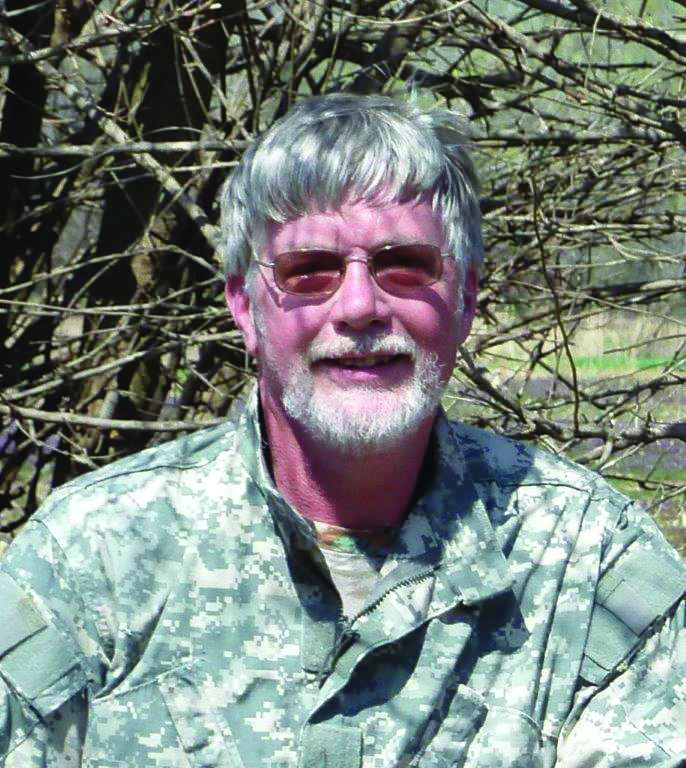
I’ve seen several articles lately both in print and on the TV evening news reminding Kansans that it’s snake season. It reminded me of a small story years ago on the back page of the Hutchinson News entitled “Rattlesnake Relocation Project comes to an End.” It seems that in the spring of 2007, Lenexa, Kansas residents began spotting an ever-increasing number of rattlesnakes in some neighborhoods. While checking on the construction site for a never-built Target store, the city construction inspector discovered numerous rattlesnakes lying around the site. It was determined that a large rattlesnake den existed somewhere under a big pile of construction rubble there. A biology professor at a major out-of-state university, saw it as the perfect opportunity to test a new conservation model; the attempted relocation of as many snakes as possible from a single population in hopes they would establish their same population somewhere else. Around-the-clock “snake watches” were established at the den, and over the next 2 or 3 weeks the professor and a host of her students and other volunteers caught 35 Timber Rattlesnakes, implanted them with radio transmitters, (I’d like to have watched that) to permit their being tracked and deposited them at another suitable den site some miles away at a “top-secret” location.
The professors reasoning for relocating the snakes and not “whacking” them was two-fold; first of all, it seemed at that time, extreme eastern Kansas was probably the western most boundary of the Timber Rattlesnake in the U.S. and since their numbers were sparse, the Kansas Dept of Wildlife and Parks and Tourism (KDWPT) had made them a SINC species, which stands for Species in Need of Conservation. Because of this, Timber rattlesnakes can legally be killed in Kansas ONLY if they directly threaten your safety, not just because they happen to have rattles on their tail. She called them “the puppy dogs of the rattlesnake world,” and said a timber rattler’s first line of defense is to blend-in rather than to coil or strike, as they opt to save that energy for hunting. Secondly, she said that those snakes were likely there for years, possibly even before the area was built-up, meaning that we humans had encroached on their territory.
Now I’m more snake friendly than most, and because of the free, natural rodent control they provide I’ve been known to relocate a bull snake or two rather than to kill them, so don’t get me wrong here, I see rattlesnakes place in Nature. You rescue Lassie or Timmy if they fall into the well, you rescue a kitten with its head stuck in a salmon can, heck one guy on YouTube even rescued a prairie dog from his swimming pool, but I have a tough time seeing any sane Kansan rescuing a rattlesnake. It all reminds me of the prairie dogs “recued” years ago from around the mall in Hutchinson. The group went to great lengths to have them “sucked” from their dens into a big, padded truck, and taken to Quivira National Wildlife Refuge, only to discover later that the Quivira badgers were eating them like fast food.
So, I feel kinda’ sorry for the poor snakes, as the worst they probably ever encountered around their old home were little old ladies with garden hoses or hoes, but their new “secret” home was probably somewhere in the country where the resident farmers and ranchers would remove their heads and care less what species they were. The “puppy dog” of the rattlesnake world really doesn’t work for me either, as I refuse to give that nickname to anything that won’t curl up in my lap to have its ears scratched. And as far as killing Timber Rattlers in Kansas only if they threaten your safety, I have to ask you when you last saw a rattlesnake and DID NOT fear for your safety.
I’ve never been able to find the final outcome of the experiment / project in terms of whether it was deemed successful or not. The article did go on to say that a few litters of young Timber Rattlers were
born during the project, and that the students went so far as to name several of the adult snakes; the largest being a male about 4 ½ feet long that weighed 2 pounds. He was named Abuelo, Spanish for grandfather. And by the way, the Timber Rattlesnake is still on the SINC list (Species in Need of Conservation) in Kansas. So, if confronted by a rattlesnake or any snake, give them a chance to retreat IF AT ALL POSSIBLE and live another day, before you remove their heads…Continue to Explore Kansas Outdoors.
Steve can be contacted by email at [email protected].
Cucumber Sandwiches

Our trip to Nashville to enjoy the Grand Ole Opry was wonderful. We had a couple of nice meals out, but we also enjoyed these cucumber sandwiches on the way down. I thought Ervin, my spouse, might say no thank you, but he truly enjoyed them! Even though I was eating bread with the spread and the cucumbers it felt like a healthy meal. I know one thing the day we left it was around 98 degrees and this certainly tasted refreshing.
I had such a great time I’m planning on going back for another concert that is 100% Vince Gill. The hotel location couldn’t have been more perfect, and we took time to rest and enjoy. That in itself made for a good trip.
Let’s chat cucumbers for just a bit. The only cucumber I can eat without repercussions is the English cucumber, the ones packaged in saran. Sometimes I can also eat the small cukes that come in the sealed bags, these are about pickling size. The unpleasant burping that comes with a regular cucumber just doesn’t work for me. Not to mention in the grocery store the cucumbers are ‘way’ to big!
Cucumber sandwiches in the past were served at luncheons and teas with the crust removed, cut into small pieces. There’s only been one cucumber sandwich from my past that’s ever held much worth. This time I think I’ve hit upon a keeper, a sandwich that will be more utilitarian.
The best bread for this sandwich would be a marble, rye or pumpernickel bread. Mine was marble, and it was very fresh and soft. The cucumber was an English cuke. You can easily make 4 sandwiches from 1 large English. Now this is the place where I have to come clean. The first time I made this sandwich I used the vegetable cream cheese, from the grocery store. You may need to set it out to soften before spreading. I was generous with the spread, then I layered on the cukes and the skins were left on. Before I put the top slice down, which also had spread on it, I put a light sprinkling of salt. I don’t recommend putting salt on too early as it will make the cucumbers weep. What would be good to sprinkle on the cucumbers is a bit of dill. The sandwich will cut in half nicely, since we were traveling, I did not cut ours. I wouldn’t be a very good cook if I wasn’t ready to
present you with my homemade vegetable cream cheese. I have to be honest I cannot remember if I wrote this recipe or my assistant, Bonnie, wrote the recipe!
As usual there is plenty of ability to switch the ingredients around, for example I would omit the cucumber in the spread. You will notice there is not additional salt in the spread. We never felt a need for it, but you may. The spread will work nicely on crackers, celery or as a dip if adapted slightly.
While we were enjoying our sandwiches, we discussed other things that might be nice to add. Thinly sliced tomatoes would be a good addition, but not if you are driving. Greens and herbs could also be considered. You don’t need any cheese because that’s the spread. OH, what about a grilled cheese with American plus the vegetable spread?
I hope you’ll give this recipe a go because it will truly surprise you, especially during the hot summer months. Simply yours, The Covered Dish.
Vegetable/Herb Spread
2 (8 oz.) pkgs. cream cheese, softened
4 tablespoons mayonnaise
1/4 cup sour cream
1 tablespoon lime juice
1/4 cup minced green onion
1/3 cup grated/shredded carrots, chopped fine
1/4 cup minced red pepper
1/4 cup minced cucumber, skin on, seeds removed
1/4 cup minced celery
2 tablespoons fresh minced parsley
1 teaspoon garlic powder
1 teaspoon ground white pepper
1 teaspoon dried basil leaves
1 teaspoon cumin
1/4 teaspoon cayenne pepper
All vegetables were measured after they were finely minced.
Soften cream cheese, stir in mayonnaise, sour cream and lime juice.
Prepare all vegetables and spices and turn them into the cream cheese mixture. If at all possible, leave the spread set overnight, allowing vegetables and spices to permeate the spread.
Recipe may easily be cut in half. Goes well with specialty breads, crackers or vegetables. With the vegetables I would use a bit less cream cheese and more sour cream.
Rural Soap Box Opinion
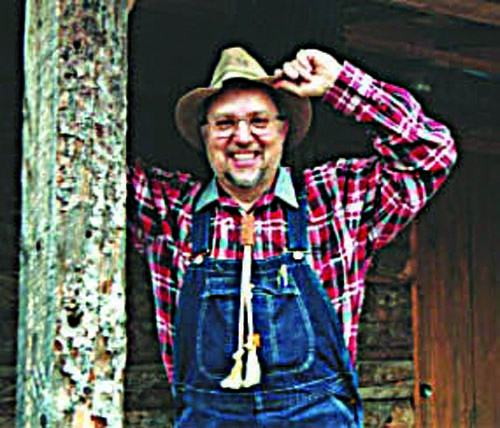
These days a person can’t escape getting involved in the global warming/climate change discussion. And the “conviction-that-I’m-right rate” is high for folks on both sides of the global warming discussion. Recently, a good friend asked how I felt about global warming. After ruminating on his question for a bit, here’s my opinion.
It’s undeniable that Earth is experiencing warmer temperatures. Thermometers don’t lie. To my way of thinking, it’s still an open question that humans are the cause of the global warm up. One thing is certain: No one knows the future with 100% certainty. The globe and humanity may indeed be on an ecological path to destruction. Or they may not be. The physical Earth has been in constant change for billions of years. Yet it has survived astronomical collisions, mass extinctions, plate tectonics and continental upheavals, global erosion, unimaginable droughts and floods, tsunamis, volcanic eruptions that caused global winters, ice ages and thaws, magnetic reversals, coronal mass ejections from the sun, epidemics, plagues, nuclear disasters, World Wars, the rise and fall of powerful empires, etc.
I’ve read that during the dinosaur era, the earth was warmer and a wide assortment of life proliferated. It was cut short by an asteroid collision with Earth. How did the proliferation of life during the dinosaur age correspond to the massive human life on earth today in terms of the carbon dioxide/oxygen equation? Who knows with certainty?
Carbon dioxide is the crucial element for life and for producing the nutrients that sustain life. It may be heating the Earth. Or it may trigger a sizable “pop” in green foliage and a corresponding surge in life-giving oxygen. The “food production zones” may gradually migrate closer to the Earth’s poles.
To my view, it’s folly to destroy the economy to achieve carbon dioxide reduction. Poverty stricken nations will not solve the problem. I’ve seen no attempts to achieve honest carbon audits for alternate energy sources. Call me a cynic, but my common sense instinct is to always follow the money to lead to the truth. The money trail for global warming/climate change, to me, suggests professional opportunism and greed, as much as response to an emergency. Are the current warmer temperatures really all that different than the sizzling temps during the Great Depression or as I remember the mid-1950s?
In short, ways of preservation, conservation and wiser use of all natural resources should be one major global research goal. The second is economic reform — which takes astute political action — to properly monetize the Earth’s natural resources to the opportunistic benefit of all, not just self-serving elites.
My opinion may be right, or it may be wrong. But, everyone is entitled to an opinion on the subject. I’m hopping down off my soap box now!
***
Kindly readers have responded to recent columns with column-worthy responses. From ol’ K. Boomer in Missouri came this response about unique and dangerous ways rural folks used in the past to celebrate the Fourth of July. Here goes;
“Milo, when we were kids on the 4th of July, me and my buddy used dynamite, not firecrackers. It was a lot cheaper — three sticks of TNT for 50-cents, ten-feet of fuse for 20-cents. We’d cut the dynamite into small pieces, wrap the dynamite around a corn cob with waxed paper, see a bunch of our friends standing around, light the fuse and toss the bundle among them and watch them scatter.
The TNT bundles wuz good for fishing, too. We cooked the big fish in a pressure cooker for 15-20 minutes to soften the bones. Good cheap eating back in those days.
Looking back, we were lucky no one ever got killed, hurt, or caught by the law. If we had, we’d probably still be behind bars.”
***
I got a second firecracker response from ol’ Rocky Krick at Bazaar. Kan. He wrote:
“Milo, as to firecrackers, here’s fun I learned as a farm kid. Put couple inches of water in a shallow pan. Then take a regular empty tin can, put a hole just big enough to stick a firecracker fuse in the closed end and set the open end of the can in the water. Then light the fuse and get back. When the firecracker goes off, the can flies way up — maybe 50-feet. We kids had contests to see whose can would fly the highest. If there was no water in the pan, the can would only jump maybe two-feet. We wore out a lot of tin cans that way. Back in those days, fun was cheap.”
***
And, from ol’ Buzz Pfinder at Altamont, Kan., comes this response to my recent note about a good friend getting bitten by an eastern massasauga rattlesnake. He wrote:
“We live down on Hwy 101 a mile north of the old Edna airport. I read your article a few weeks ago about the lady bitten by a massasauga rattlesnake. I have killed three of these vipers in our yard since 2014. The last one had three rattles and was about 16 inches long.
Just thought you and your readers might be interested and remind them to keep their eyes open.”
***
A farmer drove his old beater of a pickup truck into town. When he parked it downtown and got out of the truck, a down-and-out vagrant came up behind him, stuck a pistol in his ribs, and growled, “Stick ‘um up, Mister, and give me all your money.”
The startled farmer replied, “You’re out of luck, buddy. Things are so tough on my farm now that I don’t have any bills in my wallet or even change in my pocket.”
The holdup man shot back, “That’s nuthin’. It’s so tough out here on the streets that I haven’t been able to afford bullets for my gun for the last two months.”
***
Wise words for the week: “A lawyer will read a 10,000-word document and call it a brief. A politician with ‘a few words to say’ will talk for an hour.” Have a good ‘un.
