Wednesday, January 28, 2026
Home Blog Page 4548

Wild About Kansas photo contest now open to all ages

0
Tom Magliery

Photographers age 19 and older invited to participate in contest

PRATT – Previously a youth-only contest, the annual Wild About Kansas photo contest, hosted by Kansas Wildlife & Parks magazine, now offers an adult category, opening the contest to photographers age 19 and older. Submissions are being accepted now through Oct. 23, 2015.

“Kansas is a state filled with a plethora of diverse and awe-inspiring natural resources and this contest is just one more way we can continue to appreciate and enjoy them,” said associate editor, Nadia Marji. “With the addition of an adult category for 2015, I’m confident we’re going to see Kansas from an array of unexpected and inspiring perspectives.”

Participants can submit photos in three categories: wildlife, outdoor recreation or landscapes. There is no fee to enter, and the contest is open to both residents and nonresidents.

Photographers can submit up to three photos. Photos must be taken within the state of Kansas and must be the entrant’s original work.

Each photo will be judged on creativity, composition, subject matter, lighting, and the overall sharpness. First, 2nd, and 3rd place prizes will be awarded in each category, as well as one honorable mention per category. Winners will be featured in the 2016 Kansas Wildlife & Parks January/February photo issue.

Entries must be received no later than 5 p.m. on Oct. 23, 2015. An entry form must be submitted for each participant. Photo format should be JPEG or TIFF and file size should be not less than 1mb and not more than 5mb.

For more information and entry forms, visit ksoutdoors.com/services, or contact Marji at [email protected]

Top Ten Family Travel Battery Care Tips

0

(NAPS)—To help you avoid getting stranded with a dead car battery on your next family road trip, Gale Kimbrough, also known as “Mr. Battery,” offers these suggestions:

Helpful Hints

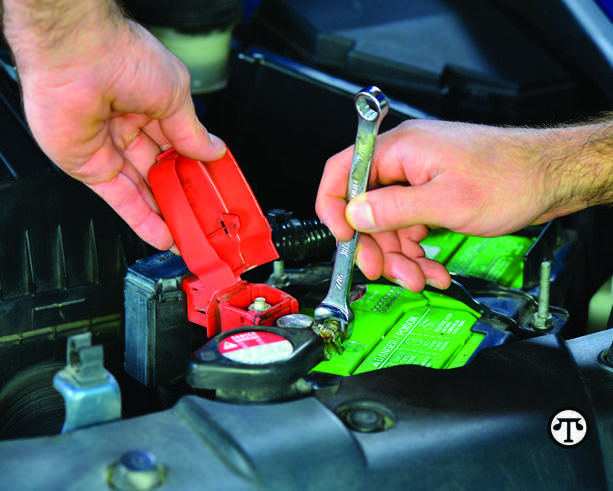
  1. Take a few minutes to read about your battery in your car’s manual and become familiar with the type of battery it is, where it is and how it can be cleaned safely.
  2. At the start of each new season, check the battery to make sure it is still fully charged for the excursions ahead.
  3. When working with your car battery, wear protective eyewear, remove all jewelry and wear long sleeves to protect your arms from battery acid discharge.
  4. Perform a visual inspection to see if the battery case is showing signs of extreme bulging, cracking or leaking. Replace your battery if you see any of these signs.
  5. If your battery has removable filler caps, open them and check the water level in each cell. If the level is low, add distilled water (not tap water) until the plates are covered, preferably to one-half inch above the plates. This prevents the buildup of sulfate crystals, which can reduce the overall battery charge and performance.
  6. Avoid overfilling, because heat can cause the electrolyte solution inside to expand and overflow.
  7. Clean up the connections by removing any corrosion and lead oxidation and make sure to brush the dirt and grime off the case.
  8. To remove the battery cables, first disconnect the negative cables and then the positive. To reinstall the cables, first connect the positive cables and then the negative.
  9. Be sure the battery is mounted securely in place to minimize vibration. Excessive vibration is harmful to the battery plates and terminals and could lead to battery failure. After completing reconnection, use a protective spray on the terminal connections.
  10. Have your battery and electrical system professionally tested every three to six months, especially prior to heading out on a trip or extreme changes in temperature.

In just 30 seconds, Interstate All Battery Center locations can provide a free printed analysis of your vehicle battery condition.

Learn More

For further information and the location of a nearby Interstate Batteries dealer or Interstate All Battery Center, visit www.Interstatebatteries.com.


Checking the battery is a wise move before any long car trip.


Trapping and predator calling class at Tuttle Creek State Park

0
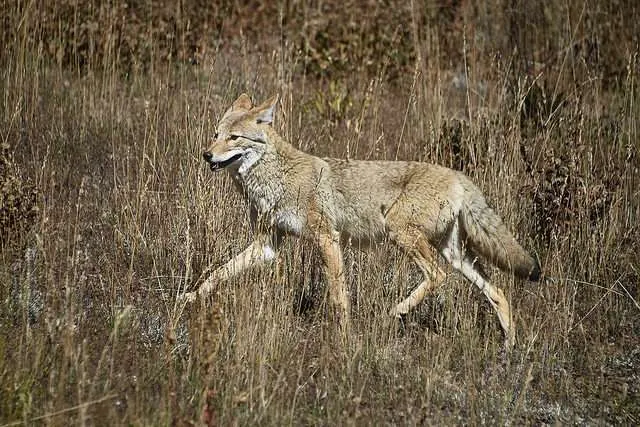
Photo credit: Diana Robinson

Learn ins and outs of hunting furbearers during free class

PRATT – Tuttle Creek State Park staff invite you to join them February 21 for an afternoon class on basic trapping and predator calling. The class will be held from 1 p.m. to 4:30 p.m. at the state park office, 5800 A River Pond Rd, Manhattan. All ages and skill levels are welcome, and there is no cost or preregistration required to attend. For more information on this class, contact park manager Todd Lovin at (785) 539-7941.

“Our hope is to get new folks interested and involved in this type of activity,” said Lovin. “And for those who are experienced, we hope this class will serve as a way to refine their skills and perhaps share techniques.”

Kansas is home to 14 furbearer species that may be hunted and trapped during the furbearer season, including badger, bobcat, gray fox, least weasel, long-tailed weasel, mink, muskrat, opossum, raccoon, red fox, striped skunk, and swift fox. Beaver and otter may also be trapped. Although coyotes are not classified as furbearers, they may be hunted and trapped year-round.

This class will not certify participants for a furharvester education certificate, but information provided will be beneficial for those interested in completing a furharvester education class in the future. The Kansas Furharvester Education course can be completed online at ksoutdoors.com/Services/Education/Furharvester.

Source: Kansas Department of Wildlife, Parks and Tourism

Improvement of Riparian Areas and Water Quality Focus of New Project

0
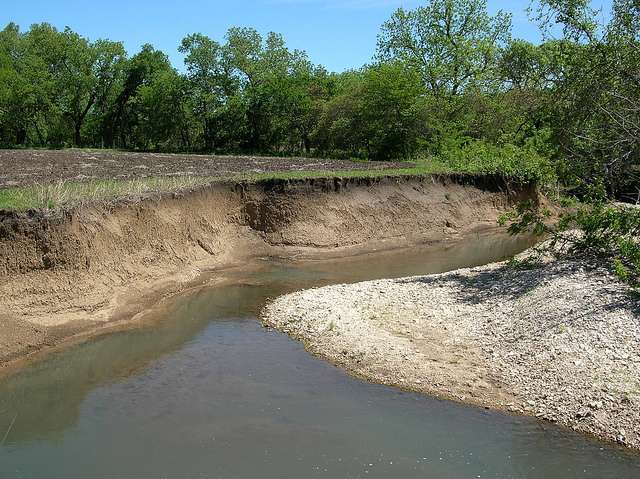
The outcomes for the recently announced new $13 million USDA regional conservation partnership program will be to slow sedimentation into Kansas reservoir systems and to improve timber quality along these stream systems.

Kansas Forest Service and K-State are recipients of program funding.

MANHATTAN, Kan. — A new $13 million U.S. Department of Agriculture program designed to improve Kansas’ water quality, support wildlife habitat and enhance the environment was announced recently for Kansas State University and the Kansas Forest Service.

The program is part of $370 million in federal funding for the new USDA Regional Conservation Partnership Program (RCPP). In addition, these projects will leverage an estimated $400 million more in partner contributions—for a total of nearly $800 million—to improve the nation’s water quality, support wildlife habitat and enhance the environment.

The Kansas project will implement forestry best management practices on more acres and create a protection framework for remaining riparian forests in high-priority watersheds. The project will help sustain reservoir storage and wildlife habitat, improve the drinking water supply, and increase recreation opportunities.

In a USDA press release, agriculture secretary Tom Vilsack said these partnerships empower communities to set priorities and lead the way on conservation efforts important for their region.

“They also encourage private sector investment so we can make an impact that’s well beyond what the federal government could accomplish on its own. We’re giving private companies, local communities, and other non-government partners a way to invest in a new era in conservation that ultimately benefits us all. These efforts keep our land resilient and water clean, and promote economic growth in agriculture, construction, tourism, outdoor recreation, and other industries,” said Vilsack.

A total of 115 projects were awarded in all 50 states.
Putting Forestry on the Ground

Mitch Lundeen, water quality forester with the Kansas Forest Service, said RCPP will include a significant tree planting component to help stabilize river banks, keep debris off the fields, and ultimately improve water quality by reducing sediment entry into streams.

“Over two-thirds of the Kansas water supplies are located in federal reservoirs. Unfortunately, loss of water capacity in these reservoirs due to sedimentation, will most certainly cause water shortages as demand continues to grow. It is a big deal to help reduce sediment from getting into our water supply,” Lundeen said.

Kansas State Forester Larry Biles said the program is designed to restore the riparian forest systems on the exposed stream banks in Kansas and to improve the riparian forests that currently exist.

“By improvement we will improve general species mix of the timber that is there and the quality of that through corrective pruning,” he said.

The second part of the program is the assessment of watersheds across the state.

“The assessments tell us first, where we have exposed stream banks; second, where existing timber is either too narrow to stabilize stream banks or the timber is of poor quality or species mix; and three, where we have a sufficient amount of high quality timber worthy of saving,” Biles said. “We either need to go in and establish timber because of exposed banks, have timber that needs improvement because of tree quality or species mix, or we need to sustain high quality timber.”

“Through that assessment, we will focus our efforts where the greatest water quality benefits can be obtained by either establishing stream-side forests or improving the health of existing woodlands,” he added.

The assessment will use aerial photography and GIS technology. “We will overlay that information with landowner information and through education, inform and contact these landowners about suggested improvements. We will write a plan for those interested,” Biles said.

The Kansas project will focus on the river systems that feed the high priority reservoirs, most of them are federal reservoirs, he said.

Expected outcomes of the project will be to slow sedimentation into Kansas reservoir systems and to improve timber quality along the stream systems.

“We have the opportunity to grow high quality hardwoods, but we need to get them established,” Biles said.

For more information, contact your local county extension offices, Natural Resource Conservation Service, Farm Service Agency or conservation district offices. More information is online at the Kansas Forest Service website.

One hundred special hunts offered for spring turkey

0

Interested hunters have until Feb. 23 to apply

PRATT – If you’re looking to make some memories this spring turkey season but are unsure where to go for a quality hunt, explore the Kansas Department of Wildlife, Parks and Tourism’s Special Hunts Program. Special Hunts provide access to public and private lands that are not open to unrestricted public access. One hundred special hunts for spring turkey will be offered this year and applications are being accepted now through 9 a.m. on Feb. 23. To obtain detailed information on all available hunts, and to download an application, visit: ksoutdoors.com/Hunting/Special-Hunts-Information.

Out of the 100 hunts available, 33 are open hunts (open to all), 39 are mentor hunts (both beginner and mentor may hunt), and 28 are youth hunts (youth hunt only). These hunts will occur on a variety of private lands, wildlife areas, city and county properties, and one national wildlife refuge. There is no fee to participate and application is open to residents and non-residents.

Successful applicants will be notified shortly after the random drawing has occurred. Hunters must still purchase all licenses and permits required by law.

For information on other spring turkey hunting opportunities, visit ksoutdoors.com and click “Hunting” and “Turkey Information.”

Source: Kansas Department of Wildlife, Parks and Tourism