Saturday, February 21, 2026
Home Blog Page 564

Horses Require Additional Attention During The Winter

0

Besides quality hay, water, and a way to get in out of the cold, horses require additional attention during winter months.

Horses grow out their coats in the winter and are well adapted to the cold. However, they need more food to keep up their energy level and body weight.

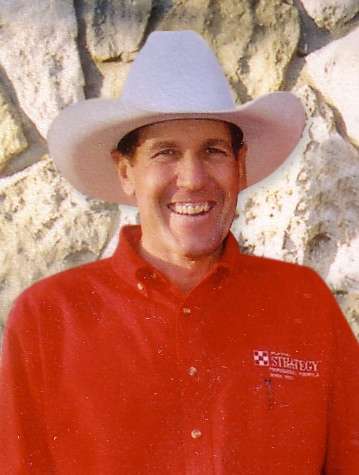
Monte Stauffer, University of Nebraska equine specialist, said as the temperatures go down, horses need to be fed more energy. The best source of energy for them is hay.

“Alfalfa hay has got a little more energy than the grass hay, but both of them can be good quality. Hay, as it ferments in their digestive system, gives off heat,” Stauffer said. “As it gets colder, horses should get more hay.”

When they’re eating all the hay they can but still shivering or losing weight, then owners can start adding grain to increase the energy content. But Stauffer said to do this gradually because it can upset their digestive system if they’re not used to getting grain.

Make sure there’s plenty of fresh water, too. Eating snow doesn’t count.

“If they drink less water, then that can cause more digestive problems because they’re eating dry hay and dry feed and grain. And if they don’t get an adequate supply of water, then that can cause impaction colic, where things are just too dry,” Stauffer said.

“The best thing if possible is to keep water between 40-and-60-degrees.”

Horses kept in the barn during the winter should be let out for exercise. This increases their appetite and reduces boredom. A bored horse will start chewing, cribbing, biting, and kicking at its surroundings.

When they’re in their stall, be sure it’s kept clean and there’s good ventilation, so the horse doesn’t develop respiratory problems.

There are blankets made to help keep horses warm, but most don’t need them.

Ann Swinker, horse specialist at Penn State University, said horses have a natural insulating layer of fat and a thick hair coat to keep them warm.

However, there may be times when you’re dependent on a blanket to do what nature does. A sick, very young, or very old horse might benefit from the extra protection. Show horses that have their winter coat clipped for showing would, too.

Swinker said it’s important to make sure to use the right size blanket, so it doesn’t rub the skin raw if it’s too tight or get caught in the hooves if the blanket is too loose. Measure the horse from the point of the shoulders to the point of the rump.

“One size isn’t always the same, so ask if you can open it up and re-measure the blanket,” Swinker said.

“If you have, let’s say, a Saddlebred or an Arabian with a level croup, you don’t want to get one that’s made for a Quarter Horse with a sloping rump because it’ll be rubbing it back there, so you want to try to pick brands that are made for that type of horse.”

If the horse will be turned out in wet weather and it’s in mud all the time, make sure the blanket is waterproof.

“The bad thing is, if that blanket gets wet and it’s sitting on the horse wet, now the hair underneath is wet, so the insulation of their hair is gone. The blanket’s chilled and it’s laying on them there’s no insulation left,” Swinker said. “You don’t want to do that, that’s really unhealthy for the horse.”

+++30+++

Horticulture 2023 Newsletter  No. 46

0

https://hnr.k-state.edu/extension/info-center/newsletters/index.html

Blog Post: http://www.ksuhortnewsletter.org

Video of the Week: Choosing the Best Poinsettia

https://kansashealthyyards.org/all-videos/video/choosing-the-best-poinsettia

UPCOMING EVENTS

Kansas Turf & Landscape Conference 

The 73rd Annual Kansas Turf & Landscape Conference will be held on Wednesday, November 29 and Thursday, November 30 at the Hilton Garden Inn, Manhattan. The conference is an excellent way to learn about turf and landscape management, visit with old friends, network with new ones, and see all the latest products and supplies from local and national vendors.

The conference has been approved for commercial pesticide recertification hours:

1 Core hour

3A – 7 hours

3B – 7hours

GCSAA education points and International Society of Arboriculture CEUS will also be available by attending the conference.

For more information, go to https://www.kansasturfgrassfoundation.com/

REMINDERS

  • Take a soil test and make needed adjustments this fall.
  • Till fallen tree leaves into garden beds

FRUIT

Winterizing Strawberry Plants

            Preparing strawberries for winter requires adding a layer of mulch over the plants at the proper timing. Adding mulch too soon prevents the plants from acclimatizing to the cold weather and makes them less hardy to temperature extremes.

      Mulch helps regulate soil temperature and prevents repeated freezing and thawing which can heave plants right out of the ground. This can be damaging to the plants and can result in death. By this point in the year, we have already had several days of low temperatures, and it is likely safe to go ahead and mulch strawberry plants.

      Straw is the best option for mulch in this case. Apply three to five inches of straw over the plants using a wire or plastic fencing to hold the straw in place if necessary. Strawberries grown in raised beds need a few extra inches of mulch since they are not as well-insulated. Container-grown strawberries will not likely survive our winter if left outdoors. Consider bringing the container into a garage or shed for protection through winter.

      In the spring as new growth appears, remove the straw a little bit at a time to re-introduce the plants to the elements. Make sure the temperature is above 32 degrees F to avoid damaging new buds. A light layer of mulch can be left in place to keep the berries off the ground and to help retain moisture in the soil. (Cynthia Domenghini)

  FLOWERS

Poinsettia Care

            Though commonly grown for the winter holiday season, poinsettias can be maintained year-round. The attractive greenery and colorful bracts make a great addition to the home. The botanical flowers of poinsettias are the yellow parts in the center of what most think of as the bloom. Bracts are the colorful parts ranging from red, white, green, pink and combinations of these colors. Bracts are technically leaves and some florists and nurseries will spray paint them to offer other less traditional colors such as blue.

      Poinsettias do best with temperatures between 65- and 75-degrees F. Consistency is key so avoid drafts from windows, or heat sources such as the fireplace or space heaters. Bright, indirect light is preferred but keep the leaves from touching cold windows.

      Soil should be kept moist. If it dries completely, the poinsettia will wilt and potentially lose some leaves. Water the plant in the sink until water runs through the drainage holes of the container. If the poinsettia is left in standing water such as in a saucer or in the plastic sleeve they are often sold in, the roots will rot.

      Fertilizing and other maintenance is not necessary until after the holidays. (Cynthia Domenghini)

Are Poinsettias Poisonous?

Since childhood I’ve heard that poinsettias are poisonous and should not be kept in a home that has pets indoors. The origins of this rumor are not certain though the effects are widespread. Studies have been done on humans and animals to report side effects of consuming poinsettias. Though some negative gastrointestinal symptoms may occur if large quantities of a poinsettia us consumed, the plants are not considered a major health risk to animals or humans. Regardless, poinsettias are not considered edible and families with pets that are prone to chewing should keep indoor plants out of reach.

As a member of the Euphorbiaceae family, poinsettias are related to the rubber tree. The rubber tree is responsible for the production of natural latex. For this reason, anyone with a latex intolerance may be sensitive to direct contact with poinsettias as well. (Cynthia Domenghini)

MISCELLANEOUS

USDA Plant Hardiness Zone Map Update

The USDA plant hardiness zone map is a resource many gardeners use to aide in decisions regarding plant selections. The map represents the average annual extreme minimum temperature for a certain location and a particular time period. This information has been gathered over 30 years from thousands of weather stations. A new USDA map has just been released as an update from the 2012 map.

The 2023 map is intended to be more user-friendly and designed for the Internet. Better data and technology have enabled the map to account for microclimates within regions where the zones may slightly vary from a rural area to more developed cities and towns as well as areas of elevation change.

With the new guidelines, most of Kansas is now within zones 6a to 7a. For many of us the new zoning represents a change of half a hardiness zone. This could mean more options for growing during cool seasons.

To access the updated 2023 USDA Plant Hardiness Zone Map and find resources to use the map for your location you can visit this site: https://planthardiness.ars.usda.gov/. (Cynthia Domenghini)

Ashes in the Garden

Before adding supplements to the garden, it is helpful to know the soil conditions. Soil tests can be done with help from your local extension unit. Ashes are a significant source of potash but provide a very small amount of phosphate and no nitrogen. There are many sources that recommend using ashes as a fertilizer, but soils vary from one region to another. Since most Kansas soils have naturally high rates of potash, incorporating ashes to the soil is not beneficial. In fact, this could be problematic since wood ashes will raise the pH of the soil and our soil tends to have a high pH naturally. Finding alternative ways to dispose of ashes is a better option for our area. (Cynthia Domenghini)

Storing Power Equipment for the Winter

This is a good time to service power equipment such as mowers, tillers and garden tractors. Run the equipment out of gas or treat the existing gas with a stabilizer as untreated gas can deteriorate over time. If using a stabilizer, run the engine long enough for untreated gas in the carburetor bowl to be burned and replaced. This is also a good time to replace the oil (and filter, if present) since the engine is warm. Check and replace the spark plug if necessary. Some gardeners will also apply a light, sprayable oil into the cylinder through the spark plug hole. Check and clean air filters and replace if necessary.  Many mowers and tillers will have a foam prefilter that can become filthy with use. If allowed to become too dirty, engines will run poorly or may not run at all.

Sharpen blades, clean tines, tighten screws and replace broken parts. Doing this maintenance now will help reduce frustration and lost time due to poorly performing equipment next spring. (Ward Upham)

Why Do Houseplants Lose Leaves After Being Brought Inside?

Houseplants drop their leaves in response to several conditions: too much or too little water, restricted root growth, temperature is too cold or a rapid change in the growing environment. Many gardeners move their houseplants outdoors for the summer season. With the recent move back indoors, and the change in light, these plants may experience leaf drop. The good news is the plants should self-correct within a few weeks if they receive adequate care.

Remember, growth will typically slow down significantly as plants respond to the change in environment. Water only as needed and avoid the temptation to fertilize your plants at this time. Allow time for plants to acclimate to their new location. When plants are brought indoors or even when they are brought home from the store, the light conditions will be different. Try to expose plants to this change gradually. If plants were receiving bright light in their previous location position them near the window that receives the brightest light in your home. If their permanent location is darker, take time to move the plants allowing them to adjust to less and less light. It can take four to eight weeks for plants to acclimate depending on how drastic the light difference is. When the weather warms up follow the same process in reverse as you prepare to re-introduce the plants to the outdoors. (Cynthia Domenghini)

Contributors:

Cynthia Domenghini, Instructor & Horticulture Extension Specialist

Ward Upham, Extension Associate

Department of Horticulture and Natural Resources

1712 Claflin, 2021 Throckmorton

Manhattan, KS 66506

(785) 532-6173

For questions or further information, contact: [email protected], [[email protected]%20][email protected] OR [[email protected]][email protected]

This newsletter is also available on the World Wide Web at:

http://hnr.k-state.edu/extension/info-center/newsletters/index.html

The web version includes color images that illustrate subjects discussed. To subscribe to this newsletter electronically, send an e-mail message to [email protected], [[email protected]][email protected] or [[email protected]%20][email protected] listing your e-mail address in the message.

Brand names appearing in this newsletter are for product identification purposes only. No endorsement is intended, nor is criticism implied of similar products not mentioned.

K-State Research and Extension is committed to making its services, activities and programs accessible to all participants. If you have special requirements due to a physical, vision or hearing disability, or a dietary restriction please contact Extension Horticulture at (785) 532-6173.

Kansas State University Agricultural Experiment Station and Cooperative Extension Service K-State Research and Extension is an equal opportunity employer.  Issued in furtherance of Cooperative Extension Work, Acts of May 8 and June 30, 1914, as amended. Kansas State University, County Extension Councils, and United States Department of Agriculture Cooperating, Ernie Minton, Dean. 

Happy Thanksgiving Turkey tips

0

OK, I’m getting nervous, I’m a few steps behind of where I need to be in the prep for Thanksgiving. A few items have been checked off the list, but I’ve still got more to go. I didn’t look at my list today I just kept going——

Like many of you I have my last-minute list going, thus far it’s only about 6 items long, but I have a feeling by Wednesday morning it will greatly increase. A couple of weeks ago I shared a very simple recipe for a cranberry orange sauce made with chunky cranberry sauce, orange marmalade and honey. Today I made a nice batch for home and gifts. Still looking at one more run with apple butter before I wrap up my favorite week of the year. See, the truth is I wouldn’t miss any of this hubba hubba for anything! It’s probably my favorite week of the year. The pantry and overflow pantry are well stocked, so I can fix just about anything someone desires. There’s plenty of coffee and hot apple cider. If all goes well the tree will be up by Thursday morning, just not lit yet.

Every year the guests at our table change up. Like many of my friends I try to make sure everyone has a place to be on Thanksgiving. Many times, we don’t all fit around the big table, but that’s ok, it’s the fellowship that is so very special, and the reason for the gathering.

When the bird is all picked apart folks will be scrambling to figure out how they’re going to eat all this turkey bird! That’s never a problem at my home. So, this week I’ve chosen to give you ideas galore on how to use all those delicious leftovers. Here we go:

1. Hot rolls and turkey sandwiches, one of my favorites

2. Turkey & noodles

3. Thanksgiving wraps: turkey, dressing and cranberry sauce in a flour wrap

4. Potato cakes, leftover mashed potatoes with corn or green onions, fried

5. Soups of all kinds

6. Turkey Salad

7. Turkey & rice casserole

8. Turkey quesadillas

9. Turkey enchiladas, burritos or fajitas

10. Two teenage boys or my 22-year-old-

I knew you’d get a ‘hoot’ from this last one, hey it works, then you won’t have any leftovers to even think about!

If you’re trying to solve some of your gift ideas allow me to give some suggestions from 3 of my favorite places:

Petit Jean Meat, Morrilton, Arkansas: a delivery of their meat is outstanding. I would order the sliced ham, bacon, and summer sausage for a gift basket.

Bulone Enterprises, Lampe, Missouri: Italian foods and sauces, oh my goodness, everything here is divine.

Persimmon Hill Farms, Lampe, Missouri: Known for their blueberry thunder muffins. They actually arrive at your home in a giant muffin tin.

Start ordering now for these gifts. Most stop taking orders by mid-December.

Other ideas: Personally, I enjoy coffee gift cards, good music, candles, quilts, good friends, conversation, massages and some of my favorite magazines: Country Cottages, Tea Time and Southern Living, pedi’s and manicures, just to name a few! Maybe my list will give you some good ideas for your special someone.

Need to run my friends, hope your Thanksgiving meets all your expectations. Avoid the stress, as much as possible. Simply yours, The Covered Dish

WAIT! I just thought of another tip…I use Amazon and send dry fruit & nut plates. No refrigeration needed, and oh so good.

Move Over Boys and Let Her Show You How It’s Done

0

I like retirement, but I miss interacting with the seniors at the nursing home where I worked the last 12 years of my working career. Many of them were hunters, fishermen and trappers and it was great fun listening to their stories. One such fishing story comes to mind, since a group of fellas from church just brought back enough striped bass fillets from Lake Texoma for a church-wide fish fry.

As I walked the halls of the nursing home that day, I remember being hailed by Nora Jane Schmidt, asking if I’d seen the picture of her big fish. Now, Nora Jane was no stranger to the business end of a fishing rod. She grew up southeast of Buhler, Kansas and remembers fishing in the Arkansas River as a little girl. She and her sisters would fish for carp with cane poles and dough balls her mom made for them. She doesn’t remember ever catching much, but the seeds were sown for her love of fishing. For years after she was grown and gone, she and her sisters still took their mom to the river to chase carp every chance they got. Mom liked to catch carp because they fought so hard. Nora Jane and her late husband Elmer fished in Canada every year they were married and made innumerable trips to Lake Texoma and to local reservoirs over the years.

To celebrate recent retirements among her kids, a Schmidt family fishing trip was organized for the first week of May, 2015 at Beaver Lake, tucked into the Ozark Mountains of northwest Arkansas. The Schmidt’s are a competitive crew and still have a Schmidt family pheasant hunt each year on opening day of pheasant season where prizes are awarded for things like the most birds killed and the longest tail feather. With that as the standard, the family got trophies for the first fish caught, the most fish caught and of course the biggest fish caught on that trip.

Two guides and two boats were reserved for each day, and the first morning everyone met the guides at the dock at six A.M., divided up four to each boat and headed out. It was a full hour boat ride to where they fished that first morning, and Nora Jane remembers thinking as they sped across the lake “I didn’t pay all this money just for a boat ride!” When they arrived at the guides chosen spot, two rods per person were baited with live shad, the rods put into rod holders that lined the sides of each boat, and the wait began.

During the next couple hours Nora Jane caught a nice seven-pound striped bass and remembers thinking “My, that’s a big fish.” Around ten o’clock with only a couple more small fish caught by the group, a fish hammered the bait on one of Nora Jane’s rods. Their guide could tell immediately it was big and told everyone else in the boat to pull their lines to give her the entire boat to play the fish. With line zipping from the reel and the rod bent double until the tip nearly touched the water, she needed the guide’s help to even get the rod out of the holder so she could start reeling. She would gain line and pull the fish closer, then the reel would sing as

the fish stripped line from it and headed for parts unknown. Back and forth they went as each tried to wear-down the other. Finally, twenty minutes later as she stood exhausted on the opposite back corner of the boat from where she first hooked the fish, the guide netted her monstrous twenty-five-pound striped bass!

As the Schmidt family fishing trip came to an end, Nora Jane, then eighty-eight-years-old and matriarch of the Schmidt family, took home the trophies for both the biggest fish and for the most fish caught on the trip.

We spend lots of time and energy attempting to get and to keep today’s youth interested in the outdoors, and rightly so. But we must also remember our elders who instilled in us the love of fishing, hunting and the outdoors that we have today. Continue to Explore Kansas Outdoors!

Steve can be reached by email at [email protected].

A Cowboy’s Faith

0

Constant Task Maintaining Fences

“Fence is essential for keeping livestock, pets, and sometimes even children out of trouble and where they’re supposed to be.”

Days of open range are long gone when cattle grazed at random going from one location to another without boundary.

There was major disgruntlement between landowners and cattlemen when fences were constructed to keep livestock in their specified place.

Barbed wire was used for building many fences and is still the most common material for keeping livestock confined.

Interesting evaluating early day fences constructed out of native limestone. Remains of those rock fences still exist although likely none can safely be used to keep livestock in. Difficult to imagine the arduous work required to build and maintain those layered rock fences.

Of course, fences for centuries have been built using various other materials with wood probably the most recurrent.

Regardless of how well a barbed wire fence is built, there seems to be unending maintenance. One large rancher contended that all barbed wire fences must be rebuilt on a regular basis. He felt that fence replacement should be done on a certain footage half mile, more-or-less, every year.

Having constructed lots of fences during this lifetime, most of them were not done very well. There is a wide variation in the quality of new barbed wire fences depending on who’s doing the work.

Basic requirements are that the fence will keep livestock confined in a certain locale. A new fence should not need major repairs in a long time unless it is damaged by livestock or careless land managers.

Many of the ranch fences were “new” when property was acquired but they are now worn out and must be replaced. There are numerous loose, broken pieces of wire, and sagging wire splices throughout the fence.

Majority of the posts now are steel compared to earlier wooden posts, but everyone is leaning from grazing pressure. Osage orange (hedge) tree corner posts were formerly used for the best fences, but fence builders now often prefer steel corner posts. They are strong as hedge posts and will not burn during a pasture fire.

Fence construction today is demanding work and expensive, requiring definite skills and specialized modern-day equipment. It’s much more than wire, posts, shovel, hammer, pliers, and staples.

Reminded of the Proverb: “Good fences make good neighbors.”

+++ALLELUIA+++

XVII–47–11-19-2023


Constant Task Maintaining Fences

“Fence is essential for keeping livestock, pets, and sometimes even children out of trouble and where they’re supposed to be.”

Days of open range are long gone when cattle grazed at random going from one location to another without boundary.

There was major disgruntlement between landowners and cattlemen when fences were constructed to keep livestock in their specified place.

Barbed wire was used for building many fences and is still the most common material for keeping livestock confined.

Interesting evaluating early day fences constructed out of native limestone. Remains of those rock fences still exist although likely none can safely be used to keep livestock in. Difficult to imagine the arduous work required to build and maintain those layered rock fences.

Of course, fences for centuries have been built using various other materials with wood probably the most recurrent.

Regardless of how well a barbed wire fence is built, there seems to be unending maintenance. One large rancher contended that all barbed wire fences must be rebuilt on a regular basis. He felt that fence replacement should be done on a certain footage half mile, more-or-less, every year.

Having constructed lots of fences during this lifetime, most of them were not done very well. There is a wide variation in the quality of new barbed wire fences depending on who’s doing the work.

Basic requirements are that the fence will keep livestock confined in a certain locale. A new fence should not need major repairs in a long time unless it is damaged by livestock or careless land managers.

Many of the ranch fences were “new” when property was acquired but they are now worn out and must be replaced. There are numerous loose, broken pieces of wire, and sagging wire splices throughout the fence.

Majority of the posts now are steel compared to earlier wooden posts, but everyone is leaning from grazing pressure. Osage orange (hedge) tree corner posts were formerly used for the best fences, but fence builders now often prefer steel corner posts. They are strong as hedge posts and will not burn during a pasture fire.

Fence construction today is demanding work and expensive, requiring definite skills and specialized modern-day equipment. It’s much more than wire, posts, shovel, hammer, pliers, and staples.

Reminded of the Proverb: “Good fences make good neighbors.”

+++ALLELUIA+++

XVII–47–11-19-2023