Adapted by Jessica Kovarik, RD, LD, former Extension Associate, from materials written by Tammy Roberts, MS, RD, LD, Nutrition and Health Education Specialist, University of Missouri Extension
Many people only purchase and prepare turkey around the holidays, so the following information has been developed as a guide for purchasing and preparing turkey.
Selecting a turkey
The first decision you need to make is whether you will purchase a fresh or frozen turkey. A fresh turkey is more convenient because it can be purchased and prepared at the last minute. However, fresh turkeys often must be ordered in advance to assure their availability.
Because fresh turkeys require special handling, they can be more expensive. The advantage of the frozen bird is that it can be bought in advance. This allows you to take advantage of special prices.
Next, after you’ve decided on a fresh or frozen turkey, you’ll need to decide how large of a turkey to purchase. If you’re planning to have leftovers, purchase one pound of turkey per person. If you don’t want extra turkey at your house, or are purchasing a bone-in turkey breast, plan on 3/4 of a pound per person. When buying boneless turkey breast, look for a turkey that will provide 1/2 pound of turkey per person. In addition to pounds, the size of a turkey can also be classified by the terms “hen” or “tom.” Tom turkeys are the larger turkeys and hens are the smaller ones.
Also, you may see the terms “basted” or “self-basting” on the package. This means the turkey has been injected with products such as butter, other types of fat, broth, spices or flavor enhancers to add flavor and a golden brown color to the skin. Each manufacturer may use different ingredients, so be sure to read the label to determine which ingredients were used.
Storing and thawing turkey
A fresh turkey should be purchased no more than three days prior to preparation and should be refrigerated at a temperature of 40° F or below. Frozen turkey should be kept in a freezer at 0° F or below until it’s time to thaw the turkey.
The preferred method for thawing a frozen turkey is in the refrigerator. Allow one day of thawing for every five pounds of turkey. To thaw the turkey faster, use a cold water bath. When using a cold water bath, keep the turkey wrapped during the process and completely submerge the turkey in cold water. Change the water every thirty minutes. For every pound of turkey to thaw, allow thirty minutes in the cold bath. It will take approximately four hours to thaw an eight pound turkey in a cold water bath.
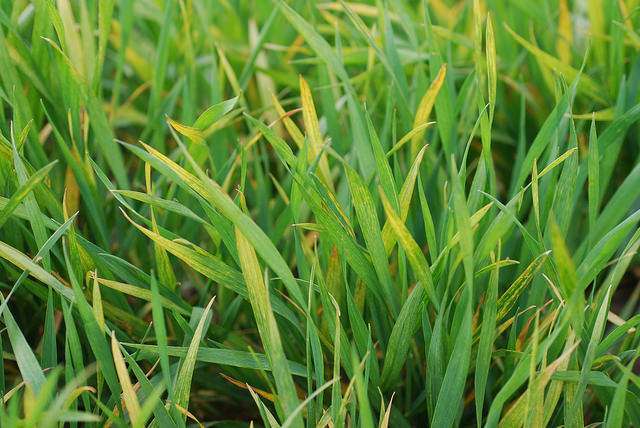
Wheat streak mosaic virus is one of the most damaging and costly diseases wheat producers encounter, but plant pathologists have recently uncovered a way for the wheat plant to defend itself against this particular virus and others.
Wheat streak mosaic virus is one of the most damaging and costly diseases wheat producers encounter, but plant pathologists have recently uncovered a way for the wheat plant to defend itself against this particular virus and others.
Patent-pending technology has shown success in disease resistance to wheat streak mosaic virus and triticum mosaic virus, among others.
MANHATTAN, Kan. – Wheat diseases caused by a host of viruses that might include wheat streak mosaic, triticum mosaic, soil-borne mosaic and barley yellow dwarf could cost producers 5 to 10 percent or more in yield reductions per crop, but a major advance in developing broad disease-resistant wheat is on the horizon.
John Fellers, molecular biologist for the U.S. Department of Agriculture’s Agricultural Research Service, and Harold Trick, plant geneticist for Kansas State University, have led an effort to develop a patent-pending genetic engineering technology that builds resistance to certain viruses in the wheat plant itself. And although genetically engineered wheat is not an option in the market today, their research is building this resistance in non-genetically engineered wheat lines as well.
“(Wheat viruses) are a serious problem,” Trick said. “Wheat streak mosaic virus is one of the most devastating viruses we have. It’s prevalent this year. In addition to that, we have several other diseases, triticum mosaic virus and soil-borne mosaic virus, that are serious diseases.”
Knowing how costly these diseases can be for producers, Fellers has worked on finding solutions for resistance throughout his career. As a doctoral student at the University of Kentucky, he used a technology in his research called pathogen-derived resistance, or RNA-mediated resistance—a process that requires putting a piece of a virus into a plant to make it resistant to that particular virus. Most of the viruses that infect wheat are RNA viruses, he said.
“The plant has its own biological defense system,” Fellers said. “We were just triggering that with this technology.”
Now Fellers, with the help of Trick, his wheat transformation facility and K-State graduate students, have developed transgenic wheat lines that contain small pieces of wheat streak mosaic virus and triticum mosaic virus RNA.
“It’s kind of like forming a hairpin of RNA,” Fellers said. “What happens is the plant recognizes this RNA isn’t right, so it clips a piece of it and chops it up, but then it keeps a copy for itself. Then we have a resistance element.”
Fellers compared the process to the old days of viewing most wanted posters on the post office wall. The piece of foreign RNA from the virus, which is a parasite, is one of those most wanted posters. Because the virus is a parasite, it has to seize or hijack part of the plant system to make proteins that it needs to replicate.
When the virus comes into the plant, the plant holds up that poster from the post office wall, recognizes the virus, and doesn’t allow the virus to replicate and go through its lifecycle.
A broad resistance goal
Trick said it wasn’t difficult to incorporate the RNA into the wheat, as it involved a standard transformation process where the DNA encoding the RNA was introduced into plant cells, plants were regenerated from these transformed cells, and then the transgenic plants underwent testing for disease resistance.
“The problem with this technology is the most wanted poster is only for one individual,” Trick added. “If we were trying to target multiple genes, we’d have to make another vector for a second virus, then create that transgenic, which we have done. So, we have different plants that are genetically resistant to wheat streak mosaic virus and plants that are resistant to triticum mosaic virus. We would like to get something that has broad resistance to many different viruses.”
Knowing again that the viruses are parasites that rely on part of the plant system to replicate, it may be possible to shut off these plant systems to prevent viral replication, Trick said, which in essence means making a most wanted poster for specific plant genes.
Fellers and Trick have made additional transgenic plants with a most wanted poster for these plant genes and tested their new plants for resistance to a number of wheat viruses.
“We’re now able to target barley yellow dwarf and soil-borne mosaic viruses,” Fellers said. “We’ve also done mixed infection tests with wheat streak mosaic and triticum mosaic (viruses), and our initial results now are that they’re all resistant. We’re very cautious, but our initial indications show we have come up with something that provides broad resistance to these four viruses. We thought it was important enough to file for a patent.”
Fellers said this work is a proof of concept, meaning it shows that researchers have an ability now to address these virus issues. The fact that the process uses genetic engineering would mean that getting broad-resistance wheat would take some time considering the public and industry would have to accept it first.
However, Trick said they are now pursuing a non-genetically engineered method that involves turning off specific plant genes using mutations. With this method, the researchers could develop the technology and incorporate it into the K-State breeding program without regulations.
“We would hope the turn around time would be quick, but it’s still classical breeding,” Fellers said of using mutations. “It’s a matter of developing markers and getting them in the varieties. We have been using Jagger and Karl 92, varieties that are already past their prime, so we have to get them in some newer varieties.”
The Kansas Wheat Commission has provided funding for this research. More information about K-State’s Department of Plant Pathology is available online (http://www.plantpath.ksu.edu). A video interview with Fellers and Trick can be found on the K-State Research and Extension YouTube page (http://youtu.be/mXiw78MpS0E).
By: Scott Eckert, County Extension Agent, Horticulture
Have you ever accidentally “weed whipped” a young tree with a string
trimmer? One cure for this is mulching. Aside from watering, few other
horticultural practices can ensure the survival and growth of your new
tree like mulching. Newly planted trees benefit from mulching, especially
during the first years of establishment. Besides preserving moisture and
moderating soil temperature, mulching controls competing weed growth
(including turf).
As important, mulch acts as a barrier to keep lawnmowers and string trimmers away from the tree trunk – a leading cause of damage to landscape trees. Mulch can be made of many products, but bark chips, wood chips, and compost are the most common. Mulch should be 2 to 4 inches deep in a 2-foot radius around the tree. Mulch should NOT touch the trunk. Do not create a “mulch volcano” around the trunk. Excess and high mulch around the trunk increases the moisture level around the lower part of the trunk that can lead to crown rot and tree death. A moist
environment around the trunk encourages harmful insects and disease as
well.
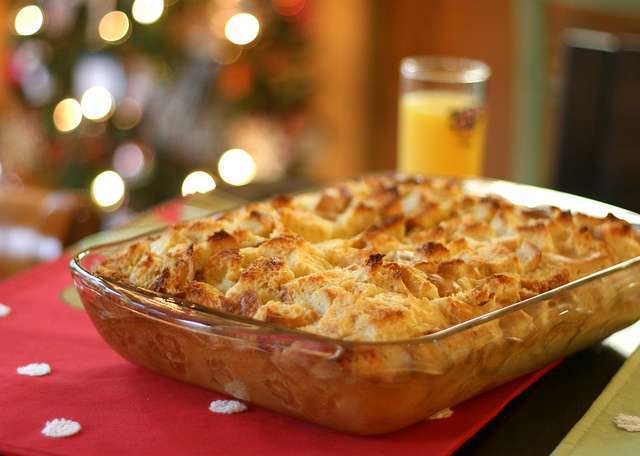
One way to prevent holiday stress is to prepare some of the food ahead of time and freeze it. From casseroles to cookies you can have a large portion of your holiday food prepared before the actual day arrives.
“Some things freeze better than others,” said Tammy Roberts, nutrition and health education specialist with University of Missouri Extension. “Things that may not have the quality you would be proud to serve include meringue, cream or custard pie fillings, mayonnaise, sour cream, and vegetables you would use for a salad such as lettuce, cucumbers, radishes and celery.”
Roberts said that uncooked potatoes and cooked pasta don’t often freeze well on their own but you can get great results with these foods in a casserole.
Roberts offered the following tips for quality home-frozen foods…