Sunday, January 18, 2026
Home Blog Page 4662

The Covered Dish: Apple pie moonshine

0

Well, I bet you never thought I’d be featuring an alcoholic beverage this week!

The good thing is it is a new recipe, at least to me it is.  There’s a bit of a story

behind this drink so here goes:

A year or so ago at our Uhrig family Christmas an intriguing bottle showed up at

the beverage table.  It said something about adults only and it looked like a

wassail.  Not wanting to miss any fun I filled my cup with this interesting drink.  I

was told what the recipe was but of course I didn’t remember them.  Then came

the fall barn party at Cousin Becky’s house.  I sat down with Cousin David and the

bottle was back again filled with yummy elixers.  I didn’t overindulge, but I must

say it was a nice closure to the evening.

This past week when I was discussing recipes I dropped Cousin David a note and

asked him for the directions for this nice winter ‘recipe’.  After receiving the

instructions I continued to ‘study’ on the ingredients.  When I realized that

Everclear is like straight old rot gut in the alcohol department I had to dig a bit

further.  Some of you are asking yourselves how I didn’t know what Everclear was.

Let’s keep in mind that I was raised Southern Baptist and a good knowledge of

liquor labels was rather taboo to say the least!

What I found was that you can substitute 100 proof Smirnoff Vodka in place of

the Everclear.  It has no taste and should work equally as well.  At least I won’t

feel as bad putting good ‘moonshine’ over the lips.

It’s the time of year when we also indulge of wassails of all sorts.  When I first

started writing I remember talking about the time I took wassail to work.  At lunch

I realized that no one had sampled any.  I found out that ‘lots’ of individuals do

not know what wassail is!   Wassail can be any mixture of fruit juices that are

mulled with spices for drinking.  It can have alcohol, or it can be non-alcoholic.

When I realized how much this recipe made I knew I had to cut it down for those

seeking only a small amount.  Therefore I have included two different

measurements one for the ‘big’ batch and one for a much smaller version.

This year as our family enjoys Thanksgiving dinner I’m going to serve a

spiced/fruited tea that is non-alcoholic.  There’s never a need for an appetizer

when you have so much food at Thanksgiving.  It’s also a nice alternative to food

for those not wanting to overindulge during the holidays.  As I always say nothing

beats a good conversation with a friend when it’s accompanied by coffee or tea.

This week has been a frantic one for me.  I got sick at work the day before a ‘big’

dinner party and then today I went in and prepared the wrong dishes on the

wrong day!   I will jump off the busy track Monday when I regroup and complete

my holiday décor and make a few goodies for the freezer.  When company is

coming, (which they are for us) I always get things made ahead of time so we can

sit and visit and not cook the entire time.

Have an outstanding week.  Hopefully I haven’t stepped on any toes featuring an

alcoholic beverage in the column!  Simply yours, The Covered Dish. Apple Pie

Moonshine

1 gallon apple juice

1 gallon apple cider

2 cups sugar

2 teaspoons cinnamon

1 liter *Everclear

Cinnamon sticks to garnish

Mix the apple juice, cider, sugar and cinnamon together and bring to a boil.  Cool

down and then add the Everclear.  Garnish glasses with cinnamon sticks.

A full batch will yield approximately 36 servings, 8 ounce servings.

To make only a fourth of the batch use the following amounts which will yield

approximately (9) 8 ounce servings.

32 ounces or 4 cups apple juice

32 ounces or 4 cups of apple cider

1/2 cup sugar

1/2 teaspoon cinnamon

Approximately 8 1/2 ounces Everclear

Everclear usually comes in 375 milliliters/12.7 ounces, 750 milliliters/25.4 ounces

or a liter/33.8 ounces.  Everclear is an extremely high ‘spirit’ and not sold in some

states.  Please research this product before preparing this beverage.  Everclear

also comes in different levels of proofs.

*100 proof Smirnoff Vodka may be used as a substitute.  Everclear is not a vodka.
Beef up your holidays

0

beef(Family Features) For many families, gathering around the table is as treasured a holiday tradition as gathering around the tree to exchange gifts with loved ones. With universal appeal, cuts of tender, juicy beef are ideal for a wide range of family-friendly dishes — from appetizers to special occasion holiday entrees.


If your seasonal celebrations and commitments have you pinched for time, opt for the convenience of home delivery. Starting with premium products, such as those available from Omaha Steaks, lets you create the perfect meal every time. Each cut of beef is perfectly aged and flash-frozen at its peak of flavor and tenderness, and delivered right to your door with a 100 percent quality guarantee.


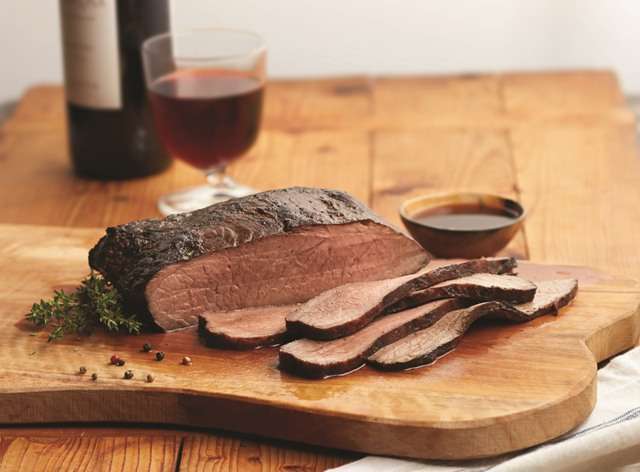
There are as many ways to prepare beef as there are cuts to choose from. The best approach depends on the type of flavor you want to achieve, and how you’ll ultimately serve the dish. One popular option that creates robust, hearty flavors perfect for holiday feasts is braising. This celebrated technique is featured in this Omaha Steaks family recipe for Braised Beef Brisket. Or, add some pre-dinner bites to your holiday spread with Bacon Wrapped Tenderloin Tip Appetizers, a savory recipe that is sure to be a hit among guests.


Find these and more beef preparation tips and recipes at www.omahasteaks.com.


Braising Tips

  • Braising (from the French word “braiser”) is a combination cooking method that uses both moist and dry heats. Typically, the food is first seared at a high temperature, then finished in a covered pot or pan at a lower temperature while sitting in some amount of liquid, which may also add flavor.
  • The purpose of braising is to break down the connecting tissues, enhancing the meat’s tenderness.
  • Some examples of cuts that are typically braised include:
    • Chuck (Chuck Eye Roast, Chuck Arm Roast, Chuck Shoulder Roast, Short Ribs)
    • Brisket (Whole Brisket, Brisket Flat Roast, Brisket Point Roast)
    • Shank (Cross Cut Shanks, Whole Beef Shanks)
    • Round (Top Round Roast, Bottom Round Roast, Eye Round Roast, Boneless Rump Roast)
  • First brown your roast using a large pan and some oil over high heat, seasoning the protein first.
  • Once the roast is browned, “deglaze” the pan using wine or some of the liquid that will be used in the braising process, to capture drippings from the pan that are loaded with flavor.
  • Once the roast is browned you will want to place it, along with all the liquid including the pan drippings, in a Dutch oven or deep roasting pan. It is very important to cover the top of the pan as tightly as possible so steam and pressure will build up during the oven cooking process.
  • The liquid for the braising process can vary depending on the dish you’re trying to make. For example, barbecue sauce would be used for a barbecue brisket, and beef broth would be used for a pot roast. Usually if using a thick liquid such as barbecue sauce you will want to thin it down with wine, broth or water. It will thicken as it cooks, and if it gets too thick it will burn.
  • You can also experiment with putting root vegetables in the braising pan along with your roast to create a complete meal and enhance the flavor.
  • The oven part of the process is usually done at 250°F and can vary in time from 3 to 8 hours, depending on what cut is being braised and how big it is. A general rule of thumb is that the protein will shred easily with a fork when it is properly braised.


Braised Beef Brisket

This recipe has graced the holiday table of the Simon family, the owners of Omaha Steaks, for generations.

Prep time: 30 minutes

Cook time 8 hours

Servings: 6–8

1          Omaha Steaks Brisket (3 pounds)

2          tablespoons canola oil

4          teaspoons Omaha Steaks All Natural Seasoning

2          cups diced yellow onion

2          tablespoons fresh chopped garlic

1          cup bottled chili sauce

1          package dry onion soup mix

1/2       cup beef broth

1/4       cup soy sauce

1/2       cup red wine


Thaw brisket overnight in refrigerator.


Heat canola oil in large pan.


Blot brisket dry with clean paper towel and generously season each side with 2 teaspoons seasoning.


Brown brisket in hot oil on both sides for about 2–4 minutes each side. Remove brisket from pan and place in crock pot, raised side braising pan or Dutch oven.


Add onion and garlic to hot oil and cook until transparent. Add remaining ingredients and bring to a boil. Pour sauce into crock pot, raised side braising pan or Dutch oven.


If using crock pot, cook on low for 6–8 hours. If using braising pan or Dutch oven, cover tightly with foil or lid and place in oven at 250°F for 6–8 hours.


Serve the same day or cool overnight in refrigerator before slicing and reheating in sauce.


Bacon Wrapped Tenderloin Tip Appetizer

Prep time: 20 minutes (plus time for thawing)

Cook time: 6 minutes

Servings: Approximately 32 pieces

3          pounds Omaha Steaks Tenderloin Steak Tips (#670)

32        Omaha Steaks Precooked Bacon Slices (#177)

1          jar Omaha Steaks All Natural Seasoning (#1141)

Round wood toothpicks


Thaw steak tips and bacon overnight in refrigerator.


Preheat oven to 450°F degrees.


Sprinkle each tenderloin tip with seasoning.


Wrap a slice of bacon around each tenderloin tip and push a toothpick through to secure bacon.


Place bacon-wrapped tips on baking sheet. Bake for 3 minutes; flip and bake an additional 2–3 minutes.


Serve immediately.

Autumn perfect for the trail, its lessons in history

0
john marshal

Not long ago we stopped along Union Street, where the Välkommen

Trail intersects, and looked both ways, as we do at nearly all the

Trail intersections, and it struck home that there is always something

pleasing about this walkway even if we’re not actually on it, striding

along or cruising on a bike. From most intersections the Trail moves

north and south in a kind of serpentine meandering, over lush grassy

slopes or along lines of high cedars, and among leafy little plots and

garden shrines that people have cultivated along the way.

And then there are the signs, more than two dozen special histori-
cal markers along the course, each a special commemoration in the

rich history of the Smoky Valley.

During this stretch of weather-to-be-outdoors, we applaud the

Trail, a crown jewel among Lindsborg public works projects. This

2.5-mile, $1.5 million bicycle and pedestrian trail was incubated on

Dec.28, 2000, when the City filed a request for a National Interim

Trail Use permit with the federal Surface Transportation Board, the

chief regulatory agency for railroads. The Trail was to be built on

the abandoned rail beds of the Missouri Pacific and Union Pacific

Railroads. Then followed a long stretch of wagering and haggling

with the railroads, and planning sessions among City officials and

local interests.

Construction of the Trail began in early March, 2006, with the

opening ceremony on July 29, a muggy Saturday morning. Even

with landscaping not quite finished, the project was thrilling, the

spread of its solid concrete, its trail heads, its lighting, its shaded

benches and rest stops. Here was government at work, helping a

community to be more livable, to polish its appeal. With each year

the Trail matures, acquiring patina, the reassuring comfort of func-
tion and familiarity.

LONG BEFORE the City officially opened the Trail, the Smoky

Valley Historical Association had adopted a project to erect 2 x

3-feet historical markers along its winding stretches with signs

placed at significant sites. Each sign is sponsored by a local busi-
ness or individual donors. The first two, unveiled in late May 2007,

mark the sites of the former Union Pacific and Missouri Pacific

Railroad depots.

“Without the railroads,” said the venerable Corky Malm,

“Lindsborg would not be here today. We hope the signs welcome

people to a historical trail of the people, businesses and industries

that have made Lindsborg what it is today.”

The Trail is a diary, an education in the area’s history along the

rail beds. The desire to build it led to a Historical Association Trail

Committee, led by Malm with members including John Riggs,

Ken Branch, Don Howe and board members Margaret Nelson,

Bill Carlson and Chet Peterson. Bertil Malm, Ken Swisher, Einar

Johnson and others have been involved, gathering at the sites to

help dig the holes for the sign posts and prepare a brief program for

installation ceremonies.

A couple of years ago, on May 12, a crew of about a half-dozen

wily, history-hardened veterans showed up at the Union Street

site to install a marker commemorating the Methodist Church in

Lindsborg. The sign gleamed with the likeness of a tomte from

its creator, the late Norman Malm, also a church member. (The

Methodist Episcopal Church, organized here in 1879, worshiped in

the Swedish Methodist Church until 1887, when members built a

church at 224 S. Main.)

Among the installation crew for this sign were Peterson and

Swisher, armed with a portable auger, men who had been part of the

installation of every sign along the Trail. They were there to make

short work of this one, their 25th, digging two 30-inch deep holes

for each leg of the sign’s heavy iron frame.

Short work became long work. The men had struck a solid layer

of chunk rock, once used to cushion the ties and rails in the days

when the railroads brought commerce to the Smoky Valley. They

had struck history, in hard form. It came loose reluctantly, a rock at

“It’s all my fault,” chuckled Bill Carlson, a regular with this vol-
unteer crew. He had worked for the railroads in Lindsborg decades

*

*

ago (“78 cents an hour…”). Carlson was on his knees and elbows,

reaching with gloved hands into one of the holes, removing rock and

dirt a handful at a time. At one point, as the men were about to break

through the layer of rocks, Peterson looked up at the sign, pointed

at reference to Nels Peterson (the fi rst pastor) and said “That’s my

dad’s uncle.” More history, in the fl esh.

Corky Malm, Norman’s brother, surveyed the scene. “Normally,

we’d come in and be done in 20 minutes,” he said. “This hard dig-
ging, it fi ts … kind of like Norman … to be hard-headed, like this.”

IN JUNE, 2010, the Historical Association published an updated

edition of the illustrated booklet that documents its Trail signage

project. The free publication contains photographs and small nar-
ratives for 23 of the Trail’s signs and the community history that

the project celebrates. The original booklet, published in June 2007,

listed 17 signs. When the Association fi rst discussed a marker proj-
ect for the Trail, the goal was ten signs.

A year later, in May 2011, installation of a Trail sign with the title

“Lindsborg’s Boxcar Children” carried a candid and unswerving

message about the impact of railroads in the community. That sign

was erected at the location of a “railroad boxcar,” which served

as home for Martin and Frieda Opat and their family for nearly a

decade, from 1930 to 1939.

A special signifi cance came with this sign; the railroads brought

life to the early, emerging towns and cities of the Plains, and to

Lindsborg, where Martin Opat came to work for the railroad and to

raise a family – one that would ultimately include nine children, all

boys, all grateful that the railroads had provided work and, in their

case, shelter. They would become prominent, productive members

of the community.

The Trail’s historical markers are an affectionate, anecdotal

chronicling of more than a century in Lindsborg and the Smoky

Valley. They are the living enterprise of men and women who want

us to know how we have lived and died, prospered, perished, or

simply existed by nature’s quirky authority.

The Historical Association signs and sponsors (in parentheses)

are:

– A Brief History of Early Lindsborg (Lindsborg Community Foundation)

– Terrible Swedes (Lindsborg Quarterback Club)

– Bethany College (Wallace Chevrolet of McPherson)

– Birger Sandzén (Peoples Bank and Trust of McPherson)

– Messiah Chorus (First Bank of McPherson and Assaria)

– Bethany Lutheran Church (Doris Johnson Stump)

– Railways to Highways (Mid-Kansas Co-op)

– The Power Plant (Dauer Welding and Machine)

– Missouri Pacifi c Depot (Hemslöjd, Inc.)

– Site of Many Uses (Curtis and Jill Enterprises, LLC, dba Anderson Body Shop)

– Home and Studio of Anton Pearson (Corky and Deloris Malm)

– Hagstrom Manufacturing Company (Lindsborg Concrete Products)

– Crossing the Smoky (Midway Motors of McPherson)

– The Swedish Pavilion (Dr. Duane and Nancy Fredrickson)

– Smoky Valley Roller Mill (Lindsborg State Bank)

– Crescent Flour Mill (Scott’s Hometown Foods)

– Kansas Pacifi c Depot (Farmers State Bank)

– Red Barn Studio and Museum (Lindsborg Lions, Kiwanis and Rotary service

clubs)

– Messiah Lutheran Church (members of Messiah Lutheran Church)

– Hobo Camp on the Smoky (members of the Trail Sign Committee)

– Art in Lindsborg (Ron and Loren Dauer dba Town and Country Repair)

– Evangelical Covenant Church (members of Evangelical Covenant Church)

– Lindsborg Public Schools (USD 400, Smoky Valley School District)

– Lindsborg’s Boxcar Children (E-M Sand and Gravel and the family of Edward

Opat)

– Trinity United Methodist Church (Norman Malm Memorial)

No better time than autumn to enjoy them.

*

*

*

– JOHN MARSHALL

Beef and pork quality assurance training December 2

0
credit -NDSU Ag

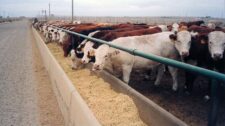
            LINCOLN, Neb. — University of Nebraska-Lincoln Extension will be offering a Beef Quality Assurance and Pork Quality Assurance recertification and training Dec. 2 at the Lancaster Extension Education Center.


            Registration and evening meal will begin at 5:30 p.m. with the programs beginning at 6:15 p.m.


            Participants will complete an interactive training and quiz in order to certify/recertify. Each session will last about two hours.


            Rob Eirich, UNL Extension educator and Nebraska BQA director, will teach BQA. There is an additional $20 fee for the BQA certification (checks can be made payable to Nebraska BQA). This certification is good for two years. The BQA certification is free to youth and full-time college students.


            Amy Schmidt, UNL assistant professor, livestock bioenvironmental engineer and Nebraska PQA+ trainer, will teach the PQA session.


            There is no additional fee for this certification, and it is good for three years. The PQA certification is the adult certification only.


            This program is designed for anyone who wants more information on good production practices of beef and/or pork and for persons who raise, market, and/or sell beef and/or pork animals. There will be time to visit with the speakers on an individual or small group basis.


            Cost is $10 and includes the meal and all materials. Pre-registration is requested by Nov. 26 to ensure an accurate head count for the meal. Please indicate attending the BQA or PQA session.


            To register or obtain more information, contact: Lindsay Chichester, Saunders County, 402-624-8007 or Cole Meador, Lancaster County, 402-441-7180.

Viburnums shine into Fall

0
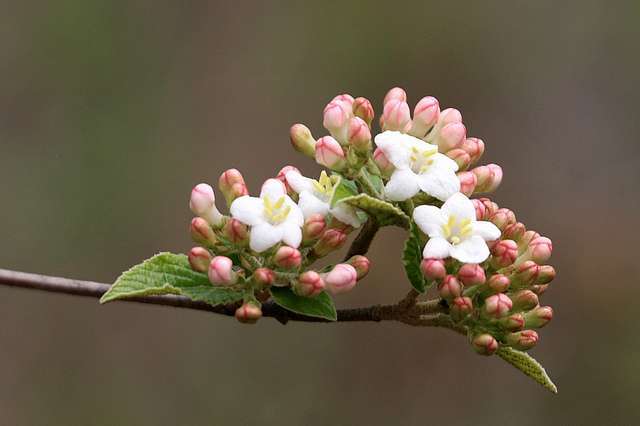
Burkwood Viburnum Blossom

LINCOLN, Neb. — There’s a lot to love about viburnums. Though they are known for their large, showy (and sometimes fragrant) spring blossoms, their ornamental characteristics extend far beyond that. Many produce magnificent berries late summer into fall, most have outstanding fall color and some have foliage that persists all winter.


In the face of recent drought, viburnums have fared far better than more commonly-planted shrubs like hydrangea and burning bush. And if deer are a problem in your locale, another great quality is that viburnums are rarely bothered by them. Ornamental characteristics really vary within this species and new varieties are being developed all the time, but here’s a few that really shine.


The fruits of Siebold viburnum (Viburnum sieboldii) change from rose to red to black. It’s one of the largest viburnums, growing to 20 feet or higher. It has a rigid growing habit and is worth planting alone as a specimen.


American cranberrybush viburnum (V. trilobum) gets yellow to reddish purple fall foliage and bright red fruits that may hold from September into February. It is similar to European cranberrybush, but has better fall color and is more resistant to aphids. A dwarf cultivar, ‘Compactum’, grows to 5 feet by 5 feet.


Nannyberry viburnum (V. lentago), a Nebraska native, is tolerant of almost any conditions; sun or shade, moist or dry soils, planted in a border or as a specimen. Fruits go through a series of color changes. Green when they first appear in September, they may turn yellow, rose and pink before becoming bluish black. They often persist into December. Fall foliage may be red, but often the leaves fall off while they are still green. Its one weakness is susceptibility to mildew, so it should be planted where there is good air movement.


The fruits of arrowwood viburnum (V. dentatum)are also bluish black September through October and are favored by birds. Plantsman Michael Dirr calls this viburnum “possibly [the] most durable viburnum for midwest… in Nebraska it withstands the high pH, heavy soils and the vagaries of that climate.” The dark green leaves are glossy and turn yellow to red in the fall.


On wayfaringtree (V. lantana) the fruits go from yellow to red to black, often with all three colors present at the same time, making it showy in fall even though its leaves rarely develop good fall color. Planting several varieties in close proximity will increase fruiting. It can also withstand difficult, clayey soils. The cultivar ‘Mohican’ is slightly smaller, 8.5 feet by 8.5 feet, than the mature size of 13 by 13 feet for the species.


Another viburnum outstanding for its fruits is linden viburnum (V. dilatatum). Drupes are bright, cherry red September through October, sometimes drying and persisting into December when they look like withered red raisins.  Its leaves also hold late and can turn a bronze or burgundy color.


Mapleleaf viburnum (V. acerifolium)is one of the smaller viburnums, growing 5 feet by 3.5 feet. Fall foliage is beautiful, ranging from pink to orange to purple. Fruits are black, often remaining into the winter. It can grow in almost full shade and, unlike most viburnums, can also tolerate dry conditions.


Viburnum ‘Copper Ridges’ also has beautiful fall foliage; it begins copper and changes to a deep maroon.


Though its foliage doesn’t tend to take on fall color, the dark green, leathery leaves of lantanaphyllum viburnum, (V. x rhytidophylloides)persist into winter. The cultivar ‘Alleghany’ has somewhat smaller and even more persistent foliage. Fruits turn from bright red to black. The deeply ridged foliage of ‘Willowwood’ also may persist into the spring.


Leatherleaf viburnum (V. rhytidophyllum) is aptly named for its sturdy leaves with deep wrinkles. Planted in a protected micro-climate, it may remain green all winter. Fruits are red to black and hold into December. This species is tolerant of hot, dry, sunny locations.


Here’s a few other characteristics and preferences you might want to keep in mind in selecting a viburnum. If the site is in heavy shade, mapleleaf and arrowwood viburnum are good choices. For dry soils, possibilities include nannyberry and mapleleaf. Arrowwood viburnum can withstand heat better than most varieties and if the site is wet, European cranberrybush viburnum will do well.


To attract wildlife, the fruits of nannyberry, Koreanspice, arrowwood, Sargent and American cranberrybush