Wednesday, February 11, 2026
Home Blog Page 434

Property and taxes (1)

0
john marshal

Painful as they may seem, property taxes sustain our communities, a life source for cities, counties and school districts. May brings the deadline for paying them, a ritual with roots deep in our state constitution: Article 11, Section 1 commands “a uniform and equal rate of taxation” on property.

This principle was chiseled into the state Constitution at Wyandotte in July, 1859, and became territorial law 18 months before Kansas joined the union of states.

Pioneer legislators believed that a tax on property was essential to fuel public services in growing settlements across the plains. It was the way to put bridges over creeks and rivers and to carve roads from the trails. It would pay the schoolmaster and the sheriff and keep the fire wagon ready.

A “uniform and equal” levy was to spread the cost of community maintenance and improvement. It was thought fair, then, because the extent of the tax reflected the productivity of the land, not its market value, real or imagined. And productivity was the promise of Kansas.

But promise is fickle. A tax written into the Constitution to help make life better became a source of exasperation, the scorn of farmers, merchants, nearly anyone else who owned even a sliver of property.

After the Homestead Act (1862), land became a formative resource for farmer, rancher, and town booster. The value of property would be increased by “improving” it. Farms became productive and ranches fattened cattle. Townships sprouted towns and towns became cities.

Land was valuable for what was under it as well as what could be grown in it or built on top of it. Coal, oil and gas had been discovered as early as 1855 but continuous commercial ventures were not producing until the 1890s in eastern Kansas, and the 1930s in the west.

The value of land fluctuated against demands and uses so unpredictable that no law of appraisal could reflect reality. Commerce now included coal, oil and gas. Irrigated farm land and feed lots expanded in the west and suburbs sprawled in the east. Even the keenest assessors could only hack at the edges of the bewildering thicket of land use and value. The property tax had become the torture of politicians and constituents. Its practical application defied law, flying in the face of its keeper, the Constitution.

*

In 1980, a year into John Carlin’s first term as governor, the Santa Fe Railway sued the Kansas Department of Revenue, claiming that the railroad was assessed for property taxes at rates higher than other businesses.

At that time, property was to be appraised at “fair market value” and assessed for taxing at 30 percent of that value. That wasn’t happening. Only utilities paid taxes on a 30 percent assessment because in their case, the state – not counties – did the assessing.

County appraisers could not keep up with the 30 percent law. The ratio of sale prices (market value) to appraised value – known as the sales-assessment ratio – rarely approached even a double digit, much less 30 percent in any city, township or county.

Four years after the suit was filed, the railroads and the state arranged through federal court for tax rates lower than proscribed by law. The courts ruled that

railroads were entitled to lower rates because county assessments were far below state levels.

That seemed to settle the trouble between railroads and the state. But what of others?

In 1986, the last year of his two terms as governor, Carlin spent much of his time campaigning for six amendments to the Kansas Constitution. One of them ordered (rather than permitted) the Legislature to rewrite farmland assessment laws and enact use-value farmland appraisals; thus, farmland would be appraised by its ability to produce income.

The amendment also provided for classification of real and personal property with assessments at different percentages of value; farm machinery and equipment, merchants’ and manufacturers’ inventories, and livestock were exempt.

The voters approved.

(Next: Reappraisal)

Sweet N’ Sour Meatballs

0

What an outstanding weekend! I saw folks I haven’t seen for years in Northeast Missouri. We told stories, enjoyed great food, had perfect weather, what more could you ask?

My speaking engagement back in Lewistown went well and everyone was so very helpful. I do hope some of the gals in attendance read this column because I aimed to give an additional tip for my recipe, and totally forgot!

I wrote a new recipe to debut for the women’s event, at the Methodist church. It’s actually the first sweet n’ sour dish I’ve written down. What I hope folks will try it #1, but also use it as a base for preparing their own creative sweet and sour dishes. What I ‘totally’ forgot to mention on Saturday, was the addition of grated fresh ginger! How much, again like the addition of the vinegar in this recipe you are going to want to use what pleases your palate. I would probably grate some into the meatballs and into the sauce. In the meatballs I would add about a thumb’s worth of fresh ginger. After you cook the meatballs see what you think. I have a feeling you could probably put the thumb’s worth in the meatballs and a good tablespoon in the sauce. (You will need a zester/microplaner for this.)

For serving purposes I like to use Basmati rice under the sweet and sour. Lots of different rice, like long grain will work. The reason for Basmati is because it’s not as starchy as long grain or medium grain. Don’t forget to rinse the rice before cooking. One time at client came back to a food pantry to tell them how horrible the rice turned out, which they had received from the pantry. When the individual was told to wash the rice before cooking it, she truly did, with dawn! Perhaps we should be sure to say: ‘Rinse the rice.’ This way something like this never happens again, even though it certainly is good for a chuckle or two.

After the event concluded on Saturday, I went out to see Dad again at the care center. We began to talk about the good ole’ days in the park, when we would have ice cream socials. All the churches in town brought pies or cakes and then a certain number of people were charged with making homemade ice cream. I can see those freezers all lined up on a table with rugs wrapped around them holding the ice around the freezers. But the part I remember most were the strings of yellow watt bulbs strung high above the tables. It looked like a portrait of what rural life was all about. I wonder if I could get enough Lewistown friends to pull this off again? Hm…certainly sounds worth trying in my book. Maybe we could even get an ice cream sponsor?

After the event on Saturday, I stated I would return to Lewistown this summer for a ‘canning’ class. I’m already planning! I get all excited just thinking about it. Give me a couple of weeks and I’ll have a plan of attack ready to roll. Many many thanks to my hometown of Lewistown, MO, along with friends from Ewing, LaBelle, Monticello and other surrounding towns. You folks made my day!

I’ve got another cookie recipe I’m working on, we’ll see if it’s ready to debut next week or not. Until then, enjoy each day, and keep smiling, it certainly makes folks wonder, doesn’t it. Simply yours, The Covered Dish.

Sweet n’ Sour Meatballs & Sauce

2 pounds of pork sausage, ‘hot’, (Can’t tell it’s hot in meatballs)

2 pounds Boston Burger, 60/40 beef pork blend

3 (4-5 inch) sleeves Ritz crackers or approx.1 1/3 cups

2 Eggs

1 can (20 oz.) crushed pineapple, drain & save juice, drain extremely well

1 1/2 cups mini sweet peppers (8)

1-1/2 cups finely chopped sweet onion

1 tablespoon Teri Yaki Sauce

1 teaspoon dry mustard

1 teaspoon black pepper

1/2 cup milk or half and half

*Optional, grated fresh ginger (see notes above)

No salt used due to crackers and Teri Yaki Sauce.

Measure Meatballs by 2 tablespoon scoops. Which should yield around 75 meatballs. Bake at 350 degrees on a parchment or foil covered jelly roll pan. Approximately 20-23 minutes.

Vegetable Blend

Olive oil, approx. 3-4 tablespoons

1 very large onion, cut into chunks

1 green, red & yellow pepper, cut into chunks

Drained chunk pineapple, (20 oz.) juice reserved

Sweet n Sour Sauce

All reserved pineapple juice from crushed & chunked pineapple

Should equal 2 1/2 cups.

1 3/4 cups low sugar additional pineapple juice

1 tablespoon brown sugar

1/2 teaspoon black pepper

1/2 – 1 teaspoon Slap your Mama Cajun spice, can use your choice

1 tablespoon Teri Yaki Sauce

2 1/2-4 tablespoons cider vinegar

4 tablespoons cornstarch and 1/2 cup cold water, whisk smooth

*Optional, grated fresh ginger (see notes in column)

In a large skillet place olive oil over medium heat. Sauté the onion and peppers, when just about done add the chunk pineapple. Pour in all juices mixing in everything except the cornstarch and water. Heat until it’s not quite to a boil, thicken with the cornstarch slurry. Serve meatballs and sauce over white rice, I like to use Basmati, or regular long grain, rinse well before cooking.

For a family of 4 you should have enough meatballs for 4, yes, I said 4 meals! On the sauce I prefer it’s made solely with pineapple juice. First time I used partial orange, and preferred all pineapple. On the meat mixture you could also use ground ham instead of sausage, great way to use up holiday hams!

We accompanied the dish with a small side salad.

TIPS & SHORTCUTS

When you are thickening a sauce or gravy you will use 1 of 2 approaches:

Dry Slurry: When you work a thickening agent into drippings in a skillet or

cut butter into a dry product.

Wet Slurry: When you work thickening agent into something like water or milk before thickening a sauce, etc.

Rice: Usually; I recommend rinsing most rice before it is used. Basmati is one of my favs, but you could also use Jasmine or regular long grain rice. Rinsing removes extra starches so the rice isn’t as sticky. If you use Basmati, make sure it is from India, not the US. There is a huge difference in the two. Any time you stir rice be sure and use the handle of a spoon or perhaps a chop stick. Unless it’s a dire emergency stir clear of instant, I refer to it as ‘emergency’ only.

For sampling purposes I’ve used tidbit pineapple, and small pieces of pepper and onion that can easily be ladled over the meatballs.

Make all meatballs ahead of time and freeze. OR reheat already cooked meatballs in a steamer. Cut and dice all vegetables, draining juices, etc. ahead of time. This will make the cooking process a great deal quicker, especially for Sundays after church!

Vinegar application for sweet & sour: Most of the time people will use good ole’ cider vinegar, but that doesn’t mean you cannot change it! Also; the amount of tartness to the dish is up to the cook, so start with the 2 1/2 tablespoons and then you can add. Most times I do not go past 4 tablespoons.

But I want a red sweet and sour, OK, the usual fix is to use ketchup for the coloring. So far, I do only the color of the fruit I’m using, I would start with a couple of tablespoons and build from there, sampling as you go.

Strategies of the Hunt

0

My supervisor from years ago lived in a community along Kannapolis Lake. He would tell me stories about the numerous deer that were always in his backyard, and scoff at my stories of unsuccessful deer hunts. “I don’t know why you don’t just come down and shoot a deer from my back porch” he would say. Obviously that would have taken little planning but would probably have been illegal and at very least would have been horrible public relations, and the sight of me dragging a field dressed deer through his back yard would possibly have gotten him run out of the community on a rail. Few non-hunters understand the strategy and planning that are part of successful hunting. Seldom is hunting merely climbing into a stand or blind, shooting game then going home.

Case in point; a couple turkey seasons ago, I was out for the first time that year. I often hunt on my sister’s land and have a general knowledge of where the turkeys there usually roost. But, having disobeyed the first rule of turkey hunting and not done any scouting whatsoever, I purposely arrived just at sunup so I could see ahead of me as I walked. I parked in a hay field, ducked under the fence and slowly strolled into a woodlot through which a partially dry stream cut like a sidewinder snake. I hadn’t taken a dozen steps when a gobbler’s booming report echoed just ahead of me. Not good! I had probably spooked the resident turkeys already and hadn’t yet even seen them.

Now the planning and strategy came into play. I knew where those turkeys were headed but there was more than one way for them to get there. Should I quickly backtrack and try to get around and ahead of them to ambush them elsewhere? It was still early in the season and I now knew where they roosted, so I choose to leave quietly, and come back to set up early that afternoon to try and intercept them on their return.

I arrived about four that afternoon and walked to the far side of that same woodlot, where I settled in amongst a group of fallen trees where Joyce and I had once begun building a nice deer stand until the trees blew down in a bad storm. Now the big cottonwood trunks lay in a twisted mass, perfect for harboring a hopeful turkey hunter. Around 5:30 black specks finally appeared in an alfalfa field at least a quarter mile away. They seemed content to graze the evening away there with little regard for my hen decoy, which I knew the sharp-eyed toms could see. It was strategy time again; I was near their roosting area and even if their mood changed and they came my way soon, that was no guarantee of a shot. Turkeys are easily spooked from the area if pressured to hard or too often, and if I was caught there without getting a shot, I would risk spooking them badly (again) when I left. I opted to back out quietly and plan for a better ambush point another day.

Sunday afternoon found me tucked in under a big cedar tree at the far end of the alfalfa field where the turkeys were grazing the evening before. This seemed to be a better ambush spot than where I’d been, and would not be so hard to get away from without spooking the group if things didn’t work out (again.) I sat overlooking the alfalfa and had a hen decoy placed twenty yards away at about the two o’clock position. I could see very well to my right but not very far to my left, as some clumps of weeds separating the fields blocked my view. After an hour and a half, I noticed the cows below me looking intently at something to my left. I’m not known for my patience, so I eased out of my camp chair onto

my hands and knees to creep forward and have a look around. I’d not crawled a foot when the bright red face and fanned-out tail of a strutting gobbler stepped silently from behind the nearest clump of weeds barely ten feet away. The rest is history. He had crept silently in to check out my decoy, and would probably have given me a good shot If I’d have stayed glued to my seat another minute. My planning and strategy put me spot on for location, but my impatience busted me again!

Wind direction is not a factor when hunting turkeys, but when hunting most wildlife, wind speed and direction plays a huge role, along with time of day, location, weather patterns and even moon signs. Yes, hunting is a game of planning and strategy, and when all things come together correctly, the reward is often meat for the freezer….Continue to Explore Kansas Outdoors!

Steve can be contacted by email at [email protected]

Confused farm guard dog

0
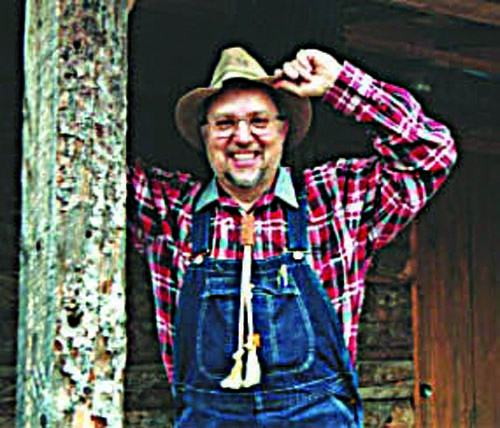
Thayne Cozart
Milo Yield

Back in the mid to late 1900s rural salesmen were as common as fleas on a dog. They traveled the dusty or muddy rural backroads every day, stopping at farm houses along the way, peddling seed, feed, minerals, tools, lubricants and full array of rural needs. They even targeted the farm housewife with brushes, brooms, vacuums, cleaners, soap, beauty products, and a host of other household needs.

Sometimes — if their product line wuz needed by the farmer, rancher, or housewife — these salesmen were welcomed with open arms. Other times — or, more often than not — they were seen as uninvited, persistent, persuasive, or pushy pests who imposed on productive daylight time.

Those were also the bye-gone days when about every farmstead had a nondescript cur dog serving as the enthusiastic guard dog of all the premises and property belonging to its master.

These guard dogs were the bane of rural salesmen because all of them had plenty of bark as warning, but some of them also included bite in their protection arsenal. Arriving at a farm home was akin to sales Russian roulette. The salesman just never knew what to expect.

All the above is precursor to this story about the experience of one rural salesman, ol’ Huck Stirr. He’d been in the rural sales game for many years, switching from product to product every few years. At the time of this story, he wuz peddling a well-known brand of garden seeds and products.

It wuz in the spring, just before garden planting time. Huck wuz working a new unfamiliar territory. It had been a pretty unproductive sales day when he arrived at a home he’d never visited before. From the road, it looked promising. The house wuz freshly painted and neatly landscaped. The front yard sported a white picket fence with a gate and sidewalk to the wooden front porch. He could also see a freshly-tilled garden spot in the backyard.

Inwardly, he hoped the husband wasn’t home and that he could make his sales pitch to the housewife, who he figgered wuz Chief Gardener.

So, Huck gathered up his sales kit, took a deep breath, mustered up a smile and headed to the house. He opened the gate and headed up the sidewalk. He wuz about half-way to the porch when out from under the porch charged a huge cur dog. It wuz all teeth — snarling loudly and going full-bore when it launched itself towards Huck’s throat.

But then, just as Huck braced himself for the impact and mentally prepared himself for the worst possible outcome, the beast did a complete backflip and meekly scrambled back under the porch.

As Huck shakily arose off the sidewalk, the man of the house ambled out the front screen door and stood there with his hands of his hips.

Before he could say a word, Huck yelled, “Sir, what’s the story on that massive guard dog? I thought I wuz a goner.”

The farmer drawled, “Well, Mister. I’ve had him tied up for years and I just unsnapped his chain this morning and he ain’t figgered it out yet!”

***

Ol’ Huck’s story has an important moral to it if you stop to think about what happened.

How many of us are like that guard dog — held back by unseen restraints from doing what are capable of doing? It’s easier to not go beyond familiar custom and routine, so we never know the full extent of our capabilities.

***

I heard about a young farmer whose marriage went into the dumpster when his wife asked if she could have a little peace and quite while she cooked the evening meal.

Her hubby obliged her by taking the battery out of the smoke alarm.

***

We still need runoff in this area badly, but we still welcomed two nice showers this week — one with a quarter-inch of rainfall and the other about one-half inch. The showers were good for my garden and my reseeded portion of our lawn.

***

I read this week that scientists are making progress toward using genetic manipulations to re-create animals that have been extinct for tens of thousands of years. That’s interesting science, but I have a better idea for spending those research dollars.

I suggest that geneticists redirect their efforts toward re-creating humans who have lost their common sense. There is increasing evidence that more and more humans no longer have common sense.

For instance — the folks who protested their cause by blocking the Golden Gate bridge is San Francisco have clearly lost their common sense. Same with those blocking streets in New York City. So have those wayward folks who were caught chanting “Death to America.”

If those folks had a lick of common sense, they’d realize that America is one of the few nations on this spinning globe in which they could hold such protests.

Personally, I’m proud that rural folks have steadfastly maintained their common sense — and use it daily.

***


Words of wisdom for the day: “Remember, just because you went to college doesn’t make you smarter than anyone else. Common sense doesn’t come with a degree.”

Have a good ‘un.