Sunday, February 1, 2026
Home Blog Page 4493

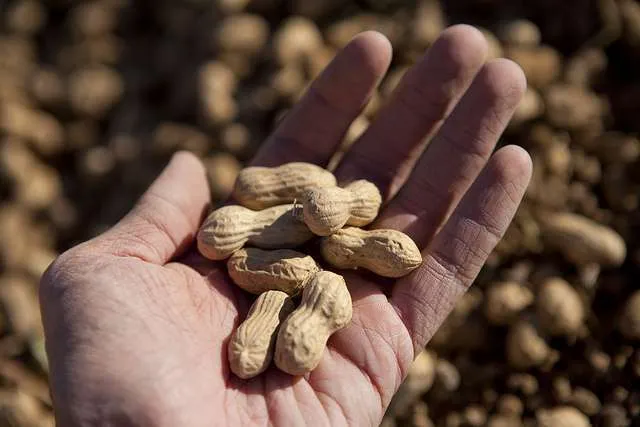
March is National Peanut Month

0
Photo credit: uacescomm

Christeena Haynes, MS, RD, LD, former Nutrition and Health Education Specialist, Dallas County, University of Missouri Extension

According to the Peanut Institute, peanuts are the most popular nut choice in the U.S. Not only are peanuts well liked, but they offer many health benefits as well. Despite the fact that peanuts are high in fat, they are still an excellent food choice because they provide a variety of important nutrients.

Peanuts contain protein, fiber and healthy monounsaturated and polyunsaturated fats, all of which improve health and lower the risk of chronic disease. In a study conducted with over 15,000 peanut consumers, it was determined that they had higher levels of vitamin A, vitamin E, folate, magnesium, zinc, iron, calcium, and dietary fiber than people who did not eat peanuts. These nutrients are needed by the body to function appropriately. Peanuts are high in arginine, an amino acid that is a precursor to nitric oxide, which helps decrease blood pressure. They contain resveratrol which improves longevity and performance as well as reduces inflammation. Peanuts also have phytosterols that work to lower cholesterol and may inhibit cancer development…

There are even more benefits to eating peanuts! To learn more, see the full version of this article at http://missourifamilies.org/features/nutritionarticles/nut450.htm

Statewide Food Drive Campaign Aims to Raise 85,000 Meals for Kansas Families

0

Manhattan, Kan. – The Neighbor to Neighbor statewide food drive launched today to support our neighbors in need and reduce hunger in Kansas communities. Harvesters-The Community Food Bank in Topeka, Kan. hosted state leaders, including Governor Sam Brownback and Secretary of Agriculture Jackie McClaskey, representatives of the food banks of Kansas, Dillon’s Food Stores employees and members of the Kansas agriculture community.

The food drive is a collaborative effort by the Kansas Department of Agriculture, Dillon’s Food Stores, Harvester’s – The Community Food Network, Kansas Food Bank, Second Harvest Community Food Bank and the Kansas agriculture community.  The goal is to raise 85,000 meals for Kansas families during the food drive, Mar. 1 – Mar. 31. Kansans can contribute to the campaign at Dillon’s Food Stores statewide, at other community locations across the state or through the virtual donation portal, http://ksn2n.harvestersvfd.org.

Governor Brownback signed a proclamation declaring March and Kansas Agriculture Month and March18 as Kansas Agriculture Day.  He also stressed the importance of serving our neighbors in need as well as educating all Kansans about how the food they eat transitions from farm to fork.

“Hunger is everywhere across Kansas – in rural counties, suburban communities and urban neighborhoods,” said Governor Brownback. “It is important to do all we can to help those in need because when Kansas families and children have enough to eat, our communities are stronger and our state is stronger.”

Governor Brownback teamed up with staff from the three food banks, Secretary of Agriculture Jackie McClaskey and representatives from Dillon’s Food Stores to pack meals to be distributed to families in need.  Members of the Kansas agriculture industry, including Kansas FFA officers and commodity organization representatives also participated.

“At Dillon’s, our number one community priority is to help bring food and hope to those living with less,” said Sheila Lowrie, Dillon’s Stores spokeswoman.  “That’s what makes the Neighbor to Neighbor Kansas Food Campaign especially meaningful for us.  We are proud to continue this commitment with the wonderful support of our local food banks and the generosity of our Dillon’s customers and associates throughout our stores in Kansas.”

Dillon’s Food Stores made an initial donation of 2,500 pounds of non-perishable food items at the kick-off event. To learn more about the Neighbor to Neighbor statewide food drive and ways to participate, visit agriculture.ks.gov/ksagday.

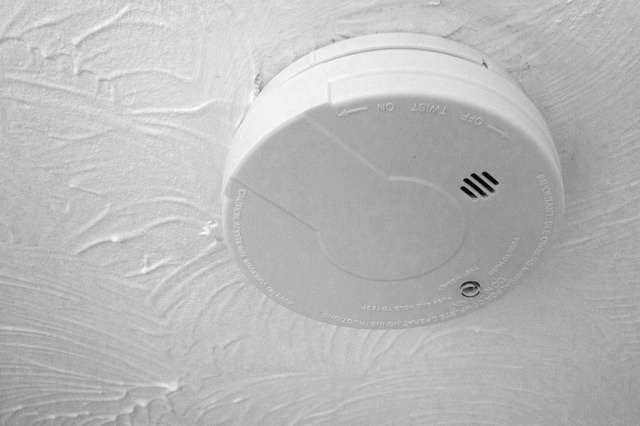
Test your smoke alarms – It could save your life

0
Rob Allen

Sherry F. Nelson, LCSW, Human Development Specialist, Marion County, University of Missouri Extension

Each year more than 4,000 Americans lose their life to fire and approximately 25,000 are injured. At least 80 percent of fires in the U.S. occur in the home; however, there are many things we can do to prevent these fire tragedies and injuries. Testing our smoke alarms is one of the most critical things we can do to protect ourselves and our loved ones. All homes should have smoke alarms, an escape route and fire extinguishers on hand.

Smoke alarms: There should be a smoke alarm in every bedroom. Additionally having a smoke alarm on every level of your home is a must and you should test your smoke alarms monthly. Experts recommend that you change your batteries twice a year, in the fall and spring when we change our clocks for daylight saving time.

Escape plans: Having an escape plan and practicing the plan has been shown to save lives because you and your family will know exactly what to do in the event of an emergency. Practice the plan twice a year with the whole family. Be sure to know two ways out of your home and have a designated meeting place outside. Remember that once you are out of the home, have a neighbor call 911, and DO NOT go back inside. Be sure to educate babysitters/caregivers of your escape plan so they are familiar with it as well.

Fire extinguishers: Having fire extinguishers on each level of the home is a must for every homeowner or renter. An ABC type extinguisher is best because it can be used on most types of fires…

For more safety tips, see the full version of this article at http://missourifamilies.org/features/housingarticles/testsmoke.htm

Sleep – Are you getting enough?

0
Photo credit: That Dam Kat

Jinny Hopp, former Human Development Specialist, Jasper County, University of Missouri Extension

Research in the area of sleep has determined that as many as two-thirds of Americans lack enough sleep. A National Sleep Foundation poll found that 43 percent of Americans between the ages of 13 and 64 say they rarely or never get a good night’s sleep during the week. More than 60 percent say they experience a sleep problem (such as snoring, waking in the night or waking up too early) every night or almost every night. The Centers for Disease Control & Prevention has called insufficient sleep a “public health epidemic.”

Contrary to common belief, sleep is not a time when the mind and body shuts down. According to the National Sleep Foundation, “sleep is an active period in which a lot of important processing, restoration, and strengthening occurs.” Sleep serves critical functions and it is necessary for optimal health and well-being.

Over time, lack of sleep can lead to stress, depression and mental and physical exhaustion. We know that when we are not well-rested we do not perform at our best. Most adults need seven to nine hours of sleep each night. Some people may need as few as five hours or as many as 10 hours of sleep. Children require even more sleep. Both children and adults can use naps to get the total number of hours of rest they need. The focus here is on ways that adults can meet their need for rest. Here are some tips for improving your sleep…

For more helpful information and tips to improve your sleep, see the full version of this article at http://missourifamilies.org/features/healtharticles/health49.htm

KU to activate public address system Tuesday as part of statewide tornado drill

0

LAWRENCE — Kansas emergency management organizations and the National Weather Service will conduct their annual Statewide Severe Weather Tornado Drill on at 1:30 p.m. Tuesday, March 3. The University of Kansas will participate in the drill by activating the university’s emergency public address system at that time.


The activation of the KU system will begin with a scripted message indicating “This is a test” and that “no action is required” by KU building occupants. Also at that time, Douglas County Emergency Management will sound tornado sirens across the county, some of which are audible on campus. Once the script is read, the drill will be over.


Commercial broadcast outlets may take part in the drill with test messages. Additionally, National Oceanic and Atmospheric Administration Weather Radios that are set to receive the “TOR” tornado code will activate during the test.


The purpose of the annual Statewide Severe Weather Tornado Drill is to test Douglas County residents’ readiness for life-threatening severe weather events such as tornadoes, flash floods, hail, and damaging winds. Every school, citizen and business in the county is encouraged to participate in the drill by treating it as though it were an actual tornado warning and practicing seeking secure, safe shelter. In the case of inclement weather, the test will be rescheduled for Thursday, March 5.


The test falls during Kansas Severe Weather Awareness Week.  Speakers for KU’s public address system have been installed in and around 82 buildings, reaching 98 percent of KU’s academic areas. The buildings comprise the highest concentration of students, faculty and staff.


The public address system is one component of KU’s multi-tiered emergency notification system. Other facets of that emergency notification strategy include:

  • Text message alerts: For students, the text message system is “opt-out,” meaning student cell phone numbers are automatically subscribed to this system unless the student unsubscribes. Faculty and staff can sign up at sa.ku.edu.
  • Email alerts: The university’s emergency broadcast email system can reach about 33,000 KU e-mail accounts.
  • Webpage alerts: The university will use alert.ku.edu as a centralized location for information updates.
  • Protocols: The university has established protocols to use local media to help inform the public in the event of an ongoing crisis.
  • Workshops: The university hosts various workshops and events related to campus safety.
  • Hotline: The university also maintains the 864-SNOW hotline that is activated if bad weather forces the delay or cancelation of classes or the closure of campus.

http://news.ku.edu/2015/03/01/ku-activate-public-address-system-tuesday-part-statewide-tornado-drill