Friday, January 23, 2026
Home Blog Page 4610

Our Own Comfort Zones

0
lisa

I don’t know about anyone else, but I am surely glad I don’t live in California.  Recently we felt an earthquake and I would be happy to never have that happen again.  I realize that the folks who are in those regions that have frequent earthquakes probably would freak out in tornado season, but we all get accustomed to our own “norm”.

I grew up on an island on the east coast.  Hurricanes were a thing that I experienced often as a child.  These were storms that gave you plenty of warning and preparation time.  High winds and rain.  Boats had to be secured or moved, windows were boarded if necessary and you hunkered down for days at a time.  The Navy moved me to Florida and Hawaii which remained in my “comfort” storm zone.  When my oldest daughter Aubrae was a toddler, we rode out Hurricane Iwa (pronounced Eva) in base housing on the Island of Oahu.  This was the nastiest hurricane I had ever been through.  It headed our way as a tropical storm on the Thursday before Thanksgiving, which was really out of the hurricane season.  Once we were sure the storm would be upgraded, the base I was stationed on, Barbers Point NAS, went into full alert.  I was an air traffic controller, but the field was closed except for Coast Guard and emergency Army aircraft.  Anyone not needed in the tower was used to taxi aircraft to the hangers and tie down the ones left on the ramps.  We were busy until Monday getting all that completed and the windows boarded up. When we were off duty, everybody helped each family get our own windows covered.  In the housing unit I lived in, we had the washer and dryer outside on the lania (which was an open porch under a roof).  This meant we had to build a temporary cover to keep out the wind and rain.

The tropical storm was upgraded to a hurricane and hit us hard on Tuesday of Thanksgiving week.  It was the costliest hurricane to ever hit Hawaii.  We had a day and a half of sustained winds of 100 mph, with gusts of 120 mph and 30 ft. seas.  We tucked ourselves in a little room we had under the stairway.  We set up a makeshift bed in there and tried to make a game of it so Aubrae didn’t get bored or scared.  Four people died and 500 were homeless.  President Reagan declared us a disaster area. Our house escaped with very little damage.  We were lucky to be right across the street from a huge sugar cane field, so there were a lot of cane branches to clean up, but not much other damage.  The best memory I have is from the loss of electricity.  We were out for eight days and this made for one of the best Thanksgivings we ever had.  The housing unit we lived in was six two story houses linked together.  We all had food to use before it spoiled, so on Wednesday night we fired up the six Weber grills out front and started our attempt at making pies for the big day.  There was a small learning curve, but by the end of the evening we had six pies that Martha Stewart would have been proud of.  The next day we had turkeys in some of the cookers and vegetables casseroles in the rest.  We pushed together four of the picnic tables we had and set a great table and had a lot to be thankful for.  One of the guys put it best when he was saying our prayer.  He said that we were thankful for being brought through the storm and for God helping us to see how the pilgrams must have felt at the first Thanksgiving, cooking this great meal together, over open fires, with no running water, indoor plumbing or electricity.


Adapting to change

0

By John Schlageck, Kansas Farm Bureau

Without question, agricultural research is one of the most vital investments we can make to feed our increasing population and protect our planet.

Agricultural research has been helping people by fighting hunger and lowering food costs for years. It also aids rural America which has a higher wage structure than some of developing countries and faces competition in the world marketplace.

High-yield farming is the result of agricultural research and some would say it’s the greatest achievement of human civilization for the environment.

Increased crop yields since 1960 are saving millions of square miles of wildlife habitat around the world from being plowed down for low-yield crops. Latest estimates put this saving in land areas equal to the United States, Europe and Brazil.

We cannot return to an earlier time period when new technology and research were not as much a part of the agricultural scene.

If the United States farmer attempted to produce the crops we harvest now with the technology that prevailed in the ‘40s, it would require an additional area of approximately 200 million hectares of land of similar quality, say those in USDA agricultural research. To find such land, most of the forests east of the Mississippi River would have to be chopped down and most pastures would have to be plowed up and these lands would have to be planted to annual crops.

With the use of innovative practices, farmers have reduced soil erosion. Today, most farmers are using systems that leave at least 40 percent or more crop residue after planting. No-till, ridge-till and mulch till account for the reduction in soil loss.

The most sustainable farming in the world today is that done with hybrid seeds, chemical fertilizer, integrated pest management and conservation tillage, according to the Soil and Water Conservation Society of the United States.

Kansas farmers, and their counterparts across the United States, take responsibility for the conservation of valuable topsoil seriously. This country has as much of the planet’s valuable cropland as any other nation. U.S. farmers also have the infrastructure needed to make this land productive.

Farmers can, and will, do more to improve their environment. They will conserve more water, monitor grassland grazing and continue to implement environmentally sound techniques that will ensure preservation of the land.

Farmers will adopt new techniques spawned by agricultural research. High-yield farming works and will continue to work because it is flexible enough to accept and adapt to change.

No agricultural system, or any system, is perfect. Farmers must continue to search for better ways to farm through research and education.

John Schlageck is a leading commentator on agriculture and rural Kansas. Born and raised on a diversified farm in northwestern Kansas, his writing reflects a lifetime of experience, knowledge and passion.

 credit – KFB


University, industry experts provide updates at three-state beef conference

0

LINCOLN, Neb. — The second annual Three-State Beef Conference is scheduled Jan. 13, 14 and 15, 2015 with locations in Iowa, Missouri and Nebraska.


Topics and speakers for the conference include:  “Evaluating Supplementation Strategies,” Rick Rasby, extension beef specialist, University of Nebraska-Lincoln; “Rethinking our Forage Systems,” Bruce Anderson, extension forage specialist, UNL; and “Financial Impacts of Fertility and Infertility in the Current Cattle Market,” Patrick Gunn, extension cow-calf specialist, Iowa State University.


The first conference session is in Creston, Iowa, at Southwestern Community College on Tuesday, Jan. 13, with registration at 5:30 p.m. and the program at 6. The Missouri session will be Wednesday, Jan. 14, in Albany at the University of Missouri Hundley-Whaley Learning Discovery Center with registration at 5:30 p.m. and program at 6.


On Jan. 15, there will be two different sessions in Nebraska.  The first session will be at the Gage County UNL Extension Center in Beatrice. Registration begins at 10:30 a.m. with the program at 11. An evening session will be at the UNL Ag Research and Development Center near Mead, with registration at 5:30 p.m. and program at 6.


The Three-State Beef Conference (formerly the Four-State Beef Conference) is designed to provide regular updates on current cow-calf and stocker topics to beef cattle producers and others in the beef industry in Iowa, Missouri and Nebraska.  The conference provides a forum of specialists from three of the United States’ leading beef cattle land grant universities as well as other industry experts.


Registration fee is $25 per person and it includes a meal and copy of the conference proceedings.  Pre-registration is due Jan. 9 to assist with meal planning and material preparation.


If you need accommodations because of a disability, have emergency medical information to share, or need special arrangements in case the building must be evacuated, please inform us by Dec. 31.


For more information or to register, contact Paul Hay (Beatrice location), [email protected], 402-223-1384 or Lindsay Chichester (Mead location), [email protected], 402-624-8030 or visit on the web at http://extension.iastate.edu/feci/3StBeef/.


UNL Extension is in the Institute of Agriculture and Natural Resources.

# # #

12/18/14-DM                 Sources: Paul Hay, UNL Extension educator, 402-223-1384, [email protected]


Lindsay Chichester, UNL Extension educator, 402-624-8030, [email protected]


Beef.18             Editor: Dan Moser, IANR News Service, 402-472-3030, [email protected]

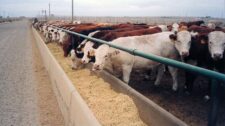
Cattle on feed

0
credit -NDSU Ag

ISSN: 1948-9080

Released December 19, 2014, by the National Agricultural Statistics Service
(NASS), Agricultural Statistics Board, United States Department of
Agriculture (USDA).

United States Cattle on Feed Up 1 Percent

Cattle and calves on feed for slaughter market in the United States for
feedlots with capacity of 1,000 or more head totaled 10.9 million head on
December 1, 2014. The inventory was 1 percent above December 1, 2013.

Placements in feedlots during November totaled 1.79 million, 4 percent below
2013. Net placements were 1.72 million head. During November, placements of
cattle and calves weighing less than 600 pounds were 550,000, 600-699 pounds
were 440,000, 700-799 pounds were 362,000, and 800 pounds and greater were
440,000. For the month of November, placements are the second lowest since
the series began in 1996.

Marketings of fed cattle during November totaled 1.48 million, 11 percent
below 2013. November marketings are the lowest since the series began in
1996.

Other disappearance totaled 74,000 during November, 9 percent above 2013.

Number of Cattle on Feed, Placements, Marketings, and Other Disappearance on
1,000+ Capacity Feedlots – United States: December 1, 2013 and 2014
——————————

———————————————-
——-
:          Number           :
Percent of
Item                  :—————————:

:    2013     :    2014
:previous year
—————————————————————————-
——-
:   —- 1,000 head —-
percent
:

On feed November 1 …………………:   10,585        10,633
100
Placed on feed during November ………:    1,867         1,792
96
Fed cattle marketed during November ….:    1,660         1,475
89
Other disappearance during November ….:       68            74
109
On feed December 1 …………………:   10,724        10,876
101
—————————————————————————-
——-

Number of Cattle on Feed, Placements, Marketings, and Other Disappearance on
1,000+ Capacity Feedlots – United States: November 1, 2013 and 2014
—————————————————————————-
——-
:          Number           :
Percent of
Item                  :—————————:

:    2013     :    2014
:previous year
—————————————————————————-
——-
:   —- 1,000 head —-
percent
:

On feed October 1 ………………….:   10,110        10,058
99
Placed on feed during October ……….:    2,378         2,357
99
Fed cattle marketed during October …..:    1,827         1,685
92
Other disappearance during October …..:       76            97
128
On feed November 1 …………………:   10,585        10,633
100
—————————————————————————-
——-

Number of Cattle on Feed on 1,000+ Capacity Feedlots by Month – States and
United States:
2013 and 2014
—————————————————————————-
———————–
:                 :                 :
December 1, 2014
:                 :
:—————————–—————
State      :December 1, 2013 :November 1, 2014 :              :
Percent of  :  Percent of
:                 :                 :    Number
:previous year :previous month
—————————————————————————-
———————–
:     ————— 1,000 head ————–
—– percent —-
:

Arizona ……….:        275               250              252
92            101
California …….:        505               420              435
86            104
Colorado ………:        970               900              930
96            103
Idaho …………:        225               220              230
102            105
Iowa ………….:        610               590              610
100            103
Kansas ………..:      2,050             2,080            2,100
102            101
Minnesota ……..:        122               132              135
111            102
Nebraska ………:      2,430             2,450            2,550
105            104
Oklahoma ………:        265               260              260
98            100
South Dakota …..:        220               230              245
111            107
Texas …………:      2,510             2,550            2,560
102            100
Washington …….:        207               226              234
113            104
:

Other States …..:        335               325              335
100            103
:

United States ….:     10,724            10,633           10,876
101            102
—————————————————————————-
———————–

Number of Cattle Placed on Feed on 1,000+ Capacity Feedlots by Month –
States and United States: 2013 and 2014
—————————————————————————-
—————–
:              :              :            During November
2014
:    During    :    During
:—————————–—————
State      :November 2013 : October 2014 :              :  Percent of
:  Percent of
:              :              :    Number    :previous
year :previous month
—————————————————————————-
—————–
:    ———— 1,000 head ———–           —–
percent —-
:

Arizona ……….:       30             22             26            87
118
California …….:       63             53             62            98
117
Colorado ………:      165            210            155            94
74
Idaho …………:       42             61             43           102
70
Iowa ………….:      122            132            117            96
89
Kansas ………..:      365            420            320            88
76
Minnesota ……..:       18             30             15            83
50
Nebraska ………:      475            660            485           102
73
Oklahoma ………:       40             60             45           113
75
South Dakota …..:       61             84             53            87
63
Texas …………:      405            520            385            95
74
Washington …….:       44             51             47           107
92
:

Other States …..:       37             54             39           105
72
:

United States ….:    1,867          2,357          1,792            96
76
—————————————————————————-
—————–

Number of Cattle Placed on Feed by Weight Group on 1,000+ Capacity Feedlots
by Month – States and United States: 2013 and 2014
—————————————————————————-
————
:                           During November

:—————————–—————————————-
State      :Under 600 lbs: 600-699 lbs : 700-799 lbs :  800+ lbs   :
Total

:—————————–—————————————-
: 2013 : 2014 : 2013 : 2014 : 2013 : 2014 : 2013 : 2014 :
2013 : 2014
—————————————————————————-
————
:                             1,000 head

:

Colorado ………:  50     45     50     40     30     30     35     40
165    155
Kansas ………..:  80     65     90     75    105     95     90     85
365    320
Nebraska ………: 120    120    135    120     80     85    140    160
475    485
Texas …………: 165    160    115     95     75     80     50     50
405    385
:

Other States …..: 165    160    120    110     62     72    110    105
457    447
:

United States ….: 580    550    510    440    352    362    425    440
1,867  1,792

:—————————–—————————————-
:                           During October

:—————————–—————————————-
State      :Under 600 lbs: 600-699 lbs : 700-799 lbs :  800+ lbs   :
Total

:—————————–—————————————-
: 2013 : 2014 : 2013 : 2014 : 2013 : 2014 : 2013 : 2014 :
2013 : 2014

:—————————–—————————————-
:                             1,000 head

:

Colorado ………:  80     55     50     45     45     45     55     65
230    210
Kansas ………..:  90     85    120    100    140    115    120    120
470    420
Nebraska ………: 170    170    170    165     90     95    200    230
630    660
Texas …………: 190    180    120    130    145    130     65     80
520    520
:

Other States …..: 190    200    118    130     85     77    135    140
528    547
:

United States ….: 720    690    578    570    505    462    575    635
2,378  2,357
—————————————————————————-
————

Number of Cattle Marketed on 1,000+ Capacity Feedlots by Month – States and
United States:
2013 and 2014
—————————————————————————-
—————–
:              :              :            During November
2014
:    During    :    During
:—————————–—————
State      :November 2013 : October 2014 :              :  Percent of
:  Percent of
:              :              :    Number    :previous
year :previous month
—————————————————————————-
—————–
:    ———— 1,000 head ———–           —–
percent —-
:

Arizona ……….:       24             21             19            79
90
California …….:       51             40             43            84
108
Colorado ………:      140            145            120            86
83
Idaho …………:       36             45             32            89
71
Iowa ………….:      100            100             95            95
95
Kansas ………..:      345            320            285            83
89
Minnesota ……..:       12             11             11            92
100
Nebraska ………:      400            430            370            93
86
Oklahoma ………:       43             43             43           100
100
South Dakota …..:       39             43             34            87
79
Texas …………:      400            420            360            90
86
Washington …….:       39             35             37            95
106
:

Other States …..:       31             32             26            84
81
:

United States ….:    1,660          1,685          1,475            89
88
—————————————————————————-
—————–

Other Disappearance on 1,000+ Capacity Feedlots by Month – States and United
States:
2013 and 2014
—————————————————————————-
—————–
:              :              :            During November
2014
:    During    :    During
:—————————–—————
State      :November 2013 : October 2014 :              :  Percent of
:  Percent of
:              :              :    Number    :previous
year :previous month
—————————————————————————-
—————–
:      ———- 1,000 head ———-            —–
percent —-
:

Arizona ……….:       1              3              5            500
167
California …….:       2              8              4            200
50
Colorado ………:       5              5              5            100
100
Idaho …………:       1              1              1            100
100
Iowa ………….:       2              2              2            100
100
Kansas ………..:      20             30             15             75
50
Minnesota ……..:       1              1              1            100
100
Nebraska ………:      15             20             15            100
75
Oklahoma ………:       2              2              2            100
100
South Dakota …..:       2              1              4            200
400
Texas …………:      15             20             15            100
75
Washington …….:       1              2              2            200
100
:

Other States …..:       1              2              3            300
150
:

United States ….:      68             97             74            109
76
—————————————————————————-
—————–

Terms and Definitions of Cattle on Feed Estimates

Cattle on feed are animals being fed a ration of grain, silage, hay and/or
protein supplement for slaughter market that are expected to produce a
carcass that will grade select or better. It excludes cattle being
“backgrounded only” for later sale as feeders or later placement in another
feedlot.

Placements are cattle put into a feedlot, fed a ration which will produce a
carcass that will grade select or better, and are intended for the slaughter
market.

Marketings are cattle shipped out of feedlots to a slaughter market.

Other disappearance includes death loss, movement from feedlots to pasture,
and shipments to other feedlots for further feeding.

Reliability of Cattle on Feed Estimates

Survey Procedures: During January and July all known feedlots in the United
States with capacity of 1,000 or more head are surveyed to provide data for
cattle on feed estimates. During the other months, all known feedlots from
16 States are surveyed. The 16 States account for approximately 98 percent
of the cattle on feed in feedlots with capacity of 1,000 or more head.
Individual State estimates are published monthly for 12 of the 16 States.
Data collected from the remaining 4 States are used to establish the “Other
States” estimates. These 4 States include Illinois, New Mexico, Oregon, and
Wyoming. The “Other States” category represents all cattle on feed with a
capacity of 1,000 or more head for the rest of the United States.

Estimating Procedures: These cattle on feed estimates were prepared by the
Agricultural Statistics Board after reviewing recommendations and analysis
submitted by each State office. Regional and State survey data were reviewed
for reasonableness with each other and with estimates from the previous
month when establishing the current estimates.

Revision Policy: Revisions to previous estimates are made to improve month
to month relationships. Estimates for the previous month are subject to
revision in all States each month when current estimates are made. In
February, all monthly estimates for the previous year, and the number of
feedlots and annual marketings from two years ago are reviewed and subject
to revisions.
The reviews are primarily based on slaughter data, state check-off or brand
data, and any other data that may have been received after the original
estimate was made. Estimates will also be reviewed after data from the
Census of Agriculture are available. No revisions will be made after that
date and estimates become final.

Reliability: Since all 1,000+ capacity cattle on feed operators in every
State are not included in the monthly survey, survey estimates are subject
to sampling variability. Survey results are also subject to non-sampling
errors such as omissions, duplications, and mistakes in reporting,
recording, and processing the data. The effects of these errors cannot be
measured directly.
They are minimized through rigid quality controls in the data collection
process and through a careful review of all reported data for consistency
and reasonableness.

To assist users in evaluating the reliability of estimates in this report,
the “Root Mean Square Error” is shown for selected items in the table on the
following page. The “Root Mean Square Error” is a statistical measure based
on past performance and is computed using the differences between first and
latest estimates. The “Root Mean Square Error” for cattle on feed inventory
estimates over the past 24 months is 0.1 percent. This means that chances
are
2 out of 3 that the final estimate will not be above or below the current
estimate of 10.9 million head by more than 0.1 percent. Chances are 9 out of
10 that the difference will not exceed 0.2 percent.

The table on the following page shows a 24 month record of the range of
differences between first and latest estimates for selected items. Using
estimates of number on feed as an example, changes between the first
estimate and the latest estimate during the past 24 months have averaged
9,000 head, ranging from 0 to 34,000 head. During this period the initial
estimate has been above the latest estimate 8 times and has been below the
latest estimate
6 times. This does not imply that the initial estimate is likely to
understate or overstate final inventory.

Reliability of Monthly Cattle on Feed Estimates [Based on data for the past
24 months]
—————————————————————————-
———————————————-
:  Root mean   :  90 percent  :
Difference between first and latest estimate
: square error :  confidence  :         :
:         :               :
:              :    level
:—————————–——————————
Item             :              :              :         :
:         :            Months
:              :              :         :
:         :—————————–
:              :              : Average
:Smallest : Largest : Below latest  : Above latest
—————————————————————————-
———————————————-
:   percent        percent        ——–
1,000 ——-            —– number —-
:

Number on feed ……………:     0.1            0.2           9         0
34            6               8
:

Placements ……………….:     1.6            2.7          15         0
88            2              13
:

Marketings ……………….:     1.4            2.3          15         0
67            0              12
—————————————————————————-
———————————————-

Information Contacts

Listed below are the commodity specialists in the Livestock Branch of the
National Agricultural Statistics Service to contact for additional
information. E-mail inquiries may be sent to [email protected].

Dan Kerestes, Chief, Livestock Branch ……….. (202) 720-3570

Scott Hollis, Head, Livestock Section ……….. (202) 690-2424
Travis Averill – Cattle, Cattle on Feed …… (202) 720-3040
Sherry Bertramsen – Livestock Slaughter …… (202) 720-3240
Doug Bounds – Hogs and Pigs ……………… (202) 720-3106
Donnie Fike – Dairy Products …………….. (202) 690-3236
Mike Miller – Milk Production and Milk Cows .. (202) 720-3278
Evan Schulz – Sheep and Goats ……………. (202) 720-6147


Access to NASS Reports

For your convenience, you may access NASS reports and products the following
ways:

All reports are available electronically, at no cost, on the NASS
web
site: http://www.nass.usda.gov

Both national and state specific reports are available via a free e-
mail subscription. To set-up this free subscription, visit
http://www.nass.usda.gov and in the “Follow NASS” box under “Receive reports
by Email,” click on “National” or “State” to select the reports you would
like to receive.

For more information on NASS surveys and reports, call the NASS Agricultural
Statistics Hotline at (800) 727-9540, 7:30 a.m. to 4:00 p.m. ET, or e-mail:
[email protected].

Milk production

0

ISSN: 1949-1557

Released December 19, 2014, by the National Agricultural Statistics Service
(NASS), Agricultural Statistics Board, United States Department of
Agriculture (USDA).

November Milk Production up 3.5 Percent

Milk production in the 23 major States during November totaled 15.5 billion
pounds, up 3.5 percent from November 2013. October revised production, at
16.0 billion pounds, was up 3.7 percent from October 2013.  The October
revision represented a decrease of 35 million pounds or 0.2 percent from
last month’s preliminary production estimate.

Production per cow in the 23 major States averaged 1,806 pounds for
November,
41 pounds above November 2013. This is the highest production per cow for
the month of November since the 23 State series began in 2003.

The number of milk cows on farms in the 23 major States was 8.59 million
head, 93,000 head more than November 2013, and 3,000 head more than October
2014.

November Milk Production in the United States up 3.4 Percent

Milk production in the United States during November totaled 16.5 billion
pounds, up 3.4 percent from November 2013.

Production per cow in the United States averaged 1,782 pounds for November,
42 pounds above November 2013.

The number of milk cows on farms in the United States was 9.28 million head,
82,000 head more than November 2013, and 4,000 head more than October 2014.

Milk Cows and Production by Quarter – United States: 2013-2014 [May not add
due to rounding]
——————————

———————————————-
———–
:   Milk Cows 1/   :  Milk Per Cow 2/  :      Milk
Production 2/

:—————————–—————————————-
Quarter     :        :         :         :         :         :
:  Change
:2013 3/ :  2014   : 2013 3/ :  2014   :  2013   :  2014
:   From
:        :         :         :         :         :
:   2013
—————————————————————————-
———–
:    1,000 Head      —- Pounds —-     Million Pounds
Percent
:

January-March …:           9,214               5,540     50,545   51,046
1.0
April-June ……:           9,253               5,713     51,997   52,861
1.7
July-September ..: 9,224     9,271     5,356     5,518     49,408   51,156
3.5
October-December : 9,201               5,355               49,268

:

Annual ……….: 9,221              21,822              201,218

—————————————————————————-
———–
1/ Includes dry cows. Excludes heifers not yet fresh.

2/ Excludes milk sucked by calves.

3/ Survey was not conducted in April and July, resulting in no milk cow and
milk per
cow data for March through June. 2013 annual totals include modeled data.

Milk Cows and Production By Month – 23 Selected States: 2013-2014
—————————————————————————-
——————————————–
:         Milk cows1/         :       Milk per cow2/        :
Milk production2/

:—————————–———————————————-
—————————–
:              :              :              :              :
:              :    Change
Month     :   2013 3/    :     2014     :   2013 3/    :     2014     :
2013     :     2014     :     from
:              :              :              :              :
:              :     2013

:—————————–———————————————-
—————————–
:  1,000 head     1,000 head       pounds         pounds
million pounds million pounds    percent
:

January …….:    8,497          8,512           1,881         1,902
15,985         16,186          1.3
February ……:    8,498          8,513           1,732         1,750
14,715         14,899          1.3
March ………:                   8,521                         1,958
16,501         16,687          1.1
April ………:                   8,542                         1,912
16,105         16,332          1.4
May ………..:                   8,559                         1,977
16,648         16,922          1.6
June ……….:                   8,572                         1,893
15,860         16,227          2.3
July ……….:    8,522          8,583           1,850         1,909
15,762         16,388          4.0
August ……..:    8,522          8,582           1,850         1,885
15,768         16,174          2.6
September …..:    8,508          8,590           1,748         1,805
14,874         15,507          4.3
October …….:    8,504          8,589           1,817         1,864
15,449         16,013          3.7
November ……:    8,499          8,592           1,765         1,806
15,002         15,520          3.5
December ……:    8,504                          1,851
15,741
:

Annual ……..:    8,508                         22,145
188,410
—————————————————————————-
——————————————–
1/ Includes dry cows.  Excludes heifers not yet fresh.

2/ Excludes milk sucked by calves.

3/ Survey was not conducted in April and July, resulting in no milk cow and
milk per cow data for March through June.

Estimated Milk Cows and Production By Month – United States: 2013-2014
—————————————————————————-
——————————————–
:         Milk cows1/         :       Milk per cow2/        :
Milk production2/

:—————————–———————————————-
—————————–
:              :              :              :              :
:              :    Change
Month     :   2013 3/    :     2014     :   2013 3/    :     2014     :
2013     :     2014     :     from
:              :              :              :              :
:              :     2013

:—————————–———————————————-
—————————–
:  1,000 head     1,000 head       pounds         pounds
million pounds million pounds    percent
:

January …….:    9,222          9,210           1,855         1,878
17,109         17,293          1.1
February ……:    9,223          9,212           1,709         1,728
15,759         15,920          1.0
March ………:                   9,221                         1,934
17,677         17,833          0.9
April ………:                   9,238                         1,891
17,249         17,468          1.3
May ………..:                   9,254                         1,954
17,813         18,080          1.5
June ……….:                   9,267                         1,868
16,935         17,313          2.2
July ……….:    9,235          9,271           1,818         1,882
16,788         17,448          3.9
August ……..:    9,229          9,265           1,819         1,858
16,789         17,214          2.5
September …..:    9,208          9,276           1,719         1,778
15,831         16,494          4.2
October …….:    9,203          9,276           1,790         1,839
16,475         17,060          3.6
November ……:    9,198          9,280           1,740         1,782
16,003         16,540          3.4
December ……:    9,202                          1,825
16,790
:

Annual ……..:    9,221                         21,822
201,218
—————————————————————————-
——————————————–
1/ Includes dry cows. Excludes heifers not yet fresh.

2/ Excludes milk sucked by calves.

3/ Survey was not conducted in April and July, resulting in no milk cow and
milk per cow data for March through June.

Milk Cows and Production – 23 Selected States: November 2013 and 2014 [May
not add due to rounding]
—————————————————————————-
———————————————-
:        Milk cows 1/         :       Milk per cow 2/
:             Milk production 2/
State
:—————————–———————————————-
—————————–
:              :              :              :
:              :              :    Change
:     2013     :     2014     :     2013     :     2014
:     2013     :     2014     :     from
:              :              :              :
:              :              :     2013
—————————————————————————-
———————————————-
:  1,000 head     1,000 head       pounds         pounds
million pounds million pounds    percent
:

Arizona ………:      190            193          1,860          1,930
353            372           5.4
California ……:    1,780          1,780          1,840          1,880
3,275          3,346           2.2
Colorado ……..:      138            145          1,975          2,030
273            294           7.7
Florida ………:      123            123          1,495          1,535
184            189           2.7
Idaho ………..:      567            579          1,885          1,920
1,069          1,112           4.0
Illinois ……..:       96             92          1,550          1,550
149            143          -4.0
Indiana ………:      178            179          1,730          1,775
308            318           3.2
Iowa …………:      206            207          1,775          1,840
366            381           4.1
Kansas ……….:      135            143          1,800          1,800
243            257           5.8
Michigan ……..:      380            399          1,930          1,965
733            784           7.0
:

Minnesota …….:      461            460          1,565          1,615
721            743           3.1
New Mexico ……:      322            323          1,990          1,975
641            638          -0.5
New York ……..:      611            615          1,750          1,805
1,069          1,110           3.8
Ohio …………:      268            267          1,600          1,630
429            435           1.4
Oregon ……….:      123            124          1,625          1,615
200            200             –
Pennsylvania ….:      530            530          1,585          1,640
840            869           3.5
South Dakota ….:       95             97          1,735          1,810
165            176           6.7
Texas ………..:      440            470          1,770          1,785
779            839           7.7
Utah …………:       93             96          1,775          1,855
165            178           7.9
Vermont ………:      132            132          1,570          1,630
207            215           3.9
:

Virginia ……..:       94             92          1,490          1,535
140            141           0.7
Washington ……:      266            276          1,885          1,905
501            526           5.0
Wisconsin …….:    1,271          1,270          1,725          1,775
2,192          2,254           2.8
:

23-State Total ..:    8,499          8,592          1,765          1,806
15,002         15,520           3.5
—————————————————————————-
———————————————-
–  Represents zero.

1/ Includes dry cows. Excludes heifers not yet fresh.

2/ Excludes milk sucked by calves.

Milk Cows and Production – 23 Selected States: October 2013 and 2014 [May
not add due to rounding]
—————————————————————————-
—————————–
:      Milk cows1/      :    Milk per cow2/     :
Milk Production 2/

:—————————–———————————————-
————–
:           :           :           :           :
:              :  Change
:   2013    :   2014    :   2013    :   2014    :     2013
:     2014     :   from
:           :           :           :           :
:              :   2013

:—————————–———————————————-
————–
:1,000 head  1,000 head    pounds      pounds    million
pounds million pounds   percent
:

Arizona …….:     190         193       1,880       1,915           357
370         3.6
California ….:   1,780       1,779       1,875       1,930         3,338
3,433         2.8
Colorado ……:     137         145       2,030       2,105           278
305         9.7
Florida …….:     123         123       1,400       1,470           172
181         5.2
Idaho ………:     569         579       1,950       2,010         1,110
1,164         4.9
Illinois ……:      97          93       1,570       1,600           152
149        -2.0
Indiana …….:     178         179       1,790       1,820           319
326         2.2
Iowa ……….:     206         207       1,820       1,885           375
390         4.0
Kansas ……..:     135         143       1,835       1,855           248
265         6.9
Michigan ……:     380         397       2,000       2,050           760
814         7.1
:

Minnesota …..:     463         460       1,610       1,655           745
761         2.1
New Mexico ….:     322         323       2,025       2,050           652
662         1.5
New York ……:     610         615       1,840       1,880         1,122
1,156         3.0
Ohio ……….:     269         267       1,650       1,710           444
457         2.9
Oregon ……..:     123         124       1,690       1,685           208
209         0.5
Pennsylvania ..:     530         530       1,620       1,680           859
890         3.6
South Dakota ..:      95          97       1,830       1,860           174
180         3.4
Texas ………:     440         470       1,820       1,825           801
858         7.1
Utah ……….:      93          96       1,840       1,920           171
184         7.6
Vermont …….:     132         132       1,620       1,680           214
222         3.7
:

Virginia ……:      94          92       1,510       1,580           142
145         2.1
Washington ….:     266         275       1,975       1,995           525
549         4.6
Wisconsin …..:   1,272       1,270       1,795       1,845         2,283
2,343         2.6
:

23-State Total :   8,504       8,589       1,817       1,864        15,449
16,013         3.7
—————————————————————————-
—————————–
1/ Includes dry cows.  Excludes heifers not yet fresh.

2/ Excludes milk sucked by calves.

Statistical Methodology

Survey Procedures: Primary data used to determine these estimates were
obtained from a sample of producers. Individual States maintain a list of
all known milk producers and information on the size of their herd. States
use all known sources of producers to ensure that their lists are as
complete as possible. Generally, all large producers and a sample of small
producers are included in the survey. Questionnaires are mailed to producers
near the end of the month to obtain data for the first day of the month.
Additional reports are obtained by telephone, as needed, to supplement the
mail response. Where feasible, States utilize state and federal
administrative data to estimate milk production. This eliminates duplication
of data gathering by different government agencies.  Indications of milk cow
inventory are also obtained in the January Cattle Surveys.

Estimation Procedures: State offices prepare these estimates by using a
combination of survey indications, historic trends, and any available
administrative data. Individual State estimates are reviewed by the
Agricultural Statistics Board for reasonableness.

Revision Policy: Milk production, milk per cow, and number of milk cows are
subject to revision the following month after initial publication for
monthly States or the following quarter for the quarterly States. Normally,
administrative data from Federal Market Orders, State Departments of
Agriculture, or other sources are the main basis for revisions. However,
administrative data for all States may not be available in time for these
revisions. Estimates are again subject to revisions in February each year
based on additional administrative data. In the event that additional
changes are necessary, a third revision is possible in February the
following year.
Estimates are again reviewed after data from the five-year Census of
Agriculture are available. No revisions are made after that date.

Reliability: Since all operations with dairy animals are not included in the
sample, survey estimates are subject to sampling variability. Survey results
are also subject to non-sampling errors such as omissions, duplications, and
mistakes in reporting, recording, and processing the data. The effects of
these errors cannot be measured directly. They are minimized through rigid
quality controls in the data collection process and through a careful review
of all reported data for consistency and reasonableness.

To assist users in evaluating the reliability of the estimates in this
report, the “Root Mean Square Error” is shown for selected items in the
table below. The “Root Mean Square Error” is a statistical measure based on
past performance and is computed using the differences between first and
final estimates. The “Root Mean Square Error” for the 23 State milk
production estimates over the past 24 months is 0.2 percent. This means that
chances are
2 out of 3 that the final estimate will not be above or below the current
estimate of 15.5 billion pounds by more than 0.2 percent. Chances are 9 out
of 10 that the difference will not exceed 0.3 percent.

Reliability of Monthly Milk Production Estimates [Based on data for the past
24 months]
—————————————————————————-
———————————————-
:  Root mean   :  90 percent  :
Difference between first and latest estimate
: square error :  confidence  :         :
:         :               :
:              :    level
:—————————–——————————
Item             :              :              :         :
:         :            Months
:              :              :         :
:         :—————————–
:              :              : Average
:Smallest : Largest : Below latest  : Above latest
—————————————————————————-
———————————————-
:   percent        percent        ——–
1,000 ——-           —– number —–
:

:

Milk production …………..:     0.2            0.3          26         1
81           15               9
:

All Milk cows …………….:     0.1            0.1           4         0
11           10              12
—————————————————————————-
———————————————-

Information Contacts

Listed below are the commodity specialists in the Livestock Branch of the
National Agricultural Statistics Service to contact for additional
information. E-mail inquiries may be sent to [email protected].

Dan Kerestes, Chief, Livestock Branch ……….. (202) 720-3570

Scott Hollis, Head, Livestock Section ……….. (202) 690-2424
Travis Averill – Cattle, Cattle on Feed …… (202) 720-3040
Sherry Bertramsen – Livestock Slaughter …… (202) 720-3240
Doug Bounds – Hogs and Pigs ……………… (202) 720-3106
Donnie Fike – Dairy Products …………….. (202) 690-3236
Mike Miller – Milk Production and Milk Cows .. (202) 720-3278
Evan Schulz – Sheep and Goats ……………. (202) 720-6147