Thursday, March 5, 2026
Home Blog Page 692

Physiological Leaf Curl in Tomatoes

0

Tomato leaves will sometimes curl as a result of imbalanced growth above and below the soil. Gardeners may see vigorous top growth during mild spring weather. Below the soil the roots may not be keeping up. When the weather turns hotter during the summer the roots are not established enough to support the size of the upper growth. Curling leaves, in this instance, is a physiological condition that enables the plant to reduce its surface area and conserve water. Leaves may also become tougher and leathery.

Physiological leaf curl is most often seen as the seasons change from spring to summer but can also be caused by heavy cultivation that has damaged the roots, improper fertilization and poor watering practices. Though the plants typically self-correct with time and as conditions improve, prolonged periods of time with improper care can affect yield. To avoid leaf curl, it is important to properly harden off tomato seedlings. Use a layer of mulch around tomato plants to regulate soil moisture and temperature. Apply fertilizer as needed based on soil testing. You may also choose determinate (bush-type) varieties of tomatoes which are less susceptible to leaf curl than the indeterminate (vining) varieties.

Cynthia Domenghini, Extension Agent

Free Mosquito Dunks Available to Reno County Residents

0

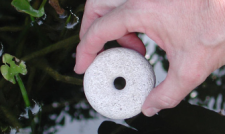
The Reno County Health Department, in collaboration with the Kansas Department of Health and Environment, has been trapping mosquitoes in order to monitor numbers and ascertain potential threats from mosquito-borne illnesses. Recent rains have made conditions ideal for increased numbers. Now is the time to begin minimizing and eliminating the mosquito breeding grounds on your property.

While supplies last, there are free larvicide mosquito dunks and directions for proper usage available to all Reno County residents at the Reno County Health Department, 209 West 2nd Avenue, and at local municipalities. The Health Department is open Monday, Tuesday, and Thursday from 7:30am – 6 pm; Wednesday 9 am – 6 pm, and Friday 7:30 am – noon.

The Centers for Disease Control and Prevention, along with KDHE, recommend removing standing water where mosquitoes can lay their eggs by emptying items that hold water (tires, buckets, planters, tools, pools, birdbaths, flowerpot saucers, trash containers). If the water cannot be emptied, you can use larvicide mosquito dunks in the water. To prevent mosquito bites, the CDC recommends using Environmental Protection Agency registered
insect repellants (https://www.epa.gov/insect-repellents), wearing long sleeves and pants, using screens on doors and windows that will be open, and if you are camping and sleeping outdoors, consider using a mosquito bed net.

For more information about the free mosquito dunks, please contact the Reno County Health Department at 620-694-2900. Visit the Centers for Disease Control and Prevention’s website at www.cdc.gov to learn more tips for preventing mosquito bites.

Municipality Pickup Locations:
Abbyville, 100 N. Abby St.
Arlington, 900 W. Main St.
Buhler, 219 N. Main
Haven, 120 S. Kansas
Hutchinson, 125 East B
Langdon, 18 South Front St.
Nickerson, 15 N. Nickerson

Partridge, 2 West Avenue E
Plevna, 301 S. Main
Pretty Prairie, 119 W. Main
South Hutchinson, 2 S. Main
Sylvia, 121 S. Main St.
Turon, 501 E. Price St.

Brown Recluse spider: Fact vs. fiction and tips for prevention

0

Any spider can disturb a quiet night or a piddly daytime chore around the house. But the words “brown recluse spider” can elicit an even higher level of anxiety and even fear.

Wizzie Brown, Texas A&M AgriLife Extension Service integrated pest management specialist for Travis County, said many concerns about the brown recluse spider have been mythologized, but there are ways to prevent bites and reduce their numbers. Brown is a member of the team of IPM specialists within the AgriLife Extension arm of the Department of Entomology in the Texas A&M College of Agriculture and Life Sciences.

The brown recluse spider can be found inside and outside throughout Texas. They are active from spring through the fall outside but can be active year-round in climate-controlled spaces like homes.

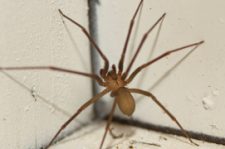
The spider has two body regions that are smooth-looking, eight slender legs and typically a light tan to dark, greyish brown color that is uniform, Brown said. Adults are about the size of a quarter to half dollar – legs and all – and have three pairs of eyes on their cephalothorax, the front body section.

Many descriptions found online also include mention of the violin-shaped marking on the back, but Brown said those markings are sometimes faint and can be similar to other non-venomous spiders. The size, color and eye-pattern are the best indicators.

Their webs are not distinct either and typically sparse with a lack of any pattern, she said.

“I hear all the time that they are a lot smaller than people think they are,” she said. “But the eye pattern is pretty distinctive. Only one other spider group in Texas has that eye pattern, and they are not venomous.”

Brown recluse spiders hide in undisturbed places

They are nocturnal hunters and prefer hidden areas that are rarely disturbed, Brown said. Stacks of firewood outside or stored boxes in basements and attics are good examples of places a brown recluse spider might hide, but any crack or crevice in low-traffic areas can shelter them.

“They really are shy, thus the name recluse,” she said. “They come out to hunt insects, even other spiders, at night, but otherwise they like hidden areas where they aren’t bothered.”

Bites are typically “accidents,” Brown said. Reaching into a wood pile or putting on clothes that have been stored in a closet for extended periods could lead to a defensive bite from a brown recluse.

Brown recommends wearing leather gloves when working outside, cleaning out sheds or moving items in an attic or basement. The gloves will protect from a variety of potential issues such as bites from spiders or stings from scorpions.

To avoid hiding spiders, seasonal clothes that have been in storage or in a closet for a while should be shaken out well or put in a dryer on high heat for about 45 minutes before they are worn. Brown also recommends checking shoes that have been sitting in a closet.

“Summer clothes coming out of winter or vice versa, linens, shoes should all be shaken out,” she said. “A house can offer the perfect habitat for the brown recluse, so you should take steps on the front end to avoid a potential problem with anything that might be in there.”

A tip for campers and hikers is to check under the seat when using a primitive bathroom, Brown said.

Brown recluse spider bites rarely as bad as internet searches suggest

A brown recluse spider surprise in a shoe or under a toilet seat is nightmare fuel for most, but Brown said bites are rarely as serious as some stories or images portray on the internet. There has never been a confirmed death attributed to the brown recluse spider. And while bites may swell and can break down cellular tissue in the bite area, they are typically akin to any normal wound.

Brown said bites should be cleaned and dressed with a topical antibiotic and monitored. Medical attention should be sought for any serious reaction to a bite or wound that is not healing properly.

“There are other things like antibiotic-resistant staph infections that look similar to spider bites, but that can be far more gruesome than a bite,” she said. “Some photos presented as brown recluse spider bites are horrible, but anyone can put information and photos on the internet. Unless the person has an allergic reaction to the venom or has some secondary issue that might compound the bite, there is usually not much to worry about.”

Prevention over panic

An encounter with a brown recluse or any spider can be unsettling, but Brown said there is no need to panic. “If you see one in the house, you can suck them up with a vacuum or squish them with a shoe,” she said.

Brown said sticky traps placed along a wall will passively capture them. Spiders and other insects typically follow edges because it is safer.

Residual pesticides can be used to kill spiders and other insect pests, Brown said. Sprays should be concentrated around corners, cracks and crevices. Dust pesticides can also be used but should be applied to areas where the dust can settle and not be disturbed like under the sink or behind large appliances like washing machines. When using pesticides, Brown said be sure to read and follow label directions.

Checking seals around doors and windows and locations insects might gain entry is a good way to prevent spiders and other pests from getting in a home.

“If there is a recurring problem with brown recluse spiders in a location, I could see the need for action,” she said. “But I know of a house that has regular pest control and would catch hundreds of them, but no one had ever been bitten. They want to avoid an encounter with us as much as we want to avoid an encounter with them.”

For more information about AgriLife Extension’s work with integrated pest management, visit https://tx.ag/AgriLifeExtensionIPM.

As reported in High Plains Journal.

What Were They Thinking?

0
lee pitts
What were those adventurous vagabonds who came west 150 years ago thinking when in just the first 400 miles of their journey from the Platte River to Fort Laramie, they saw 12 graves to the mile documented by shallow graves and crosses made from bedposts, wagon boards and double trees? I don’t know about you but I’d have given serious consideration to doing a quick about-face and running back home to momma.
How did past generations survive without childproof lids on pill bottles or seatbelts in our vehicles? The teeth marks in the rails of the family crib that was painted with lead based paint are still visible, yet here I am 71 years later and not yet totally demented or deranged. When I think of the busy roads, avenues and streets we darted in and out of on our bikes, not always following our mother’s advice to “look both ways,” it’s a miracle most of us survived. Especially when you consider that our miniature and not fully developed brains weren’t cushioned, insulated and sheltered from our own stupidity by the now-mandated hard hats.
Was a life just worth less a couple centuries ago when mothers often gave birth to a dozen or so kids knowing that several of them would die before they reached the age of five from eating lye, falling down wells or from scarlet fever, smallpox, polio, the grip, dropsy, or other diseases that no longer strike fear in households? Were mothers having ‘extra kids’ or ‘spares’ to insure there’d be enough help during harvest, or was their loss just considered  ‘shrink’, as if kids were a steer on the hoof? Did mothers love their kids any less than they do now?
What the black slaves were thinking when they were put on the auction block and sold like they were cattle or swine. And how did one man ever get it in his head that he had the right to ‘own’ another human being? (Even American Indians owned slaves.)
What were those brave young men thinking when they stormed the beaches of Normandy and saw their fellow soldiers being mowed down in front of them? Were they simply better men than we? And what were American grunts on the ground in Vietnam thinking as they got sprayed by their own planes with cancer-causing Agent Orange and then came home to an ungrateful nation?
I wonder what it was like in the old west to order up a bride from a catalog not knowing what would step out of the stagecoach? And what did the women think when they ended up with a toothless, alcoholic loser? I suppose it’s no different than having an Internet relationship nowadays. Still…
What was my mom thinking when she got my brother and I a chemistry set for Christmas that had dozens of small bottles filled with dangerous chemicals, including acids that I used to etch the number of my Cub Scout troop on my mom’s favorite furniture? Did the very remote possibility of having your child become the next Marie Curie, Alfred Nobel or Louis Pasteur outweigh the higher probability of having your house blow up because you’re rug rats accidentally built a bomb?
After John Glenn became the first American to orbit the earth did it make every simple Sunday drive that followed seem rather mundane? Did a speech writer back home at NASA write Neil Armstrong’s now-famous soliloquy when he stepped on the lunar surface for the first time and called it, “One small step for man?” And where did Alan Shepard get the golf club he used to hit a golf ball farther than anyone had ever hit one before? Did he yell “fore”?
What was the ‘risk versus reward’ ratio when the first man ever hopped on the back of a bull to ride him; what makes a person want to drive 300 miles per hour; and why did those in charge of building the Golden Gate Bridge wait until 23 men had fallen to their death before they thought to put up a net to catch them?
Did we discount the value of human life in the past; were lives just worth less? The answer lies in a newspaper headline from long ago that reported on the loss of life in an accident as, “fatal but not serious.”

Trifles

0


This week I was starting to think about the 4th of July and what I might serve for dessert. When it’s hot outside a cold dessert with fresh fruit always seems to hit the spot. This week I’m featuring what I’ll call my ‘base’ trifle recipe. But let’s remember this is just a sketch for all of us! Special fillings, flavors, alcohols, caramel, chocolate, pumpkin, they all can make an impact on a beautiful trifle.
My husband, Ervin, enjoys desserts of this style more than any other. Some of you might even have a ‘cream’ salad you make which could be turned into a trifle or parfait. Fourth of July morning you could even make trifles or parfaits with yogurt, fruit, baked oatmeal, honey and nuts. They’re special and your family and guests will love them.

No matter which way you twist or turn a trifle, they are simply delicious. Personally I have lots of different versions that I ‘play around’ with when I want to make a trifle presentation. This time of the year they are particularly desirable because of all the fresh fruits. I’ve even seen them made with commercial cupcakes and Twinkies. The presentation can be in a large trifle bowl or an individual parfait cup.

Historically some artists referred to it as a work of art! It’s a whimsical dish that comes from the English word Trufle. At the beginning it was a sponge cake that was soaked with sherry, and covered with fruit and an egg custard. As years have passed it can include any type of cake, cookie, lady fingers, nuts, fruit, alcohols, egg custard and whipped cream. When I was growing up it was a good way to use a cake that had become too dry.

This week I’ll share my more impressive trifle recipe that is one of my all-time favorites. But let’s go with something simple to start, the egg custard. I’ve been making lots of Boston Crème Pies lately and the filling is pretty close to what you may be looking for:

1 cup granulated sugar
1/4 cup flour
2 large whole eggs
2 cups 2 % milk
1 teaspoon vanilla

I place the dry in a saucepan and incorporate them together, then I add the eggs, whisking, followed by the milk. Blend until smooth and place over a burner on medium. With a whisk stir until it comes to a light boil and thickens. Remove from heat and add the vanilla.

This is also a dessert that can transport well. Make the fillings before you depart and put the dish together upon arrival. Some recipes will tell you to make a trifle 24 hours ahead of serving. I’m not sure I totally agree with the concept. There could be times when I’s say yes, and other times when I would disagree. Here’s my favorite trifle:

Debbie’s Decadent Trifle

1 (17 ounce) or larger angel food cake
12-14 ounces fresh blueberries
1 pound fresh strawberries, sliced. (Leave 1-2 whole berries for garnish)

Crème Filling
6 cups milk
2 cups sugar
1/3 cup plus 1 tablespoon cornstarch
8 egg yolks, beaten
1 teaspoon vanilla
1/8 teaspoon salt
4 tablespoons butter

In medium saucepan combine milk, cornstarch, salt and sugar, stirring well. Cook until mixture is thickened. Beat egg yolks and ‘temper’ them into the hot pudding. Cook 2 more additional minutes.
Remove from heat and add butter and vanilla, stirring until melted. Allow to cool before making trifle.

Topping
1 (8 ounce) block cream cheese
7-8 ounces marshmallow crème
1/2 cup cream (your choice)

Prepare the filling about an hour before you are ready to put the trifle together, allowing to cool. Pull angel food cake (sponge cakes and cake mixes also work) into small chunks for layering in the dish. If there’s more cake, layer on again. Sprinkle a few blueberries in the center and fan out a whole strawberry with the stem still attached. Cover and chill until ready to serve. Best if served the day it is made. This will accommodate approximately 12 persons.

If time doesn’t allow for making the filling from scratch two boxes of vanilla pudding may be substituted. Don’t omit the top layer as it really makes this trifle special. Spoon a bit of filling in the bottom of the bowl, cover with a layer of cake, spoon on filling, covering well. Sprinkle on blueberries and sliced strawberries. Add another layer and build! Simply Yours, The Covered Dish.