Friday, March 13, 2026
Home Blog Page 770

Asparagus

0

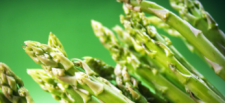
Asparagus is a perennial vegetable with three primary parts: the fluffy top is called the fern; the crown is the part just beneath the soil and the roots extend down from the crown. Each spring new edible spears (stems) emerge from the crown. To promote growth this season, last year’s stems and ferns needs to be removed now.

Old spears and ferns can be removed by hand or by gently tilling or mowing, using caution not to damage the crowns. Burning is another option if it is safe and legal to do so.

Asparagus spears emerge from early to mid-April in Manhattan but earlier in southern Kansas and later in northern Kansas.

Fertilize asparagus after the harvest, as needed, based upon a soil test. General recommendations are to apply 1 to 2 pounds of 10-20-10 or 11-15-11 fertilizer per 20 feet of row. If only nitrogen is needed, apply 1 pound of 16-0-0 or ½ pound of 30-4-5, 27-3-3 or similar fertilizer per 20 feet of row. Most of these high nitrogen fertilizers are lawn fertilizers but can be used for this crop as long as they don’t contain a weed preventer or killer. Water in the fertilizer application with ¼ inch of water.   (Cynthia Domenghini)

Controlling Weeds in Home Garden Asparagus Beds

The best time to control weeds in asparagus is early spring before the asparagus emerges. A light tilling (or hoeing) that is shallow enough to avoid the crowns will eliminate existing weeds. Many gardeners like to mix in organic matter during the same operation.

 Herbicides can be used before asparagus emerges as well. Glyphosate (Roundup, Killzall) will kill weeds that are actively growing, and the preemergence herbicide trifluralin can be used to kill weed seeds as they germinate. Trifluralin is found in several products, but not all of them list asparagus on the label.  Those that do have asparagus on the label include Miracle-Gro Weed Preventer Granules and Monterey Vegetable and Ornamental Weeder.  Mulch can also be used to keep weeds from invading.

 No herbicides can be used during harvest. The end of harvest presents another opportunity.  Remove all fern and spears and apply glyphosate (Roundup) to control virtually all of the weeds present.  After the harvest season is past and the asparagus starts to regrow, options are limited. Products that contain sethoxydim can be applied to asparagus to kill annual grassy weeds such as crabgrass. Sethoxydim has no effect on broadleaves including asparagus. Two sethoxydim products available to homeowners and labeled for asparagus are Monterey Grass Getter and Hi-Yield Grass Killer. With broadleaves, the only option is to pull them and look forward to next year.

Ward Upham, Extension Agent

Help for Vegetable Gardeners   

0

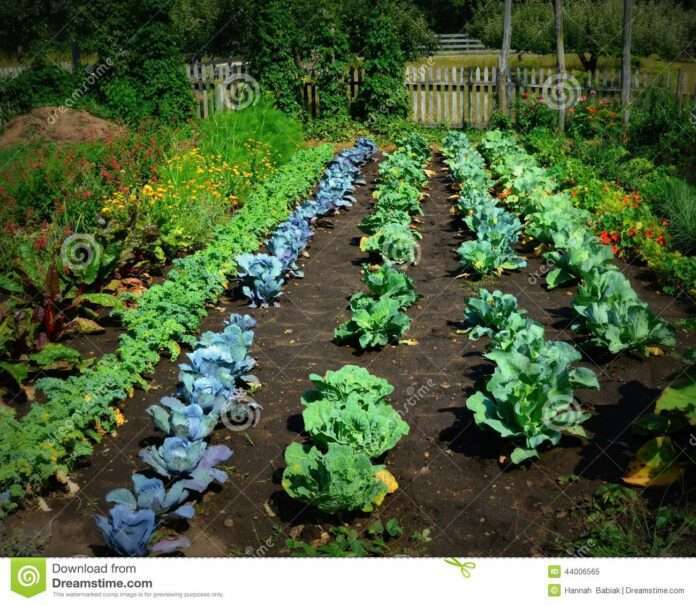
Kansans that are new to vegetable gardening often don’t know how much of each crop to plant. K-State Research and Extension has a publication that can help. The “Vegetable Garden Planting Guide” gives information on the size of planting needed per person and the average crop expected per 10 feet. Also included is a garden calendar highlighting suggested planting dates and expected harvest dates. Crop specific information is detailed including days to germinate, plants or seeds needed per 10 feet of row, depth of planting, spacing within the row and spacing between rows. You can find the publication at your  local county extension office or online at: http://www.ksre.ksu.edu/bookstore/pubs/mf315.pdf .  If you don’t know the location of your county extension office, see http://www.ksre.ksu.edu/Map.aspx.

Another, more in-depth publication titled the “Kansas Garden Guide” is also available. Newly updated, this 202-page publication has sections on planning a garden, composting, improving soil, seeding and planting, garden care, watering, planting gardens for fall production, insect and disease control, container gardening, season extension and harvesting and storing. This is followed by an extensive section on how to grow specific vegetables and herbs. You may access a free PDF copy of this publication at http://www.ksre.ksu.edu/bookstore/Item.aspx?catId=534&pubId=8219 .  A “for pay” print copy will be provided in the future.  Check the above link for availability of the print copy and price. These publications can also be useful for experienced gardeners.

Ward Upham, Extension Agent

Presentation Explores the Story of Kansas During the Civil War

0

Lyons, Kansas – The Rice County Historical Society/Coronado Quivira Museum in Lyons, Kansas will host “The Civil War in Kansas,” a presentation and discussion by Will Haynes on Sunday, March 26 at 1:30 p.m.at the Coronado Quivira Museum, 105 West Lyon, Lyons, Kansas. Members of the community are invited to attend the free program.

For Kansans, the violent guerrilla warfare between proslavery and antislavery forces known as Bleeding Kansas foreshadowed the national Civil War to come. From 1861-65, the border struggle continued to heat up as Kansans fended off Confederate attacks, accepted the formerly enslaved into their communities, and engaged in bitter political debates. Men of all backgrounds—white, black, and Native American—served in uniform, while women managed farmsteads and formed societies to help the needy. This talk presents the story of Kansas during the Civil War and how it helped shape the state’s image for years afterward.

Will is the director of engagement and learning for Watkins Museum of History in Lawrence, Kansas. He earned a PhD in history from the University of Kansas and has contributed to public history projects involving the New York Times, the Truman Library Institute, and the Kansas City Public Library.

“The Civil War in Kansas” is part of Humanities Kansas's Speakers Bureau and “21st Century Civics,” a collection of resources that invite Kansans to participate in community discussions and learn more about the history of American democracy and the shared responsibilities of citizenship.

“21st Century Civics” is made possible with support from “A More Perfect Union: America at 250,” an initiative of the National Endowment for the Humanities. Support for “The Civil War in Kansas” has been provided by the Freedom’s Frontier National
Heritage Area.

Contact the Rice County Historical Society at 620 257-3941 for more information. The program is made possible by Humanities Kansas. Humanities Kansas is an independent nonprofit leading a movement of ideas to empower the people of Kansas to strengthen their communities and our democracy. Since 1972, our pioneering programming, grants, and partnerships have documented and shared stories to spark conversations and generate insights. Together with our partners and supporters, we inspire all Kansans to draw on history, literature, ethics, and culture to enrich their lives and serve the communities and state we all proudly call home. Visit humanitieskansas.org.

Kansas National Guard to Conduct Orientation Flight April 12

0

Community leaders from Hutchinson and the surrounding area will be flying out of Hutchinson Community College, 600 E 11th Ave., Hutchinson Kansas, on Wednesday, April 12, aboard UH-60 Black Hawk helicopters flown by the Kansas National Guard’s 1st Battalion, 108th Aviation.

The flights are part of the Kansas National Guard’s Community Connect program to increase awareness of the Guard, its people and the role they play in protecting the security, health and safety of Kansans. Flight participants will include representatives from local government, education, and businesses.

The UH-60 Black Hawk helicopter is the aerial workhorse of the Kansas Army National Guard. It is a four-bladed, twin-engine, medium-lift utility helicopter used for soldier and equipment transport, aeromedical evacuation, support for ground troops, and other missions.

KU News: Survey shows geoscientists from historically excluded groups more likely to experience hostile, discriminatory behavior at work

0

From the Office of Public Affairs | http://www.news.ku.edu

Headlines

Contact: Blair Schneider, 785-864-0663, [email protected]
Survey shows geoscientists from historically excluded groups more likely to experience hostile, discriminatory behavior at work
LAWRENCE — A first-of-its-kind workplace climate survey of Earth and space scientists indicates that scientists of color, women, those with disabilities and other groups historically excluded from geoscience careers are more likely to experience hostile and discriminatory behavior at work than their colleagues. The results have implications for retention of scientists in these fields that go beyond current efforts to improve diversity through recruitment activities.

The survey, distributed through five professional organizations, asked respondents to focus on their workplace climate in the past year and to rate how often they experienced a range of positive as well as exclusionary behaviors, including general incivility or interpersonal mistreatment, negative or discriminatory language, and sexual harassment.

Results published in the journal Earth’s Future and reported last week in Nature Geoscience analyzed differences in responses by gender, race and ethnicity, sexual orientation (lesbian, gay, bisexual, queer, pansexual and asexual — LGBQPA+), career stage, respondents with or without a disability, and transgender identity.

Although a large majority of respondents reported positive interactions in the workplace — colleagues showing genuine concern, respect and public recognition of accomplishments, among others — negative interactions were common, especially among groups historically excluded from geoscience careers. They experienced higher rates of conduct characterized as incivility in the workplace: devaluation of work, insulting remarks, threats to physical safety, bullying and intimidation.

Specifically, geoscientists of color reported higher rates of discriminatory remarks about race and were more likely than white respondents to have their work devalued, as were students and early career scientists compared to scientists at other stages in their careers.

“The results validate our argument that you can’t just throw all your resources toward recruitment, which is where the majority of previous diversity, equity and inclusion initiatives have focused,” said Blair Schneider, Kansas Geological Survey science outreach manager and associate researcher.

Schneider is co-principal investigator on the National Science Foundation-funded ADVANCEGeo Partnership, which conducted the research. The ADVANCEGeo Partnership includes scientists from the KGS and seven other institutions for research focused on reducing hostile workplace climate barriers in the geosciences.

“Instead, you have to consider recruitment and retention,” Schneider said. “If you manage to recruit more folks into the space, how will you ensure that they feel included and want to stay?”

While recruitment is a vital tool for increasing diversity in the geoscience field, creating a safe, welcoming and respectful climate is equally crucial for retaining scientists, said researcher Emily Diaz Vallejo, a graduate student at the University of Wisconsin-Madison.

“Unfortunately, our findings reveal that many underrepresented groups often face negative experiences throughout their careers, which can significantly impact their productivity and desire to remain within their organization or the geoscience field as a whole,” Diaz Vallejo said.

Underrepresented groups reported in larger numbers that their experiences in the workplace had resulted in negative professional consequences, including avoiding others at work, loss of confidence, lowered productivity, skipping professional activities or considering career changes. Negative individual professional consequences have negative consequences for geosciences as a whole, Schneider said.

“Diversity and representation in the geosciences means greater inputs of creativity, problem-solving and unique perspectives to solve some of today’s greatest challenges,” she said. “Take climate change, as an example. Climate change is causing more extreme climatic events, which impacts our society disproportionately based on race, gender identity, socio-economic status, age, ability and more. If we lack diversity and representation in the geoscience workforce, then we lack the information needed to support all members of our society as we look to mitigate the effects of these climatic events.”

While the data provide a snapshot of a year’s time span, missing are long-term impacts of these exclusionary behaviors over people’s careers, said Erika Marín-Spiotta of the University of Wisconsin-Madison and ADVANCEGeo Partnership principal investigator.

“We may not have that data, but we have people’s stories,” Marín-Spiotta said. “We all know people who left their jobs or science because they were harassed, bullied or discriminated against. Our data hopefully can put to rest the ‘it doesn’t happen in our discipline’ comments.”

The researchers found that more than half of women, nonbinary and LGBQPA+ scientists experienced identity-based discriminatory remarks. Nonbinary respondents were twice as likely as women and more than three times as likely as men to hear negative remarks about physical or mental health.

“One of the most important results of this paper was data revealing that historically excluded groups experience higher rates of sexual harassment than that of all respondents, particularly for nonbinary, disabled and LGBQPA+, which was two to three times higher than the overall response rate,” Schneider said.

The survey also asked respondents about the consumption of alcohol in professional settings. A majority indicated they were comfortable with or indifferent about the amount of alcohol consumed in professional settings. However, historically excluded and vulnerable groups, such as early-career, respondents were more likely to feel discomfort.

“As we show, alcohol plays such an important role in our discipline,” Marín-Spiotta said. “It is prevalent at conferences, during fieldwork and departmental events, but not everybody feels welcome or comfortable in environments where alcohol flows freely, so it’s an issue of inclusiveness and safety. No surprise, we found that those groups that experience more harassment, bullying and exclusionary behaviors also feel the least comfortable with the levels of alcohol in professional settings.”

The study’s authors continue to analyze data from the survey and expand their research to other STEM fields. A second study of nearly 400 ecologists, using the same workplace climate survey and published in Frontiers in Ecology and the Environment, found similar results in that field.

“Our survey was designed to be able to view our data through multiple, intersecting lenses to understand who in the community is most at risk,” Schneider said. “With this data, we can now design our interventions to better support the groups who are disproportionately impacted.”

-30-

————————————————————————

KU News Service
1450 Jayhawk Blvd.
Lawrence KS 66045
Phone: 785-864-3256
Fax: 785-864-3339
[email protected]
http://www.news.ku.edu

Erinn Barcomb-Peterson, director of news and media relations, [email protected]

Today’s News is a free service from the Office of Public Affairs