Saturday, March 14, 2026
Home Blog Page 791

Wind farms are transforming the Kansas landscape. Here’s an effort to tone down their lights

0
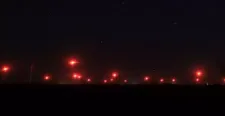
Kansas has nearly 4,000 turbines, many taller than the Statue of Liberty. People see blinking lights for miles, but now radars can help preserve the night skies.

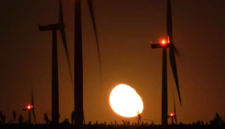
Wind farms continue to spread across Kansas — but with new features that will tone down the way they interrupt wide open skies with red, blinking lights visible for miles and resented by many rural residents.

This year, Kansas will get its first two wind farms designed to produce less light pollution — High Banks north of Concordia and Sunflower Wind Farm about an hour west of Emporia. Meanwhile, state lawmakers are considering a law to make other wind farms follow suit.

A few states, such as North Dakota and Colorado, blazed the trail in recent years by adopting similar rules. 
But Kansas, which ranks fourth in the U.S. for wind power, would be the biggest windenergy-producing state to mandate light mitigation.

Wind turbines haven’t just exploded in numbers, they’ve grown ever taller. Since 2016, 400 new turbines have gone up in Kansas with rotor hubs taller than the Statue of Liberty.

The state now has nearly 4,000 turbines, with hubs between 210 and 400 feet high.

The 233 turbines of High Banks will start rotating in December, becoming the highest-capacity wind farm in the state. With recently secured federal approval, the project will also rein in night-time lighting, a quality of life issue for people who live nearby.

“It’s a huge deal,” said Billy Wilkins, the High Banks project manager for NextEra Energy Resources, the country’s top wind and solar producer. “We try to understand, at least, what the community is asking.”

Commissioners in Republic and Washington counties urged the company to do its best to preserve the night sky with radar-activated lights that stay off except when aircraft approach, and NextEra agreed.

In the future, all Kansas wind farms may sport such lights. Wherever allowed by the Federal Aviation Administration, turbines would go largely dark. That would transform the night-time view in areas such as southwest Kansas, where red lights dot the landscape for miles upon miles.

Last week, the KansasSenate passed a bill nearly unanimously to make light mitigation steps a legal requirement. The House has yet to consider the matter.

NextEra Energy Resources says High Banks — the first wind farm in Republic and Washington counties — will be capable of generating as much as 600 megawatts. That’s enough electricity to power more than 240,000 homes.

Federal records indicate it will have more power-producing capacity than any wind farm in the state, outpacing the three-county, 470-megawatt Flat Ridge 2 project built by BP and Sempra southwest of Wichita with 294 turbines that came online in 2012.

Sunflower Wind Farm in Marion County will produce up to 200 megawatts. Orsted, the company building it, expects to turn on the turbines by the end of this year.

Turbines have lights on them for the same reason as cellular towers and other tall objects. They pose a risk to airplanes — particularly smaller ones that fly closer to the ground.

But technology gaining ground in the U.S. and other countries uses radar to scan for aircraft. Called an aircraft detection lighting system, or ADLS, it flips on the lights like a giant, coordinated motion detector.

Germany will require all offshore wind farms in its territory to install aircraft-detecting systems by the end of this year. It gained its first offshore wind farm with such a system last year.

Companies building wind farms in the U.S. must secure approval from the Federal Aviation Administration to install the technology.

The lights need to start blinking by the time an aircraft flies within 3 nautical miles (3.45 miles) of a turbine and within 1,000 feet above a wind farm’s highest point.

The FAA reviews every turbine individually. In a wind farm with 100 turbines, the agency could approve 99 turbines for light mitigation, for example, but require traditional all-night-long blinking lights for one turbine located near a hill that poses line-of-sight challenges.

For both High Banks and Sunflower Wind Farm, the FAA approved light mitigation for all turbines.

In Kansas, state senators held an informational hearing last fall and bill hearings last month on whether to require light mitigation. The Senate voted nearly unanimously to make wind farms apply for FAA approval and then follow through for all turbines approved by federal regulators.

The bill would apply not just to future wind farms, but to those already up and running.

Operators of existing turbines would not have to act immediately. Instead, they would need to seek FAA approval to install the new technology whenever their next contracts with utilities and other power-purchasers take effect.

Rural residents sick of the red lights or worried that wind farms will inevitably reach their areas are urging lawmakers to act.

Bonnie Rasmussen of Frankfort wrote to senators that she fulfilled a dream a decade ago by building a house “away from the noise and lights of the big city.”

“There I enjoyed the morning sunrises and evening sunsets and the moon and stars of the night,” she said. “Now I am almost surrounded by blinking red lights from evening until way past sunrise. I have only one window which does not look out upon a sea of red blinking lights.”

Stan Basler, of Galesburg, said the noise and lights of turbines in Neosho County “has, to a degree, transformed rural living into industrial park living.”

Mike Kolman, of Cuba, near the under-construction High Banks, wrote that the lights — and daytime shadow flicker caused by turbine blades — will undercut quality of life there and compel folks to stay indoors more.

Radar-activated lights are “a very effective tool for mitigating one of the objections, at least, to wind farm development, which is the aesthetics,” Jeff Schleicher, director of wind energy services at Terma Inc., told Kansas lawmakers at the hearing last fall.

And that’s why some developers install the systems even in states that don’t require it.

Terma is one of just two companies that sell light-mitigation systems for wind farms.

The other is DeTect Inc., the company equipping High Banks.

Jesse Lewis, a senior vice president at DeTect, told lawmakers that a light-mitigation system costs $1 million to $2 million for a typical wind farm.

The Kansas News Service tried to verify with the FAA whether any existing wind farms in Kansas use light mitigation. The FAA said diving into its files to answer that question would take a lot of time.

However, Terma and DeTect both say they do not have any systems up and running in Kansas today.

Night-time lights are just one of a litany of complaints about turbines from residents who don’t want wind farms near them.

Like other wind farms in Kansas, High Banks sparked debate in Republic and Washington counties and left some residents angry.

But hundreds of residents opted to lease their land. More than 300 landowners will provide the space for the wind farm, and more than 150 landowners for the related transmission infrastructure that NextEra will install in Republic, Washington and Marshall counties.

Construction began in December.

Light pollution is increasingly recognized as a serious environmental issue, contributing to the decline of fireflies, songbirds, bats and other animals.

Yet the red lights on wind turbines dwarf in comparison to urban, suburban and other industrial light pollution, and do not appear to be a high priority among conservationists worried about the effects of increasingly bright nights on animals.

One environmental group, Audubon of Kansas, testified in favor of requiring light mitigation for wind farms based on some evidence that it could reduce wildlife fatalities.

“Both birds and bats can be attracted to wind energy facilities” because of their red lights, Audubon of Kansas executive director Jackie Augustine said. “No lights is better than blinking lights.”

Turbines also pose daytime environmental challenges, prompting The Nature Conservancy to create a map that encourages wind farm development in areas with less impact on threatened species and bird migration routes.

The Conservancy supports “the rapid expansion of renewable energy” to curb carbon dioxide emissions.

Other conservation groups take a similar stance, because climate change and other human impacts are already having catastrophic impacts on animal species globally.
The Vegan Solution

0

A popular idea floating around the vegan community is that we could solve the whole climate change dilemma (hoax) overnight if all the world’s vegan billionaires would donate a billion dollars each to buy up all the cows on earth and destroy them. I am far from being a mathematician but I did a bit of number crunching on the back of a napkin to see if the vegan’s idea would work.

According to the Food and Agriculture Organization there are one and a half BILLION head of cattle on earth and let’s say each one of them was worth $1,000. According to my calculations it would cost one and a half TRILLION dollars to buy all the world’s cattle. There are an estimated 2,668 billionaires on earth but we don’t know how many of them are vegans. So far I could only find two who will admit to it. So the two vegans would have to come up with 750 BILLION dollars EACH to make cattle extinct. Not even Elon Musk, Jeff Bezos or Bill Gates has that kind of cash laying around.

The problem with the vegan ‘solution’ is that it assumes every cattle owner would be willing to sell their bovines. Take India, for example. It’s the country with the most cattle with an estimated 305 million head. The problem for the vegan mathematicians is that cattle are revered and protected in India and the thought of killing them all would be inconceivable to them.

The United States owns the third most cattle and its billionaires are quite fond of their cattle too. Take John Malone, for example, who just so happens to be the largest land owner in the country. He owns Silver Spur Ranches, a top notch ranching and beef company that runs on 2.2 million acres and includes the Silver Spur Ranch in Encampment, Wyoming, the Bell Ranch and the TO Ranch, both in New Mexico. He also has ranches in Walden and Kiowa, Colorado. It turns out that Malone is just as good at running ranches as he was his media business that made him worth nearly ten billion dollars. I’d like to see the two vegan billionaires I was able to identify try to out-swap a tough trader like John Malone out of his cows.

Another big landowner is Stan Kroenke with 1,380,000 acres and counting. In 2016, he bought the most expensive ranch ever, the W.T. Waggoner Estate. The 510,000 acre ranch he purchased is believed to be the largest ranch behind a single fence in the country. Stan earned his wealth mostly from sports and is the owner of the Los Angeles Rams. As far as I know you can still buy a hot dog in his SoFi Stadium so I doubt Stan is a vegan and that he’s going to be a willing seller.

The vegans can cross Peter Buck off their list too. The nuclear scientist/Subway founder died in 2021 at the age of 90 but not before he became one of the largest landowners in the country. Do you really think the Buck family wants the world to be beef-free? What are they going to sell at their Subway sandwich shops without beef… bean curd and tofu lasagna?

Then there’s the Singleton Family who own 1,110,000 acres, mostly in New Mexico. Dr. Singleton was the founder of Teledyne and with some of the proceeds from the sale of his company he wanted to preserve the ranching heritage that has been around in New Mexico for hundreds of years. Dr. Singleton passed away in 1999, but his five children carry on his mission and are known for the quality of their horses and their cattle. What will their great cow ponies do without cows, mope around all day swatting flies?

And let’s not forget the King Ranch heirs. What will they run on their ranches in a beef-free-world, yaks, bison and water buffalo? They burp and pass gas too, you know?

The point I’m trying to make is the vegan idea of buying up all the world’s cows and killing them to cure the climate change hoax is idiotic but the vegans who thought up the idea could be lacking in the brain department as a consequence of eating all that kale ice cream, chickpea banana bread and garbanzo bean surprise.

Sibling wars (2)

0
john marshal

The Republicans’ censure of Jerry Moran and the ascent of state chairman Mike Brown, an election conspiracy promoter, are recent flashpoints in a long history of Republicans feuds among themselves.
The nastier battles disgusted voters, who responded by sending Democrats to Cedar Crest, at times to Congress and, on occasion, to majorities of the Kansas House.
By the mid-1970s, several forces were working against Republican Gov. Robert Bennett early in his first term. Among them were inflation and the cost of living; state spending would surpass $2 billion for the first time, with nearly a fourth of that money from Washington.
The cost of local government was rising, and higher property taxes loomed. At the same time, sales and income tax revenues rolled into Topeka atop an estimated $100 million-plus state budget surplus. ($525 million today).
Gov. Bennett and Republicans rejected a case for returning revenues to local government; Local problems, they said, should be solved with local taxes and without state aid. This infuriated local officials (many were Republicans), who noted that the governor had no trouble accepting $483 million in federal dollars for his $2 billion state budget.
Bennett’s advertised image as a conservative was in contrast to his personal fleet of state cars ( two Cadillacs plus two state sedans), a $900,000 appropriation for a new airplane ($4.7 million today), and a $100,000 remodeling ($525,000 today) at Cedar Crest, the governor’s mansion. He had assembled an inner circle and paid them high salaries; he had added new branch offices at Wichita and Garden City.
Bennett also criticized the state’s new Governmental Ethics Commission while he continued his visible association with well-heeled lobbyists. He maneuvered to get legislative friends quick appointments to the Kansas Corporation Commission, which regulated utilities. The tone set by Bennett seemed negative: Republicans could only have friends who are useful and who can be used.
*
Democrats in 1976 were elected to a 65-60 majority in the Kansas House and John Carlin, speaker of the House, became a Democratic candidate for governor in1978. His campaign spread the word about Bennett, and in the final days of his campaign Carlin knotted his message with a neat ‒ if not entirely accurate ‒ slam that Bennett was responsible for soaring utility bills.
It worked: The Republican governor was from wealthy Johnson County, aloof and negative, accepting federal dollars while hoarding state revenues, associate of powerful lobbyists, manipulator of the corporation commission, friend of big business and bigger utility bills.
Carlin was elected. The fallout against Republicans sent Democrats to Congress: U.S. Rep. Martha Keys of Topeka was reelected in the 2nd District, and in the 4th District, Dan Glickman of Wichita defeated incumbent Republican Garner Shriver.
*
Republicans, eager to challenge Carlin’s reelection campaign, formed another circular firing squad in 1982. Five candidates were on the party primary ballot. Sam Hardage of Wichita, vicious and uncompromising, won the nomination with 36 percent of the vote. Former Lt. Gov. and state party chairman Dave Owen was second with 34 percent and House Speaker Wendell Lady (26 percent) finished third. Hardage had been ham-handed and bull-headed in a poisonous contest. Owen, Lady and other Republican regulars never got over it.
Carlin beat Hardage 1982 with 54 percent of the vote. Late in his first term, Carlin had proposed a severance tax on oil, gas and coal to raise new revenues for schools and highways. Carlin, working with the legislature’s majority Republicans, secured approval of the new tax in 1983.
Carlin also won an increase in the state sales tax and additional taxes on higher income brackets. The legislature allowed multi-banking in Kansas, began efforts to court international trade, established economic development planning and created a $20 million state venture capital fund.
The agenda seemed dominated by Carlin but he could not have achieved elimination of the sales tax on utilities and the property tax on farm machinery, or advocated new prisons, or expanded overseas markets, without help from Republicans and their leaders.
In 1986, the last year of Carlin’s two terms, he campaigned for six amendments to the Kansas Constitution. Among them were liquor by the drink, a state lottery, property classification and pari-mutuel betting. The voters’ approval would transform the government and culture of the state as had few other reforms in its history. Carlin would finish his second term as one of the state’s most accomplished and popular governors.
The law prevented Carlin from a third consecutive term. It was said that Republican Mike Hayden became the next governor because Carlin couldn’t be.
For Republicans, trouble loomed.
(Next: Feuding through Brownback)

BREAKFAST PLEASE (You are late this morning)

0

We have a new squirrel in the yard this winter and she is sure cheeky. She definitely knows who feeds her and where the food comes from. She is always in the yard when I go out to feed in the morning. This morning (Monday the 20th) she was hanging out on the power pole waiting and watching the feeder that is on the pole. It is the one they like to crawl in and eat out of and some of them will rest on the tray.
This little lady hung upside down on the pole right above the metal feeder, just out of reach, the whole time I was in the yard filling the big feeder and the metal feeder which set close together. When I walked over to the oak tree about 10 feet away from the pole she came down and started to eat on the tray. I decided to see how close she would let me get while she was on the metal feeder and was surprised how close she let come. I walked from the oak tree over to big barn shaped feeder about 10 feet the pole to put food in one of the bowls that is on the post below the barn feeder.
I talked to her all the way to the big feeder asking her if I could come and fill the metal feeder. I filled the cup below the barn. It is on a little picnic table that has benches for the squirrels to sit on. She sat on the metal feeder and looked at me all the time I was there talking to her. She sat and watched me until I moved away from the little picnic table and started to walk down the yard near her. I was going to go to the feeder in the maple tree at the other end of the yard. As I walked about 10 feet from her she decided to leave and jumped onto the fence behind the pole.
From the fence she made fast tracks down the fence to the north end of the yard. She didn’t leave the yard but as soon as I went back toward the garage door to go into house she was back on the feeder before I got into the house. I think she is also the one that comes up on the patio step by the sliding doors of the house and if there is no food on the step or the brick ledge she will get on the ledge and look in the door.
She sure is brave to come up and look in the door and I have started calling her Cheeky. She doesn’t mind asking for the food to be replenished and I don’t mind putting more out on the patio so I can see all the squirrels and the birds that come up to eat. I’ve never named a squirrel that is in the yard on a daily basis after the one we fed that had only a stub of a tail that stood straight up on his back. He was one of the squirrels that was pretty tame and would stay in the tree while I put seeds in the bowl. But after he got run over going back and forth across Monroe I swore I wouldn’t name another one and get fond of it.
Usually every morning when I go out to put sunflower seeds in the feeders Cheeky is waiting in the neighbor’s umbrella tree or sitting up in our oak tree. She will watch me go from feeder to feeder and stay in the tree. As soon as I come back in the house she will come down to the little green chair in the oak tree that is for squirrels and will sit in the chair and eat out of the little bowl attached to the front of the chair seat.
She has even been on the patio eating seeds that fall from the tube feeder and on the back step picking up peanut chips that I put out. She has a different looking tail than most of the squirrels so is easy to spot.
She is so comfortable coming up close that I am surprised that she doesn’t come to the patio door and knock on the window when they are out of food. I would love it if she did that but don’t want her to get too comfortable with us because that is when something usually happens to them. So I am content to see her at a distance when I am in the yard for a few minutes and to watch her feeding from the green chair or the patio under the tube feeder. To contact Sandy: [email protected]

Males and Females in the Kansas Outdoors

0

If the reasons for all the suggested, irrational WOKE changes to our lives here in the once good-ole’ USA could be sifted and filtered down to a few common denominators, one of those reasons would be that too many decisions are now being made, and too many opinions are now being formed based solely on emotions alone, with little or no factual information. Don’t get me wrong, some emotions are important when making decisions and forming opinions, but the main consideration must be factual information.
Nowhere has suggested wokeness invaded our society more than in the recognition of the males and females of our species. Mom and Dad, Mother and Father, mom and pop have always been the accepted names for our parents, but now, someone who needs to leave their “Mom and Dad’s” basement and get a job, has suggested that those terms are offensive to someone and should be changed to merely “male and female of the species.” What’s next? Will we have to change the name of “Mother Goose Nursery Rhymes” to “Rhyming Stories written by Birthing Waterfowl”? Will “Old Mother Hubbard” now become “Birthing Person Hubbard”? Or “There Once was a Women Who Lived in a Shoe” would now be “There Once was a non-Binary who lived in a Shoe”?
Maybe you think I’m a tad over the edge here, but I can easily see this same confused thinking coming to rest on our wildlife as well. When referring to deer, elk and moose, bucks and bulls will have to be called “representatives of the species that grow antlers in the summer, lose them in winter and are tasty when made into summer sausage, jerky and tenderloins.” Does and cows will need to be referred to as “representatives of the species that grow no antlers, and often taste even better than the representatives that grow and lose antlers.” Neither will the terms “hen” and “rooster” be allowed when referring to game birds. Roosters will possibly be known as “brightly-colored representative of the species that grow long tail feathers and taste yummy with a side of ranch.” Hens might be “dingy-colored representatives of the species that raise the young and are never spoken of when shot by mistake.” Although peacocks are rarely spoken of by gender, they are in fact peacocks and peahens. That won’t work for sure, so male peacocks will become known as “representatives of the species that grow big beautiful tailfeathers and roost above your car at night, making the expected mess.” Peahens will become “drab colored representatives of the species that raise the young and roost at night where they will also make the same mess on your car below.”
Now, I know these new gender-neutral animal and wildlife descriptions can get quite wordy, but anything to be politically correct and stay abreast of the new “woke “generation, and all you who know me know I’m all about political correctness. By the way, “woke” now means “alert to injustice in society, especially racism,” and no longer has anything to do with the old-fashioned description of the first half-hour of the day when I’m the crankiest…Continue to Explore Kansas Outdoors.
Steve can be contacted by email at [email protected].