
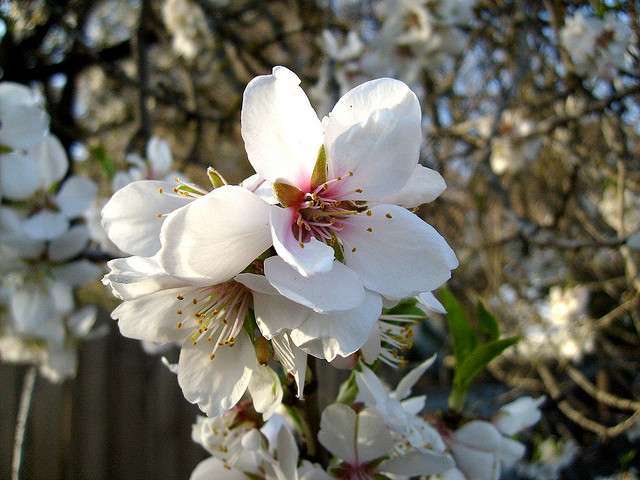
Spring in Kansas is often unsettled with apricot and peach tree flowers being the most vulnerable to late frosts. Of course, the tree itself will be fine but there will be no to little fruit for that year.
Other species of trees can also be affected but apricots and peaches are by far the most sensitive. Also, the closer a tree is to full bloom, the more sensitive it becomes to frost.
Apricots are more likely to have frost kill flowers than peaches because they bloom a bit earlier. Though there are late-blooming apricot varieties, the differences between full bloom on early- and late-blooming varieties appears to be slight. Research at Virginia Tech in the 90’s showed a maximum of a 4-day difference between early and late varieties. However, in some years that may be all that is needed.
The trees in the study that were considered late blooming included Hungarian Rose, Tilton and Harlayne. Harglow was not included in the study but is also considered late-blooming. See https://pubs.ext.vt.edu/422/
Peaches are next on the list for being likely to be caught by a late frost. With peaches, two characteristics become important when considering whether they will be damaged by late frosts. Like apricots, bloom time is very important but fruit bud hardiness is also important.
In this case, fruit bud hardiness refers to hardiness to late frosts rather than the ability to survive extreme low temperatures during the winter. Late bloomers included ‘China Pearl’, ‘Encore’, ‘Intrepid’, and ‘Risingstar.’ See http://aces.nmsu.edu/pubs/
So, are there other considerations when looking at possible frost damage? Location can be very important. Planting on a hill which allows cold air to drain to lower elevations can help. Also, a location in town will be more likely to have a warmer micro-climate than an exposed location. Some gardeners will add a heat source under a tree during cold nights if they are close to a building. Heat lamps and charcoal briquettes are sometimes used but safety should be the first consideration. (Ward Upham)
Fruit Trees and Frost
Opinions Sought on Feral Hog Control

MANHATTAN, Kan. – When wildlife populations bloom or problems arise from certain wildlife species, an allowance for sport hunting might come immediately to mind as a potential solution. Letting the hunters help by decreasing the numbers makes sense, right?
That isn’t necessarily the best solution when it comes to managing feral hogs. According to the U.S. Department of Agriculture (USDA), these animals have expanded their range in the last 30 years in the United States and reside in more than 40 states. They cause damages estimated at $1.5 billion each year.
“This species damages crops, can kill young livestock and wildlife, destroys property, damages existing plant communities, and has the potential to carry diseases that threaten much of our livestock industry,” said Charlie Lee, wildlife management specialist for K-State Research and Extension.
For these reasons, the USDA’s Animal and Plant Health Inspection Service (APHIS) is looking to reduce feral hog damage nationally, and it is asking for input from the public on its proposed environmental impact statement that is part of the APHIS Feral Swine Damage Management Program. Comments will be accepted through Feb. 2.
“Before (APHIS) can make a decision on the best approach to manage feral swine damage, the National Environmental Policy Act requires the evaluation of the potential impacts associated with various types of control methods,” Lee said.
Potential solutions
Some states allow sport hunting for feral hogs. Kansas, however, banned the practice with a law passed in 2006, but the state’s landowners or designated agents for landowners can hunt feral hogs on their properties after obtaining a permit from the Kansas Department of Agriculture’s Division of Animal Health.
“That (law) was passed primarily to reduce the transport of feral hogs to various locations in the state and release them for feral hog hunting,” Lee said. “Feral hog hunting is in high demand. It’s been estimated that feral hog hunting comes in at No. 2 in hunting activities only behind the number of hunters and days spent hunting for whitetail deer.”
Lee said it makes sense that states such as Kansas, with large areas of open territory and low populations, ban sport hunting to reduce the number of feral hogs that move about in the state. Hunting could scatter the hogs and make the population issue worse.
When the hogs aren’t scattered, it could make it easier to capture more of them successfully, he added, but it is doubtful that sport hunting and trapping efforts will eradicate feral hogs.
Other states with more tree cover might have a higher density population of feral hogs. Lee said banning sport hunting in places where the hogs are already scattered throughout the state probably wouldn’t have much of an impact. These hogs couldn’t be hunted by aerial helicopters, for example, which is one of the many control techniques in place today.
“One of the advantages of banning sport hunting is that feral hogs are elusive,” he said. “That’s one of the reasons they’re so popular among sport hunters. They are a difficult, challenging query, and if you quit hunting them, they become somewhat more domesticated and an easier target to eliminate or reduce in numbers.”
Research indicates feral hog populations in the United States must be reduced by about 70 percent each year just to keep up with reproduction, Lee said. Feral hogs can have up to three litters per year with a dozen or so pigs per litter. In the absence of a control effort, a local population could grow rapidly.
“Keep in mind that the threats posed by feral hogs are real,” he said. “They don’t appear to be going away, and in fact, they’re rapidly increasing. Unless steps are taken, we could have a major train wreck because of the disease threats that feral hogs pose to our domestic swine operations, and the ecological damage will continue.”
The APHIS Feral Swine Damage Management Program involves several other government agencies working together to address this nationwide concern. To view the draft environmental impact statement, log on to the Regulations.gov (http://www.regulations.gov/#!docketDetail;D=APHIS-2013-0031) website. Comments can be submitted online or by mail.
Story By: Katie Allen
Barton’s Barnes earns KJCCC Player of the Week honors

Jalin Barnes of the Barton Community College men’s basketball team has been named the KJCCC Player of the Week. Barnes becomes the second Cougar to win the award this season as Ahmad Walker earned the honor in week five.
Barnes shot 64% from the field for the week including over 66% from behind the arc and 68% from the charity stripe helping the Cougars average 101 points in a pair of victories over defensively tough Jayhawk West foes last week. Beginning the week matching his career high twenty-five points on 10-of-14 shooting including 2-of-3 behind the arc in Barton’s twenty-four point victory against Seward County Community College, Barnes recorded his ninth straight double-figure performance with twenty-two points on Wednesday helping a shorthanded Cougar team to its highest offensive output in the rivalry of its twelve point upset of No. 12 Hutchinson Community College.
Barnes has taken his game to another level during conference play raising his output by six points averaging 20.8 points per game while shooting over 55% from the field and 50% from behind the arc. A native of Raleigh, North Carolina, the sophomore transfer from Howard College is averaging 14.4 points per game on the season reaching double figures in 15-of-19 games while grabbing 3.7 rebounds and dishing out 2.5 dimes per contest.
The Barton men are off to a 4-1 start to the conference season and 16-3 overall and leading Region VI at 93.9 points per game. Having a week off since its victory over Hutchinson, the Cougars will travel to Colby on Wednesday for an 8:00 p.m. conference matchup against Colby Community College.
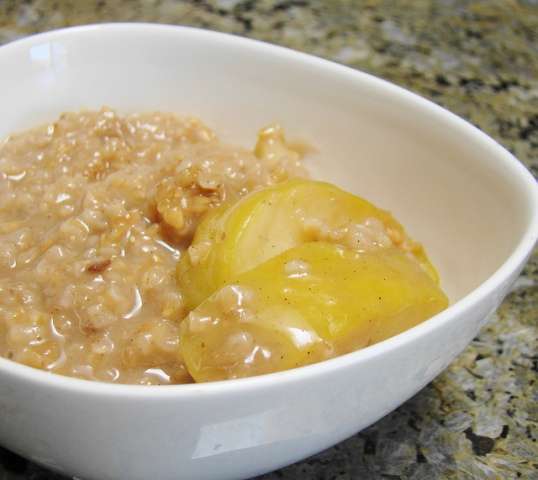
Overnight Steel Cut Oats recipe
Jami Nolen, former Nutrition Program Associate, University of Missouri Extension
Yield: Makes 1 serving
Ingredients
- 1/3 cup steel cut oats
- 2 tablespoons uncooked pearl barley
- 1¼ cups water
- 1/4 teaspoon ground cinnamon
- 2 tablespoons dried cranberries
- 1 tablespoon sliced almonds
- 1 tablespoon honey
Preparation
- Combine oats, barley, cranberries and 1¼ cups water in a microwave-safe 4-cup bowl. Cover and refrigerate 4 hours or overnight.
- Uncover bowl. Microwave, uncovered, at HIGH for 6 minutes or until most of liquid is absorbed, stirring well after 3 minutes. Stir in 1/4 teaspoon cinnamon. Top with almonds and honey.
For nutrition information, view this recipe online at http://missourifamilies.
For another oatmeal recipe, check out Slow-cooker Apple Cinnamon Oatmeal at http://missourifamilies.org/
Choose oatmeal as a whole-grain healthy choice
Tammy Roberts, MS, RD, LD, Nutrition and Health Education Specialist, Bates County, University of Missouri Extension
Although most of us know we are supposed to eat more whole grains, it can be difficult to know what foods have 100 percent whole grain.
Oatmeal is a whole grain because it contains all of the parts of the oat grain including the bran, endosperm and germ. The interesting thing is that when we eat the regular oatmeal most of us grew up with, we aren’t eating the grain in its original form. We are usually eating rolled oats. Rolled oats have been steamed and flattened. That process decreases the cooking time so old-fashioned oatmeal can be prepared in 10 to 25 minutes. Quick-cooking oats that can be prepared in 3 to 5 minutes have been cut even more finely to reduce cooking time.
Some people prefer steel-cut oats. The primary difference between steel cut oats and rolled oats is the shape of the grain. Steel-cut oats are not flattened — the grain is cut into thirds and then packaged for sale. When preparing steel-cut oats, it’s best to use 4 cups of water to each cup of oats. The cooking time for steel-cut oats is 30 to 40 minutes. Steel-cut oats have a chewy texture and hearty flavor.
A popular product in many households is instant oatmeal…
To learn more about the health benefits of oatmeal and which type is best, read the full version of this article at http://missourifamilies.org/
