Tuesday, January 13, 2026
Home Blog Page 4718

Sweet poatoes are healthy and tasty

0

Tammy Roberts, MS, RD, LD, Nutrition and Health Education Specialist, Bates County, University of Missouri Extension

It’s that time of year when many people are harvesting their sweet potatoes. As you dig those tasty roots from the ground, it’s hard not to think of that special sweet potato casserole that is a fall favorite. Not only do sweet potatoes taste great, they are healthful as well.

According to Encyclopedia of Foods: A Guide to Healthy Nutrition, three fourths of a cup of baked sweet potato contains 155 calories, 5 grams of fiber, 36 grams of carbohydrate, 3 grams of protein and no fat. They provide a good source of vitamin A, vitamin C and potassium.

When choosing a sweet potato, you want the skin to be a bright uniform color and firm to the touch. Sweet potatoes and yams look alike but they are not related. Yams are blander than the sweet potato. Unlike the sweet potato, yams do not contain vitamin A, but they are a good source of vitamin C, potassium and fiber. Yams can be stored, prepared and used in the same ways that sweet potatoes are used.

Sweet potatoes are very versatile. They can be baked in an oven or microwave like other potatoes. They can also be boiled but it is recommended that the skin be left on while boiling and easily removed after boiling. Mashed sweet potatoes can be substituted for pureed pumpkin in muffin, cake and cookie recipes. They also taste great added to casseroles, soups and stews.

For information on how to cure sweet potatoes once they’re harvested (if you grow your own), check out the full version of this article at http://missourifamilies.org/features/nutritionarticles/nut157.htm

October is Breast Cancer Awareness Month

0

Janet Hackert, Regional Nutrition and Health Education Specialist, University of Missouri Extension

Breast cancer is so prevalent that most people know someone who has had it. In fact, one in eight women will be diagnosed with breast cancer in their lifetime. October is Breast Cancer Awareness Month so here are a few facts, some of which may be surprising.

A family history of breast cancer is considered a risk factor, so if a woman’s mother, sister, aunt or grandmother has had it, she should be more careful about looking for it. However, having this risk factor does not mean that you will get breast cancer. According to the American Cancer Society, “only 20-30 percent of women with breast cancer have a family member with this disease.” This means that 7 or 8 out of every 10 women who have breast cancer are NOT related to someone who has had it.

As a woman ages, her risk of developing breast cancer increases. “Nearly 8 out of 10 breast cancers occur in women over age 50,” says the American Cancer Society. The risk for a woman over 70 developing the disease in the next year is almost double that for a 50-year-old.

Some risk factors are out of your control, but there are some changes you can make to lower your risk of breast cancer, including maintaining a healthy weight, getting regular exercise and avoiding or limiting alcohol intake. Not using hormone therapy after menopause may also help lower your risk.

Regardless of risk factors, early detection is important!…

For more information about early detection, check out the full version of this article at http://missourifamilies.org/features/healtharticles/health81.htm

Test your smoke alarms – it could save your life

0
Rob Allen

Sherry F. Nelson, LCSW, Human Development Specialist, Marion County, University of Missouri Extension

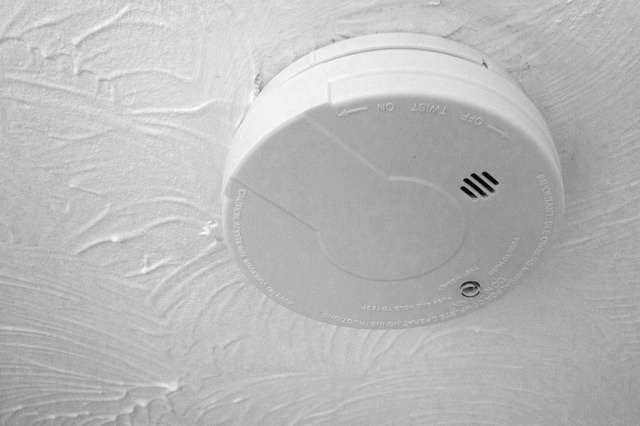
Each year more than 4,000 Americans lose their life to fire and approximately 25,000 are injured. At least 80 percent of fires in the U.S. occur in the home; however, there are many things we can do to prevent these fire tragedies and injuries. Testing our smoke alarms is one of the most critical things we can do to protect ourselves and our loved ones. All homes should have smoke alarms, an escape route and fire extinguishers on hand.

Smoke alarms: There should be a smoke alarm in every bedroom. Additionally having a smoke alarm on every level of your home is a must and you should test your smoke alarms monthly. Experts recommend that you change your batteries twice a year, in the fall and spring when we change our clocks for daylight saving time.

Escape plans: Having an escape plan and practicing the plan has been shown to save lives because you and your family will know exactly what to do in the event of an emergency. Practice the plan twice a year with the whole family. Be sure to know two ways out of your home and have a designated meeting place outside. Remember that once you are out of the home, have a neighbor call 911, and DO NOT go back inside. Be sure to educate babysitters/caregivers of your escape plan so they are familiar with it as well.

Fire extinguishers: Having fire extinguishers on each level of the home is a must for every homeowner or renter. An ABC type extinguisher is best because it can be used on most types of fires…

Learn more about how to use a fire extinguisher, plus other safety tips, in the full version of this article at http://missourifamilies.org/features/housingarticles/testsmoke.htm

For more information about smoke detectors, check out MU Extension expert recommends replacing older smoke detectors

Weekend full of service

0

4-H members, volunteers and alumni to participate in two-day statewide community service project


MANHATTAN, Kan. – When members recite the 4-H pledge, they vow to use their hands for larger service to better their club, their community, their country and their world.
This year, Kansas 4-H members, volunteers and alumni are uniting to prove their commitment to the pledge by participating in 48 Hours of 4-H, a statewide community service project showcasing the positive impact 4-Hers can make in just one weekend.
On Oct. 11 and 12, the weekend immediately following National 4-H Week, an estimated 3,000 people from at least 58 counties are expected to participate in more than 130 different community service projects.
These numbers shouldn’t be too surprising, considering a recent study on positive youth development showing that 4-H members, grades 7-12, are four times more likely to make contributions to their communities than their peers.  They are also estimated to be twice as civically active.
Blake Foraker, Kansas 4-H youth leadership council president, said that when the state council met last spring, community service was something they felt they needed to emphasize more as a way to connect back with those founders of the organization who wrote things such as the 4-H motto, “To Make the Best Better.”
“We were looking for a way to unite 4-H across the state at the local level,” Foraker said.  “We pledge our hands to larger service, and that’s a big part of what 4-H was centered around when it was created more than 100 years ago.  As we move forward, we see 48 Hours of 4-H becoming a unique challenge and something we can watch grow over the next few years.”
For more information about how you can get involved, contact your local extension office or check out the details for 48 Hours of 4-H at www.Kansas4-H.org/484H.

Story By: Kaitlin Morgan

Grant aims to transform teaching of life sciences

0

LINCOLN, Neb. — Learning the life sciences in the 21st century and beyond is about much more than memorizing information for a test and then moving on to the next subject. Students must learn in a more dynamic environment that ties the threads of science together into a whole from the start of their undergraduate experience, say University of Nebraska-Lincoln professors who are leading an effort to develop new teaching methods that meet these demands.


The University of Nebraska-Lincoln has received a four-year, $2,321,012 grant from the National Science Foundation.


Currently, life sciences teaching works like this, said Joe Dauer, assistant professor in the School of Natural Resources: “You start cramming as much knowledge as you can into a student’s head their freshman year, in pieces, and you hope students over time figure out how to connect things.”


Tomas Helikar, assistant professor in the Department of Biochemistry and principal investigator for the grant, said the new approach will be in contrast to “the way I learned – rote memorization from textbooks, static pictures, and so on. We need to be more dynamic.”


The Bureau of Labor Statistics says that over half of the 30 fastest growing careers in this nation require familiarity with the life sciences, a discipline that is rapidly shifting to a more systems-level, large database driven approach to understanding ourselves and the world we live in.


The UNL initiative brings together life sciences educators and computational biologists to develop innovative methods to meet the challenges posed by this new approach within the life sciences.


Currently, it isn’t until they’re upperclassman and graduate students that students are immersed in this advanced thinking. “We want students connecting those pieces earlier,” Dauer said.


Life sciences students will be much more challenged from the start of their college experience. Some will find that more engaging and fun, but Dauer said he expects some resistance too.


“Students have this expectation they’re going to be told what’s on the exam and what they need to memorize and if they do that, they’re going to get an A,” he said.


“The U.S. is realizing that as life sciences have evolved as a research field, education also needs to change the way we teach,” Helikar added.


“This project has the potential to significantly transform the learning of biology by providing a complete learning environment that enables students to learn by constructing, simulating, analyzing, and interrogating the dynamic and systems properties of living organisms,” the project team said in its summary.


The proposal was developed in response to “Vision and Change: a Call to Action in Undergraduate Biology Education,” a document produced by The American Association for the Advancement of Science, based on the findings of a large number of biologists. That document emphasizes the importance of systems thinking, learning about the dynamics of biology, and integration of computer simulations into undergraduate biology education.


Dauer and Helikar said they expect by the end of the grant’s four years, Life Sciences 120 and 121 will be taught very differently. Less “stand and deliver” by lecturers in auditoriums, and a more fluid classroom, with groups working together and more interaction between instructors and students. Labs for these classes also will be taught differently, with more simulations and immersion into systems thinking.


Helikar said the project will produce web-based modules that can be adapted for use in universities across the country.


It will use the Cell Collective, a web-based computer simulation platform developed in Helikar’s lab that has been successfully used in computational biology research, as a tool for learning about complex biological processes in a broad set of university life sciences courses. The technology has been successfully piloted as an educational tool in immunology and microbiology courses and has been included as part of an inquiry-based cancer biology textbook.


The educational research planned in this grant aims to extend this platform, and develop a comprehensive and easily accessible learning environment that will provide university students and instructors with computer models and learning content for topics taught in both introductory and specialized biology courses. It will enable students to learn about the dynamics of living systems in real-time through interactive simulations, while providing instant feedback with simulation and assessment results.


In addition, the web-based nature of the resource will enable students and their teachers to participate in learning activities on both a local and global scale.


Developed resources will be made available to researchers and teachers interested in incorporating this approach into their own learning technologies and methodologies. A design-based research and development approach is being used to learn about how student conceptual change can be supported by this intervention. Data from the students’ conceptual models and biology evaluation assessment and from exploratory interviews aimed at perceptions of difficulty, language barriers, and areas of greater clarification will be analyzed to refine the software technology.

This project is funded jointly by the Directorate for Biological Sciences and the Directorate of Education and Human Resources, Division of Undergraduate Education in support of efforts to address the challenges posed in Vision and Change in Undergraduate Education: A Call to Action http://visionandchange.org/finalreport/